Reading Between the Lines with IKEELYA: Sugar and Riker’s Take on Workplace Mental Health
Posted: 27 Jun 2025In November 2023, exactly a year before IKEELYA became a viral sensation on TikTok, Henrike ‘Riker’ Lode and Cukia ‘Sugar’ Kimani took on an unusual challenge.
While flying home from Taipei after Riker’s keynote at the International Women Game Makers Week, they discovered that their favorite South African Game Jam was happening. Unable to resist, the founders of All Day All Night, took shifts sleeping and developing their game jam submission during the 20-hour flight to Johannesburg.
“By the time we landed, we had the core game loop working, sniping in a very crude form and some basic furniture decorations,” Sugar recalled. “Once we got home, we kept polishing it up for the final jam submission. It was a bit rushed, little sleep, lots of time zones, but honestly, it was all good fun.”
“Make a place your home,” the theme of the game jam, immediately lit a light bulb. They realized they could iterate on Nyumbani (Swahili for “home”), a prototype they had created during their 12 games in 12 months challenge back in 2021. And just like that, Nyumbani, which focused on arranging furniture in a home, became the foundation for IKEELYA.
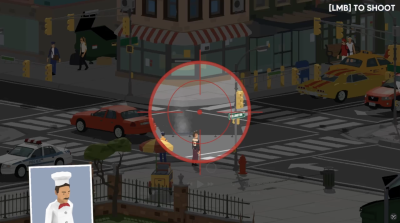
“To add an interesting spin to this, Sugar came up with the idea of adding sniping as an income generator. We were intrigued by the juxtaposition of a cozy interior design game and Where’s Waldo-style assassination. The name IKEELYA, a pun on the Swedish furniture store, cemented the concept,” Riker explained.

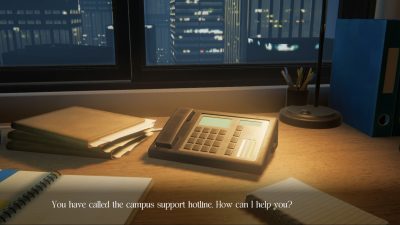
While IKEELYA took shape in the sky, another project, Between The Lines, was growing on the ground. Rooted in a mental health helpline, this narrative-driven experience explores the ways people navigate identity and the uncertainty that comes with big life changes. In the game, players step into the role of a volunteer who, despite not being paid, finds fulfillment in helping others.
Although IKEELYA and Between The Lines may seem worlds apart in gameplay, both touch on workplace dynamics and how they can impact mental health. This piece will explore how Sugar and Riker’s games highlight mental health in work environments.
After all, “If burnout is baked into the system, then mental health resources are just a band-aid on a deeper problem. Destigmatizing mental health isn’t just about providing support, it’s about creating a workplace that doesn’t cause harm in the first place.” they emphasized.
Psychological safety in the workplace allows for open and honest communication, making it easier to admit mistakes and seek help. While marketing IKEELYA, Sugar shared an Instagram video about a feature that tracked how far a sniping job was from home to avoid suspicion. However, the extra numbers confused players. By openly discussing past mistakes, the team creates a culture of constructive feedback, both internally and externally.
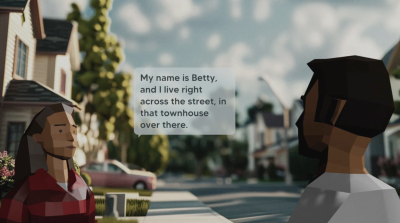
For instance, Sugar shared, “A frequent suggestion from playtesters that we found quite surprising is that Betty, our nosy neighbor, and Barry the hitman could have an affair, or that Betty might get onto Barry’s day job and have to be assassinated next. Our players’ vivid imagination gives us many ideas for further story development.
While constructive feedback sparks creative ideas, collaboration within a team also plays a big role in shaping a project. As a married couple running a studio together, Sugar and Riker admit it’s not always smooth sailing. “We had only been married a month when we started working on IKEELYA, but we’ve made games together for over seven years. We’re both very passionate, so it gets heated at times. But above all, we respect and admire each other’s skills, which made working on IKEELYA really special.”
After nearly a decade of working together, they’ve learned each other’s strengths. “As a game designer who is very focused on narrative and storytelling, Riker likes to communicate everything as diegetically as possible. This means integrating feedback on player actions and communication about the game into the game world as naturally as possible: ideally more visually and narratively instead of just updating a percentage on the user interface.” Sugar explained.
IKEELYA’s mental health tracker subtly shows which actions make Barry feel good or not. This guides players toward the end, where Barry eventually quits to pursue a more fulfilling career. “In a way, this reflects a real-life trend where people prioritize meaningful work over higher pay.” Riker added.
On Instagram, Riker once posed a question: “Is it time for video games to talk more openly about mental health?” She elaborated, “I mean, characters in games facing mental health struggles and sharing their journeys, like in movies, where people go to therapy. It still feels like a taboo in games, but why?
This hesitation to address mental health might explain why crunch culture persists in the video games industry. Riker added, “In Between the Lines, the caller struggles with studying and their relationship with family due to their gender identity. While this isn’t unheard of in games, making it so explicit turned off many playtesters. I was surprised by how strong the mental health taboo still is and how narrow the definition of ‘fun’ in video games remains.”
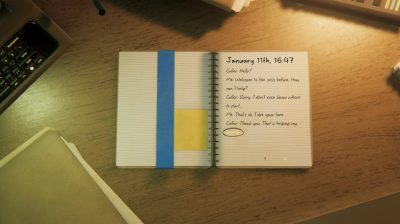
One key aspect of psychological safety is inclusion and feeling free to be yourself at work. “The story of Riley, the caller in Between the Lines, was inspired by the recent regress in trans rights in the U.S.,” Riker explained. “Even within the LGBTQ community, non-binary people aren’t as visible or included as they need to be. I wanted to normalize their existence and highlight some of their struggles.”
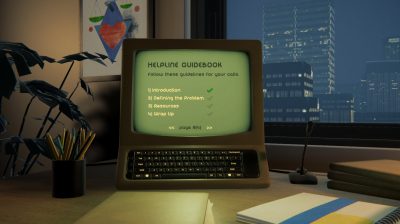
A standout feature in Between the Lines is how it keeps players engaged by subtly alerting them when they skip key parts of a conversation. “This feedback mechanism helps guide players to stay in the right phase of the conversation,” Riker explained, “I wanted to make sure players didn’t see it as a game to ‘win’ but as a real conversation, where success means keeping the conversation going and making the other person feel heard.”
In teams, inclusion fosters open communication, stronger collaboration, and better employee retention. In Between the Lines, players receive the tools to support the caller, while in IKEELYA Barry receives no intrinsic support from his employer.
When asked about this contrast, the team shared, “IKEELYA reflects how many corporations overlook employees’ mental health. Even though Barry is sinking deeper into depression and is clearly unhappy with his job, all his handler cares about is the bottom line. Even when Barry quits, his handler is willing to let him go, but only because Barry made him a lot of money. In reality, your mental health often matters to employers only if you remain profitable.
Unlike IKEELYA, Between the Lines is set outside of the vicious capitalist cycle. The player is an unpaid volunteer whose sole reward is being able to make someone feel better. Still, it is the caller’s responsibility to seek help and take care of their own mental health. As long as mental health care is still stigmatized the way it is now, most people aren’t going to get the help they need.”
Riker added, “Corporate environments feel unsafe because they inherently distrust employees to do ‘enough’ work. Policies on sick leave, office hours, and intellectual property are designed to protect companies but often strip employees of their humanity. We see our future in independent work, where we collaborate with creatives rather than try to own and control them.”
“Game development is demanding, and when you’re passionate, overworking is a real risk,” they shared. Balancing a full-time job with personal projects takes a toll, something they’ve had to be mindful of for their own mental health.
IKEELYA’s mental health tracker adds depth to Barry’s story, while Between the Lines takes a more direct approach to mental health representation. Although the latter has reached fewer players, it helps normalize mental health in games by showing that these conversations can be interactive and engaging.
“The biggest challenge is perception. Many players see games about mental health as too “serious” or heavy. If we want better mental health representation, we need to integrate it naturally into gameplay, making it feel like a lived experience rather than just a theme,” they explained.
The duo is proving that mental health can be naturally and successfully tied into gameplay. After IKEELYA’s TikTok video went viral, it caught the attention of YouTubers Arin Hanson and Dan Avidan from GameGrumps. Riker and Sugar shared that it was an incredible moment for them, “It gave our downloads a huge boost and pushed IKEELYA onto Itch’s front page. We can still feel the shockwaves and have just crossed 10,000 downloads.”
Reflecting on the viral post from November 2024, they shared, “It was incredibly vindicating. We had been working hard on IKEELYA for months, and seeing that response made it all feel worth it. It also proved that the effort we put into marketing wasn’t wasted. It was a reminder that building an audience and telling your game’s story can be just as important as development itself.”
With the demo in a solid place, the duo is now pausing development to explore their next steps. Instead of pushing forward alone, they’re looking for a publisher who believes in IKEELYA and can help fund full development.
IKEELYA and Between the Lines may have taken different creative paths, but both highlight important mental health themes. In addition, through their games, Riker and Sugar remind us that truly fostering mental health in the workplace isn’t just about coping, it’s about changing the systems that cause harm in the first place.
Experience these powerful stories firsthand by playing IKEELYA and Between the Lines on itch.io.
Wendi Ndaki Mutisya
Wendi is a Safe In Our World Ambassador from the class of 2025. She runs WAI Network in Kenya, hosts the animated podcast Creative Tech Convos, and is a fierce advocate for mental health and inclusion.