10 ways to be a better disability ally
Posted: 1 Jul 2026July is Disability Pride Month, and we’re exploring some of the ways you can be a better ally to your loved ones and colleagues who identify as disabled.
The Medical VS Social Model of Disability
Disability means different things to different people. The medical model of disability argues that physical and/or mental limitations or impairments are what make a person disabled. While this framework has had a significant impact on medical progress, it doesn’t account for an individual’s social and geographical environment.
Disabilities are seen as something that deviates from what’s typical; something that needs “fixing”. Put bluntly, under the medical model, if you can’t walk, your legs are the problem – not the lack of a ramp or lift.
The social model of disability considers disability to be the social consequence of having an impairment in a world that has not been built to accommodate it. It looks at ways to remove barriers and challenge systemic issues.
Redesigning the world with disabilities in mind can allow disabled people to live independent and equal lives in society. Revisiting our previous example, under the social model, if you can’t walk, the lack of a ramp or lift is the problem – not your legs.
Disability stereotypes in the media
Many of us have been influenced by the way disability has been portrayed on screen. We’ve seen the blind character on TV, wearing dark glasses and using a cane. We’ve encountered Deaf characters with a significant speech impairment.
We’ve witnessed wheelchair users wielded as a narrative device about overcoming adversity, autistic characters depicted as a young, white boy throwing a temper tantrum, or savants needing to be isolated in an institution (think Rain Man).
The media’s tendency to perpetuate stereotypes by oversimplifying disabilities has a huge impact on visibility. It regularly overlooks chronic conditions, intersectional experiences, and the fact that every disability exists on a spectrum.
Authentic representation is vital, powerful – it shapes public opinion by educating those who wouldn’t otherwise have much interaction with disabled people. It encourages a more inclusive society by making disabled people feel seen, and it helps us develop empathy.
Hidden and Dynamic Disabilities
Disabilities aren’t always visible. Be it a job advertisement encouraging disabled people to apply or the sign for accessible car parking, we often see wheelchair users depicted to communicate “disability”.
As we work towards meaningful inclusion and psychological safety, disabilities need to be recognised beyond that which we can see. Organisations like Unseen Aware make it their mission to educate people in how to become better allies.
Disabilities like hearing loss, ADHD, or stammering are all often overlooked because they’re less visible, and they often have dynamic symptoms – where symptoms, severity and impact can change day to day, or even hour to hour).
For people with dynamic disabilities like arthritis, fibromyalgia, or Ehlers-Danlos syndromes, it can be hard to predict how they’re going to feel each day. In addition to the lack of recognition, these disabilities often face increased stigma due to the different levels of support needed on different days.
Disability and Intersectionality
According to the World Health Organization, approximately 16% of the world’s population experiences a significant disability. Furthermore, disabled people who fall into other marginalised groups are more likely to face other health issues due to the additional stress related to being marginalised.
- One in three LGBTQ+ people are disabled
- One in five women globally live with a disability
- One in four Black people live with a disability (CDC)
When people don’t have equal rights or aren’t accepted in society, it directly impacts their physical and mental health. If more than one part of a person’s identity is considered marginalised, they’re more likely to experience discrimination and face barriers in all aspects of our society.
Being a better ally
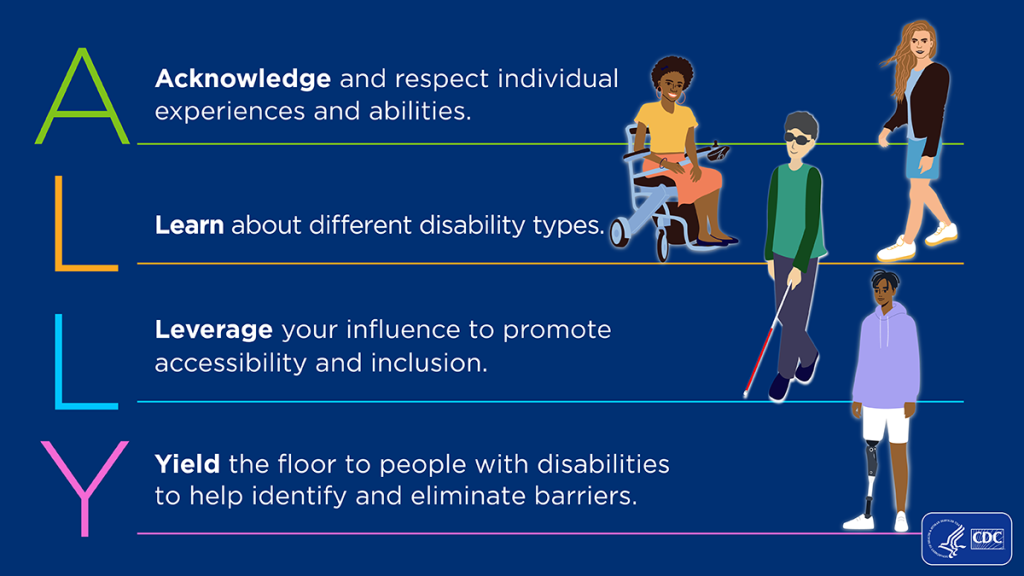
A disability ally is someone who actively supports the rights of disabled people without being disabled themselves. Being a good ally takes more than verbal support, so we’ve pulled together a list of 10 steps you can take to better support disabled people.
- Educate yourself on disabilities. Take initiative and start learning about different disabilities, challenges that disabled people may face, and adjustments that could help them.
- Actively listen! The disabled community has a saying: nothing about us without us. Make it a priority to listen and discuss the needs and concerns of disabled people in your life.
- Do not assume. Take what you’ve learned in this article about hidden or dynamic disabilities, and don’t assume someone is or isn’t disabled by how they look. Don’t assume they’re exaggerating, or faking, just because their symptoms fluctuate – and avoid assumptions about a person’s capabilities based on their disability.
- Empathise and be respectful. Language is powerful, so make sure to avoid using stigmatising or exclusionary language. You can ask questions to better understand without being invasive, and you can encourage someone while trusting and respecting their boundaries.
- Use your privilege to advocate. 9 out of 10 disabled people have experienced negative attitudes at work.
Creating a more inclusive workplace
Designing workplaces with inclusivity in mind benefits everyone, not just disabled people. With one-third of our lives spent at work, it’s crucial to create work environments that allow for psychological safety, inclusivity, and positive mental health. To continue our list, here are some best practices for employers when building more inclusive workplaces:
- Develop your knowledge in workplace accessibility. Safe In Our World has created a workplace accessibility toolkit, providing guidance and information from hiring and onboarding practices, to ongoing communication and social accessibility.
- Give your leadership the right tools. Provide line managers with disability inclusion training, as well as the tools and knowledge to support to support employees with reasonable workplace adjustments. Invest time into upskilling communication skills in management to build trust and psychological safety.
- Listen to disabled employees and colleagues. Actively listening to disabled employees will help you gain a better understanding of their lived experiences, needs, and concerns. It’ll help you understand accessibility barriers, improving workplace culture and ways of working.
- Design inclusive physical workplaces. Prioritising workplace design doesn’t just mean providing ergonomic chairs and opening windows regularly. Consider accommodations for physical and developmental disabilities alike: from step-free access and accessible meeting rooms, tactile signage and adjustable desks, to quiet rooms and natural light.
- Amplify disabled voices! Beyond policies and accommodations, disability inclusion is about ensuring employees with disabilities are represented in projects and leadership positions. Consider establishing culture groups for disability advocacy, and supporting growth through mentoring and development programmes.
Become a Level Up partner
If you’re looking for more support with workplace inclusivity, become a Level Up partner. Our free mental health initiative provides you with even more resources, webinars, and toolkits to help your leaders and your teams become more confident in creating accessible work environments that support their mental health.
References
- Unseen Aware
- World Health Organisation: Disability
- Pride, Power, and Accessibility: Exploring the Intersectionality of LGBTQIA+ and Disability Communities
- Viewing Disability Through Intersectionality
- Infographic: Adults with Disabilities: Ethnicity and Race
- Racial/Ethnic Disparities in Disability by Health Condition
- SCOPE – Disability facts and figures
