The hard truth about absence anxiety (and how to actually take time off)
Posted: 6 Feb 2025I’m about to enter my thirties, so I’m taking some time off to celebrate. Why does that make me so stressed? Well, it’s absence anxiety.
Since joining Safe In Our World in October 2024, I’ve been tackling some of the deep-rooted fears woven through my work ethic, which meant facing up to my absence anxiety and giving myself the tools to relax. Throughout my career as a community manager, content creator, and now communications and events manager, I’ve struggled with switching off and letting myself rest.
But now I work for a mental health charity, and I feel an immense sense of responsibility to do better for myself, for my partner, my friends, and my colleagues – to avoid burnout and prioritise my wellbeing.
I want to be able to give exciting projects the energy they deserve without it costing me my health.
And sure, it’s taken me until the cusp of turning thirty to finally prioritise this fundamental human need for balance, but I got here. It is time. I’ve booked a holiday, so why do I feel so anxious? (Other than the existential dread of aging that is?)
Well, despite being pretty decent at organising my workload and getting things done, I still spend a lot of time battling “what if”s. What if this thing goes wrong and I’m not there to fix it? What if I’ve actually forgotten something really important?
And then there’s the really, really big one… What if my absence puts pressure on my much-loved colleagues?
But friends, hear me out. We do actually need and deserve to take time off! And we must learn to trust those we work with. The world is not going to fall apart just because we go off hiking in Wales for a week (or whatever you do on your birthday).
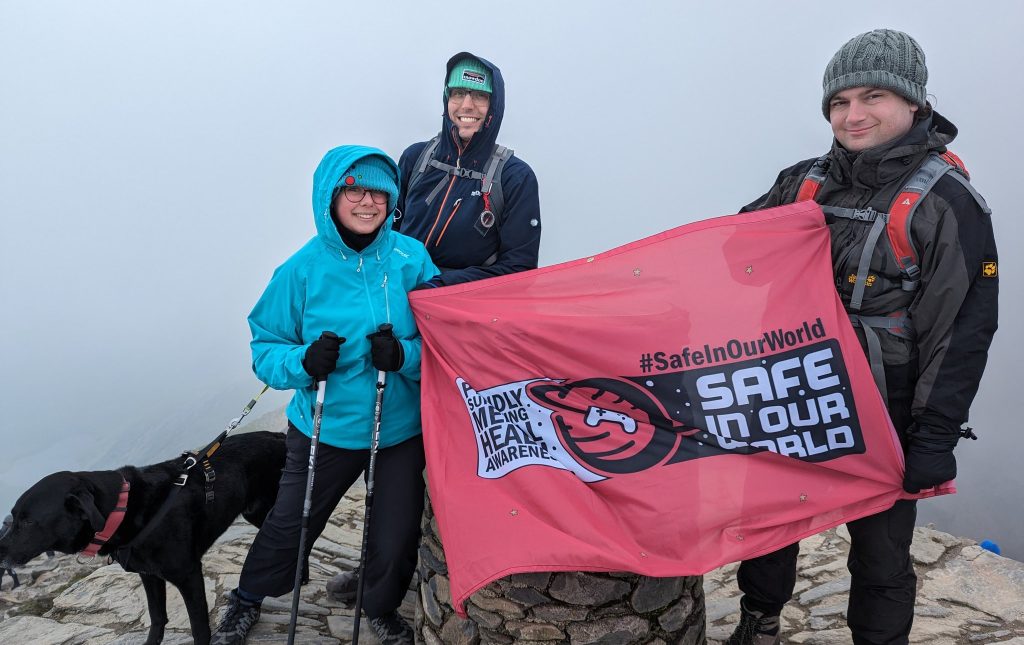
Em, Josh and Matthew at the summit of Snowdon, Wales.
💡 What is absence anxiety?
In a nutshell, absence anxiety is the overwhelming feeling of discomfort some people get when taking time away from work. It stops you from making the most of your annual leave, stopping you from properly resting and recovering. It can look like:
- Worrying about unfinished tasks
- Fear of unexpected problems occurring in your absence
- Feeling guilty about taking time off
- Worrying about the well-being of work friends
- Concerns about workload building up while you’re away
So, what can we do to manage that absence anxiety, to give us the best chance of switching off properly, while also reducing the impact our absence has on the team? Well, I’m still learning, and I realise that everyone will be a little bit different, but here’s what has worked for me (and what really hasn’t).
🙊 “Get over yourself”
Sounds harsh, kinda is. But alongside my perfectionism is a generous side portion of ego! It’s taken a while to cultivate the kind of confidence I have in myself now, and it’s a marked improvement to the alternative self-deprecation I used to struggle with.
But it has also meant that my standard of work is unreasonably high, and that leads me to not delegate to my colleagues. Why? Because I actually really like the people I work with, and I don’t want to have reasons to be annoyed at them if what they produce isn’t “as good as what I’d have done”.
It’s taking a lot to admit this. I think it’s my least favourite aspect of who I am, and I am working on it. But working on it starts with actually delegating, giving up responsibility where I need to, and being able to accept something short of perfection.
📝 Nail those handovers and checklists
The only, the ONLY, way I can get things done on time, and to the standard I strive for, is by working to a checklist. The dopamine I get out of ticking things off and watching the step-by-step progress of a project coming to life is immeasurable.
Since joining Safe In Our World, I’ve been able to help shape how we communicate internally, how we plan out initiatives, and how we keep track of our workload. My colleague, Jess, introduced me to FigJam (absolute game-changer), and I started using Monday too.
Not a sponsor, but these platforms have enhanced how I manage my time and all the ideas swirling around in my head. FigJam has allowed us to visually plan out and ideate in real-time, building out timelines, mood boards and more – while Monday is now my best friend for workload management.
Having these collaborative spaces has taken so much pressure out of creating a handover, because the whole team is familiar with the platforms, and everyone can see each other’s checklists. We track progress on a task, add comments, upload assets, link off to resources, etc.
Ongoing upkeep of these spaces means that when the time comes to delegate a task to a colleague, they can see exactly what you’ve got done so far, what needs doing, and access everything they could need to do it themselves.
⏳ Prioritise your time effectively
So, I can delegate easily enough. That still doesn’t mean I want to – like I said before, I have unreasonably high standards and that can cause friction. And nobody likes that.
But we’re only human, and working overtime just so that you can feel better about taking time off kinda defeats the purpose of that time off, no? It’s just cancelling itself out, because you’re trying to fit two weeks worth of work into one week.
I know what pieces of work I will do best, so they’re my priority. If I have a video to edit, or content to design, I know those tasks should be prioritised because those either require my skill set, or would be the kinds of tasks I’d get most upset about if something wasn’t quite right.
But I also know that the rest of the Safe In Our World team produced good graphics before I joined; they’re all exceptional writers and skilled community managers. So, whatever I leave in my handover will be safe in their capable hands.
🎓 Skill share, dammit
Absence anxiety is usually a sign that you really love your job. I know that’s the case for me! At Safe In Our World, I feel like I’ve found my purpose. Naturally, I want to ensure I give it my all. I can’t do that if I’m burned out.
And while I know there will always be tasks that best fit within my skill set, and likewise tasks that my colleagues are better at than I could ever be, in a small team like ours, there’s bound to be some overlap. And that’s where skill-sharing becomes crucial!
Skill-sharing helps me support my colleagues when they need to delegate tasks, and likewise helps them if I need their support. I’ll admit, I used to worry about feeling replaceable or unnecessary if I “gave away the skills” I was hired for. But having now engaged in skill sharing, I can confidently say that’s never happened – and it’s only ever helped strengthen the whole team.
🔕 Out Of Office on, peace out!
All this to say, I’m signing off for a short while, to celebrate my birthday and to give myself some time to rest and recover from a very exciting start to 2025.

Please do grab our charity bundle, the whole team worked so hard to pull it together. And it’s shown me just how much trust I can actually put in my colleagues. This has been the first project where I’ve consciously tried to delegate and recognise my limits, and consciously chosen to put faith in my colleagues.
If you too struggle with absence anxiety, please know you are not alone. Trust your colleagues. Allow yourself to be supported, and give yourself space to rest! You deserve it, and you can do it without feeling guilty.