
5 ways leaders benefit from polishing up their communication skills
Posted: 8 Apr 2025Are you prioritising your communication skills as a leader? Let’s unpack the benefits of improved communication in management.
Managing others is a big responsibility. Some feel ready for this change in their career, while others find themselves pushed into it without much guidance. Perhaps it’s a career step you’re looking to take in the near future, or something you just want to be prepared for when it happens.
Whatever your situation, it’s always beneficial to polish up your communication skills – but how, when there’s so much to do? If you fall into the category of “so much to do, so little time”, you might find yourself putting off training and personal development. But prioritising your communication skills will save you time across the board.
Improving your communication skills to build trust
All workplace relationships are (or should be) built on trust. But how do you build trust in the first place? And how do you rebuild it if you’ve fallen into bad habits?
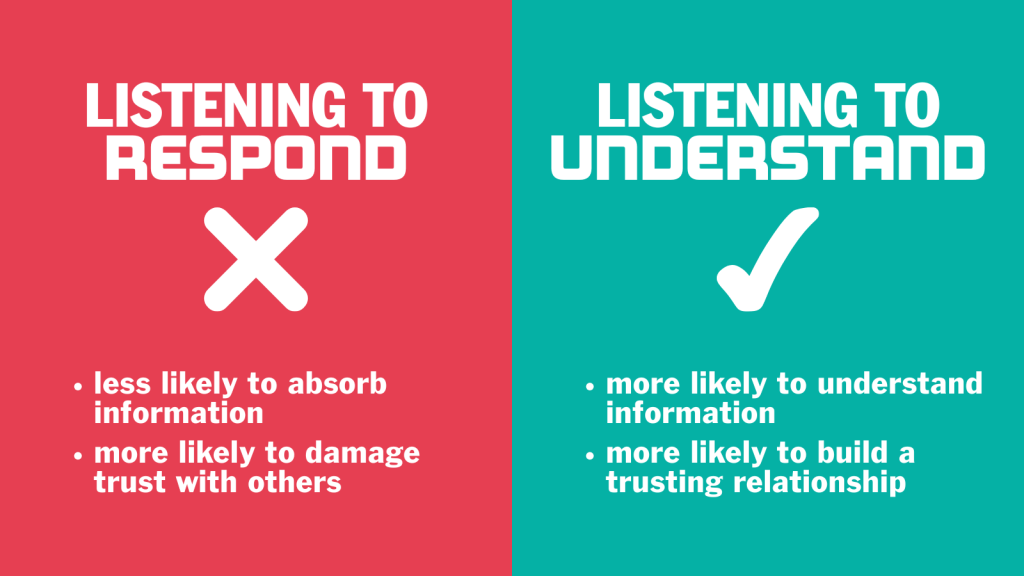
Start by assessing your listening skills. Do you pay full attention to what you’re being told, or do you get distracted by your emails or notifications? Are you in the moment with your report, or are you already thinking forwards to the next point you want to raise with them?
Active listening goes beyond just hearing the other person. 86% of workers report they do not feel heard. When you’re having a conversation with your report (or really anyone at work) you’ve got to be present and attentive. Ask them questions to ensure you’ve understood, acknowledge their points, respond thoughtfully and empathetically – and don’t interrupt!
To learn more about building trust in the workplace, read our piece on psychological safety.
Improved communication increases productivity
This is where you’re going to save the most time! By improving your listening skills, you’re already taking the first step to increased productivity. You’ll be able to better identify if someone in your team is struggling or needs additional support.
Being attuned to the different working styles and communication needs of your team, you’ll be less likely to miss important information that might impact how you spend your day – avoiding any wasted time or effort!
And when you clearly communicate your expectations or needs for a piece of work to your report, there’s less likelihood of mistakes being made. Your reports value their time and energy as much as you do. Not only can it damage trust, but also your team’s confidence when work is having to be redone as a result of expectations being poorly communicated.
Communication is key to conflict resolution
Still, even with the best intentions, mistakes happen and frustration sets in. Communication is a key skill in conflict resolution, playing a vital role in understanding the various perspectives of those involved, making space for needs to be communicated, and leading both parties back towards common ground.
Conflict brings with it a heightened level of emotion, which makes communication more difficult for many individuals! As a facilitator in the resolution of conflict, it’s important to have the tools to communicate without adding to that heightened emotion.
Improved communication levels the playing field
We’ve already touched on how communication is as much about listening as it is talking (if not more so)! One of the most valuable things you can do as a leader is create space for underrepresented voices.
47% say that underrepresented voices are undervalued by employers. Feeling undervalued in the workplace doesn’t encourage a person to stick around. By focusing your communication skills on facilitating and amplifying underrepresented voices in your workplace, not only are you helping to increase retention of employees, you’re actively helping to improve workplace culture.
Organisations are much more likely to perform well financially when their employees feel heard, and have a sense of belonging. By holding space for underrepresented voices, you reinforce that sense of belonging – and you communicate to them that their contributions are valued!
Set the example for others
We resonate with the phrase “be the change you want to see” – but as a leader, your positive impact goes further, hits harder, does more! When people look to you for guidance and they see you prioritising communication skills, they prioritise their own.
When people see you amplifying underrepresented voices, they listen. When people see your success in navigating and resolving conflict at work, they want a piece of it. When you showcase the benefits of building trusting relationships with your direct reports, they want to achieve the same.
And when your team achieves more, collaborates effectively, and feels happier at work, you’re proving to every onlooker why they should be seeking to achieve the same. So for you we’ve coined a new phrase, “be the trend-setter you want others to see”.
The next step is free
We’ve just launched the newest installment in self-advocacy speaking training, from Lisa Marie Hall – creator of the Human Handbook.
How To Human is carefully designed to help you build a long-lasting foundation for healthy and effective communication, and it’s entirely free.
In our introductory session, you will learn and explore:
- The connection between good values and meaningful actions
- The four steps of self-advocacy speaking
- How to create your own Human Handbook and implement in your team
- How to foster accessible, inclusive communication and vocabulary
You can now watch the recording of the training sessions on YouTube. Please consider sharing with your own networks to take your first step towards becoming a trend-setter!
Watch the full playlist on YouTube

