Doomscrolling: How to protect your mental health online
Posted: 21 May 2025To scroll, or not to scroll, that is the dilemma – and it’s impacting our mental health. So how do we manage doomscrolling to protect ourselves online?
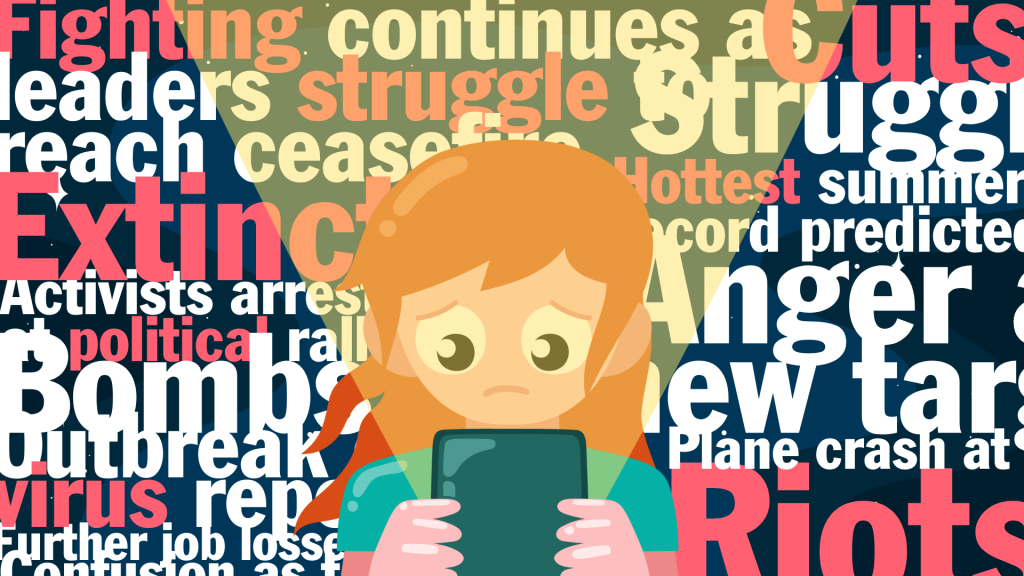
If you’ve got a phone in your pocket, chances are you’ve caught yourself doomscrolling from time to time. But for many, this habit of scrolling through distressing content online has spiralled out of control – and left many feeling hopeless and anxious.
We’re at a point in the conversation where most of us know by now that doomscrolling is bad. That’s not a groundbreaking revelation. But we know it’s not good for us, so why do we do it? What are we getting from it (other than an overwhelming sense of impending doom)?
The science behind doomscrolling
There’s evidence to suggest doomscrolling is tied to our basic instinct to survive. Since humans lived in caves, our species has survived by assessing risk. Whether that’s the risk of being taken out by a saber-tooth tiger, or not walking in front of a bus, our brains are hard-wired to process information, identify dangers, and find ways to avoid or manage those dangers.
The act of doomscrolling triggers responses in the limbic system of our brain (the place where we process emotions, regulate behaviours and form memories). It’s the part of our brain that promotes self-preservation and drives our flight-or-fight response to danger. It’s that same part that drives our urge to keep scrolling through distressing content. By doing so, we’re assessing risk, we’re gathering data – we’re trying to survive!
But doomscrolling inevitably leads to a doom spiral. The more we do it, the more we feel we need to do it – and deeper down the rabbit hole we fall.
Impact of doomscrolling on our health
This repetitive behaviour can provoke emotions like fear, despair, anger and anxiety. And if that wasn’t enough of a motivator to cut back, it can lead to physical symptoms too – such as nausea, headaches, muscle tension and pain, and even elevated blood pressure.
This is because the limbic system is linked to our sympathetic nervous system, which cues the release of cortisol and stimulates the production of adrenaline to help us in those fight-flight situations. Those physical symptoms are usually manageable short-term, indeed they can help to keep us alive when we need to be on high alert. However, repeated stimulation of our nervous system and an overload of cortisol can lead to long-term, negative health implications both physical and mental (c-PTSD).
Consume, consume, consume
We’re all at a disadvantage in our quest to reduce time spent doomscrolling, because so many factors are working to keep us locked in. From social media algorithms carefully curated to hold your attention, to sensationalised news articles engineered to draw you in, everything online is constantly fighting for your attention.
And it works. We’re manipulated, rewarded, tempted and guilted into engaging and absorbing all sorts of media, be it enjoyable or terrifying!
Many of us are still learning to navigate a post-Covid world of doomscrolling content. Balance is hard to get right, and cold turkey feels impossible to achieve. Especially since so much of the content we’re seeing seeks to elicit a guilt response.
“Please don’t scroll away…”
Something you’ll often hear at the start of a TikTok video are the words “please don’t scroll”, as content creators beg for your attention. This is especially true for content related to humanitarian crises, calls for aid, for awareness, for support.
It makes sense, right? Often those videos are talking about really important topics. Many would argue there’s a need for us to be aware of what’s actually going on around the world, because if we’re not aware, how can we do anything to help? If we stay ignorant, the problems persist.
And while that’s true, there’s also the risk of being so overwhelmed by that distressing content, that we’re driven to a different kind of inaction. Instead of ignorance, we feel hopeless and powerless against the forces we’re contending with. So how do we strike a balance?

Redirecting your efforts to limit doomscrolling
First off, don’t expect to switch off the urge straight away. You’re battling your own instincts, and that’s futile. Instead of trying to stop the behaviour, we need to redirect it. How you achieve that depends on what’s motivating you to doomscroll in the first place.
Are you feeling overwhelmed by a crisis? In situations where you feel distressed about a crisis, you might feel compelled to keep watching distressing content. Being informed can help you take action. It could be you contact your local representative by letter, or sign a petition, or perhaps you get involved with fundraising efforts. Instead of getting sucked down the doom spiral of distressing content, identify what you want to achieve – and make a to do list!
Is there a systemic issue you want to help tackle? This can be tricky, because there’s a great deal of educational content out there for so many systemic issues, not to mention lived experiences that help people empathise and gain a deeper understanding of an issue they themselves might not experience. This is where you need to be vigilant and introspective. Ask yourself, are there safer ways you can be learning more about this issue? Seek out podcasts, books, video essays – and limit your exposure to sensational, triggering content where needed.
Do you have a genuine interest to learn? Distressing content can only teach you so much, and sometimes that content focuses more on eliciting a specific emotional reaction over teaching you something valuable. Again, ask if there’s a safer way to learn. It could be that you take a course, join a group or club, or watch a documentary. What won’t help is being sucked into a TikTok live debate.
Disrupting the feed
It might be that you just need to switch off! You cannot fight every battle, and you’ll struggle to fight any battle with a drained battery. If you know you’re susceptible to doomscrolling, you can put contingencies in place to help avoid getting sucked in.
Often we need a distraction to switch out of ‘doomscroll mode’. Setting boundaries for yourself, and talking about boundaries with those around you, can help in creating those distractions when you need them.
If your friend notices you’ve been looking at your phone for a while, in those instances, you could encourage them to check in with you to help pull your focus away from the screen. You can support others in this way too, asking if that’s what they want to be doing right now, or if there’s something else you could do together.
Particularly in the aftermath of a collective traumatic experience, like the pandemic, this is a great way of showing up for each other and being supportive.

Other practical suggestions on setting boundaries:
- Set a timer when discussing distressing topics, scheduling time for self care when that time is up.
- Create time and space to talk about important and heavy topics, and identify times and spaces where those talks are not appropriate (e.g. not right before getting up or going to bed).
- Enable sleep-mode and manage your social media exposure on your smartphone (limit time on a particular app or disable notifications during a certain time of day).
- Switch off unwelcome news article notifications on your phone.
- If you’re unsure what someone means when discussing a topic or outlining a boundary, ask them to explain it or direct you to the best place to learn – minimising miscommunications in the future!
