From Memories to Games: An interview about Valley of Shadow
Posted: 30 Oct 2024We chatted to indie developers Synersteel Studio about their upcoming release Valley of Shadow, and how they incorporated true stories and memories into this narrative puzzle game.
Valley of Shadow tackles grief and difficult conversations head on, taking inspiration from games such as What Remains of Edith Finch and Gone Home, whilst using lived experiences to create an authentic narrative. The game uses real video footage and photos to take players on a personal and profound journey.
In Valley of Shadow, we see real-life photos and videos from your (the developers) childhood. How did you feel when making that decision to be more vulnerable with your audience?
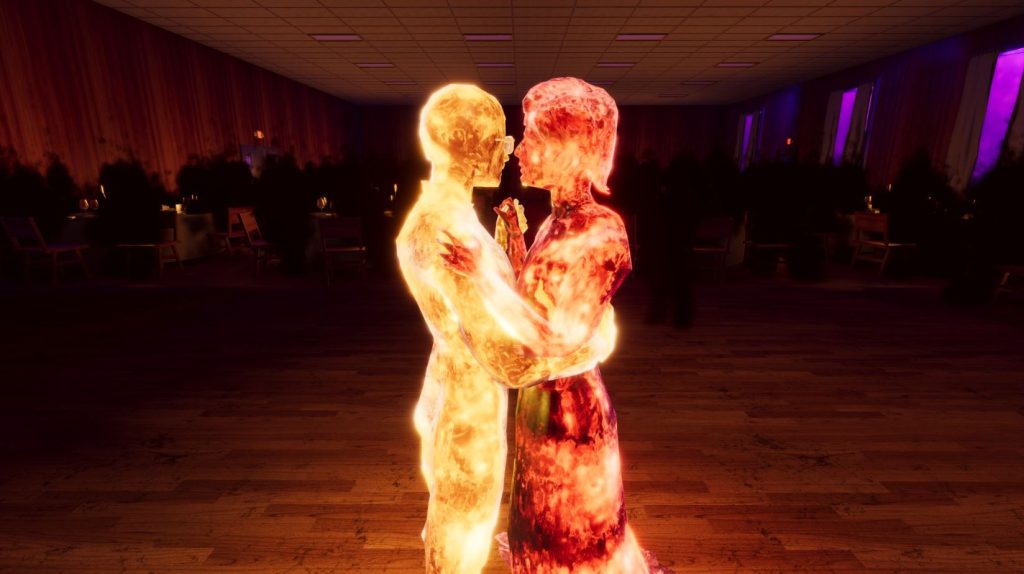
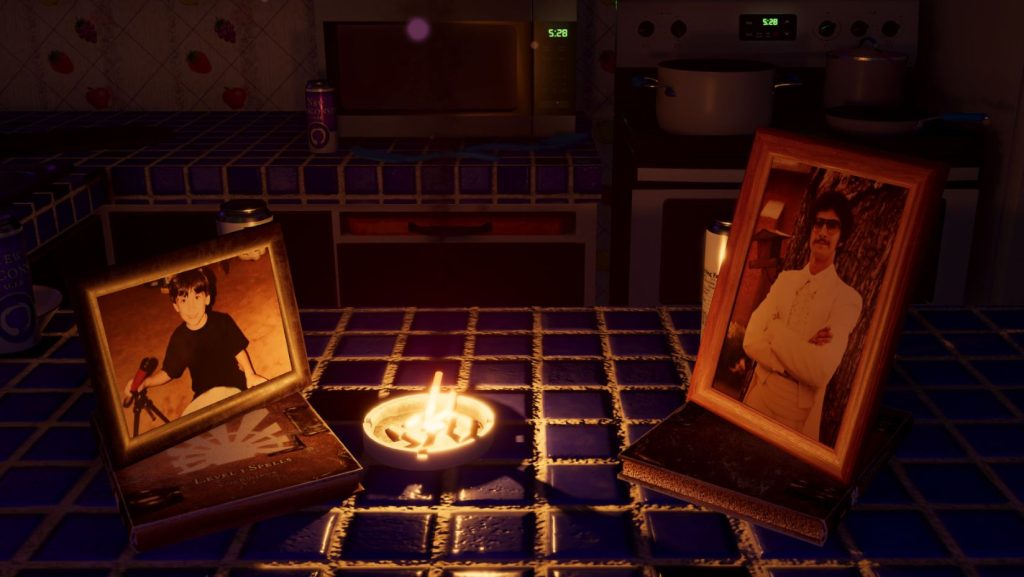
The inclusion of real photos and videos felt natural to do, especially with all of the material all around me at the time of narrative development. We began by putting a few photos into the early game experience, and adding the mechanics of picking up / inspecting them as in-game objects. That felt really good, game-feel-wise, and so I added some basic voiceover to accompany that. When it was mixed-in with the ambient music it created this beautiful feeling that we just kept following. So we added more photos, and eventually VHS videos on televisions. The story kept building out of that, and it kept feeling “right,” so we kept following it. The vulnerability came naturally, and when we started to showcase the early game at conventions like AwesomeCon in D.C., players very quickly loved it and related to it by imagining their own family in those photos and videos. It felt great, game-wise, and sad and melancholy, emotionally.
The dialogue within the game mimics a therapy-like setting; was this inspired by actual conversations had about the traumas and experiences happening in-game?
The call-and-response narrative that the player experiences in Valley of Shadow is my rendition of my own year in deep Cognitive Behavioral Therapy. It is not a 1-for-1 rendition of my therapy sessions, but it draws heavily from actual emotional beats and snippets of phrases and conversations that I did have with my own therapist. It is also not perfectly chronological compared to my own experience, as Real therapy can be scattered especially for those of us with PTSD; events unfold differently from our memory than they do in real-life, so the narrative thread in Valley of Shadow follows a logical chronology (Birth-childhood-adulthood, etc.) whereas my Real sessions were more jumpy. But many of the things that Emma says to me/the player were actual things that my therapist said to me during my sessions, and vice-versa.
Were there any drawbacks to putting these more vulnerable pieces of yourselves within this game?
The main drawback of putting so much of my personal experience in Valley of Shadow is the constant question “Am I doing this person justice by explaining it this way?” I did not want to make my father or my mother out to be worse than they actually were, but I did try throughout the entire production process to treat them fairly and well, and to remind myself all the time that they are just people too, carrying their own burdens. That was not how it felt to me pre-therapy, but during and post-therapy my view of everything shifted so drastically and clearly that I wanted to be sure I exposed my experiences as fairly as possible, while still touching on how it felt to me throughout life. When we watch players experiencing the Valley of Shadow in Beta testing, we hear them making comments about our family, in particular our parents, that can be disparaging given what is happening in-game in that moment, and those comments are perfectly reasonable to make and those opinions reasonable to hold based on how I am explaining they were acting at the time. So as a drawback, that is the biggest one. It is sometimes difficult to be both perfectly honest and perfectly fair.
How did you find it to recreate a true story in game form? Were there challenges in wanting to keep these experiences preserved and authentic, whilst game-ifying them?
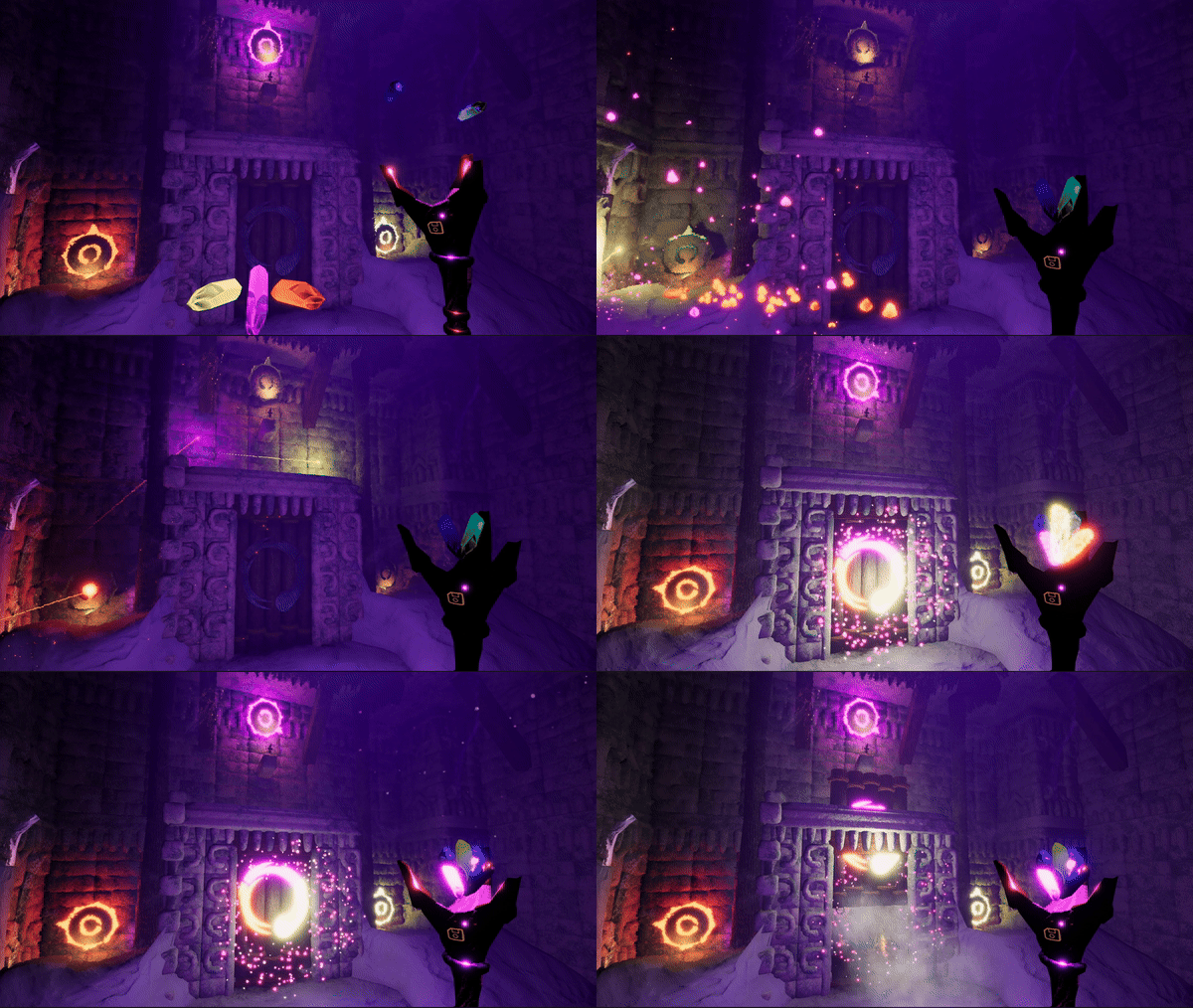
Surprisingly there are less challenges in game-ifying the therapy experience than we realized at first. The breadth of video game development and philosophy is now so vast and broad that the mechanics available to us, as well as the genres, allowed us to simply ‘create.’ The inertia of our development led naturally to a horror/puzzle/walking simulator framework thanks to the thousands of games that have been developed over the last 30+ years, and the permission to be bold and creative in this realm was given to us by our many inspirations.
What Remains of Edith Finch, Gone Home, To the Moon, The Talos Principle, The Witness, and so many many more recent eclectic game releases and successes gave us the knowledge necessary to continue carving our own path in the game space when combining the mental health and true story aspects of Valley of Shadow with the broadening framework of gaming.
The rooms and environments felt very real and personal whilst mixed with dream-like fantasy aesthetic in places. What was your inspiration behind this?
Our inspiration for the locales in Valley of Shadow are manifold. Each of the Temples in Valley of Shadow are inspired by pieces of other games that we played as children, and that I had in my imagination for years as an adult. Part of my healing process in therapy was accepting my childhood for what it was and allowing those pieces of me to belong inside of me without the incredible tension that their memory made me feel as an adult. So we wanted to give those experiences narrative weight and honor those moments of all of our lives as much as we could.

The Home environment in Valley of Shadow is a direct 1:1 remodeling of our childhood home, inspired deeply by my constant pining for that place as an adult. I both loved and hated that house, and after the death in our family that prompted my downward spiral as an adult (which ultimately led to my reaching out for therapy), I could not stop thinking about that place. Part of our early development process for Valley of Shadow was finding a reason to have that Home in the game. And the rest of the game grew around that.
What would you like to see from more developers when it comes to telling personal stories?
We would like to see more funding for indie developers. One of the hardest parts of developing a personal story is to remain calm in the face of that vulnerability. It requires as much relaxation and focus as possible. And there is nothing more stressful, more creatively destructive, than the stress of personal finance. Indie developers like us need to self-fund, and the stress of that experience can lend itself to shortcuts, pitfalls, and at times even downright cancellation of story development in pursuit of funding, career shifting, or compromising the creative underpinning of the story.
Working a full-time job that is potentially outside of game development, and then coming home to work another full-time job developing a deeply personal game project, is stressful enough for many developers to never even consider something so difficult-to-market. The story is stressful enough. We need more funding as a collective.