How can video games affect our body image?
Posted: 10 Jan 2024We’re discussing how pop culture and media influences our self-image, with a focus on video games.
We must continue to examine the impact that popular media and culture has on society, as digital technologies advance. This ongoing investigation into the effects these factors have on our collective mental health helps us safeguard future generations, challenging stereotypes and changing perspectives.
Many voices have contributed to the discussion around the negative effect that pop culture has on our self-worth. They dive into the unrealistic or narrow expectations of how we should look, dress, and speak. Conversely, we’ve seen the power of authentic and diverse representation in instilling feelings of belonging, community, and acceptance. So, how do video games fit into this?
Video games are interactive forms of entertainment which can feel more immersive. We can see ourselves in the stories we love and in the characters we embody. So, we asked our community how the games they have played have influenced or changed their own body image; to further understand how this phenomenon impacts our mental health.
Representation of Diverse Bodies in Gaming
A recurring theme from the answers we received focused on the representation of body shapes and sizes in games. Tine Schenck shared her thoughts on the lack of diversity in body types across video games, as well as stereotypes around certain character roles.
“I don’t have an hourglass figure, I have some wrinkles, and no one would base a leather bikini-clad character on my body. They might consider me for a robed wise woman, sure. But for all intents and purposes, my body would not be considered ideal in a game made by men.”
Tine goes on to discuss how this has impacted not only the games she plays, but how she presents herself in real life. “The has led me to just not play these games, and largely missing out on some excellent games. Coupled with the fact these female character also fall into the stereotypes of being 1) fatally attractive or 2) a healer, sage, or wise woman, so I generally don’t see myself and my body or mind in any of these characters. To be frank, they are part of the reason I don’t ever wear a bikini!”
Reinforcing fatphobic stereotypes
Tierra E also shared thoughts on body types represented in games, “Being that I’m a Black, plus-sized, cosplayer, I often get so thrilled to see a Black femme in a game, but kind of saddened when she is bone thin. As someone with natural curves all over, it can get pretty depressing.”
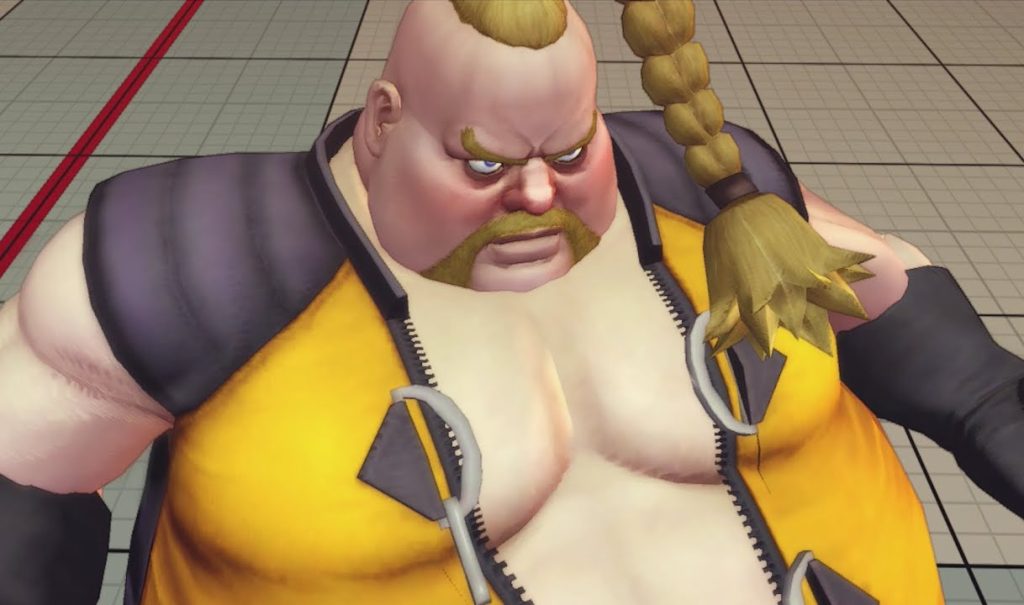
Another contributor who wishes to remain anonymous shared these thoughts: “Games tend to largely feature conventionally attractive women, establishing this idea that people are only invested in the stories of attractive women. Games also tend to use fat characters for comedic effect. Take Bob in Tekken or Wedge in FF7 – there must be in-jokes that mention their weight – fat bodies are something to be laughed at, and if you are fat, you’d better be in on the joke or you’re not cool.”
“It may be that this is echoing real life, rather than influencing it, but it is certainly reinforcing it.”
Sexualisation of Characters in Video Games
A content analysis study from 2016 (Lynch et al) which looked at female characters in gaming over 31 years, found that despite an increased number of games featuring playable female character, they were still depicted more often in secondary roles, and were more sexualised than the main protagonist.
They also found a positive relationship between the sexualization of characters and their physical capability, raising concerns about how ‘traditionally attractive’ characters are often treated as superior.
Jane discusses this further, “I remember as a teenager struggling to find games that weren’t hyper sexualized. I’m in my 30s, for reference. One of my favourite games at the time was fighting games. Soulcalibur, for example, was a struggle. I would have to unlock outfits so I could play the characters I liked without feeling uncomfortable.”
This is not just limited to female characters of course, as Olee points out: “Games present all these visually striking body image ideals and fantasies. You’ll often spend hours with a camera following the perfectly toned buttocks of your chiseled player character while you play. The majority of male protagonist body types are either a lithe toothpick with insanely thick hair and perfect smile, or a muscular Adonis complete with a perfectly trimmed beard.”
“When you’re under constant bombardment across titles and genres of this kind of thing, it definitely can bring to light insecurities about your appearance – these beauty standards are so (on the whole) consistent, and if I don’t look like that, am I failing somehow?”
Game character sexualisation reflected in real life scenarios
Em Aspinall, a Class of 2024 Ambassador explains their own experiences during their teenage years, “Most of the students I socialized with were boys with an interest in video games – it was one of the few things I could find in common with kids my age. Puberty was a difficult time, and I was made to feel embarrassed by boys making inappropriate comments about how my body was changing – calling me “polygon tits” or “Lara Croft”.”
Em went on to say, “It didn’t take me long to start wearing bras in an attempt to change how my body was being perceived by those boys. While playing video games didn’t have a direct impact on how I saw my own body, often those same video games were causing an indirect impact, and a lot of social discomfort, that lead to me paying much more attention to my body than I would have otherwise.”

The impact of character customisation
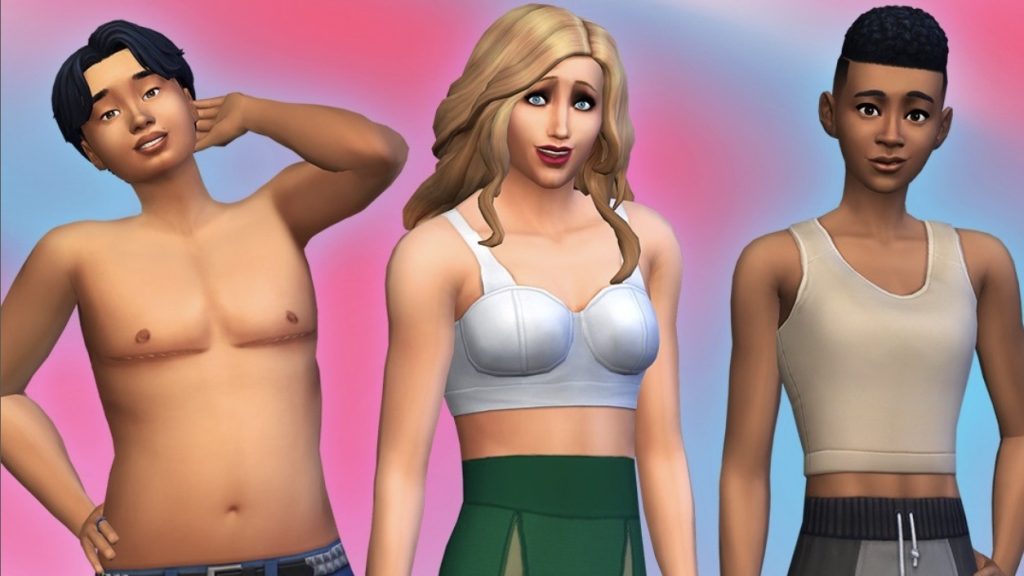
A game that has evolved over the last 20+ years in looking at more authentic representation of a variety of body shapes and sizes, has been The Sims. With the additions of custom pronouns, medical wearables and binders, trans inclusive scars, and additional creators such as Ebonix who worked with the Sims to create more skin tones, afro hair and nails, there are so many more options in creating characters than in it’s predecessors.
That’s not to say that the game is perfect – there are still issues which could be amended in future updates, such as the way that clothes fit different bodies. For example, if a masculine character wears feminine clothing, it doesn’t fit the body as you would expect, and many of the clothes warp strangely around fat characters instead of being appropriately sized. Even with size inclusivity, to be truly inclusive, it should be administered throughout multiple building blocks within the game.
Rosie Sheldon has also discussed how she uses games as a way to explore her own identity.
“As a trans woman, games helped me to virtually explore identity, presentation and self-expression through virtual realities. Having this freedom of self-expression and exploration helped me to understand how I see myself in real life and what I want for myself.”
Rosie continues to say “It made me confront the sometimes blurred line between what I want for myself and what I’m attracted to, and question what that means for my identity. These virtual realities were an immensely important way of exploring who I am and who want to be. They gave me the freedom of aesthetic presentation that otherwise, if limited to real life, would have been suppressed, shaped and molded by others’ opinions. But in these worlds, I was me and no one could tell me otherwise.”
Emma Morris agrees, highlighting that “Playing an RPG with a body that doesn’t feel relatable can be uncomfortable. More recently games have included options for non-binary characters. It definitely reduces the secondary body dysmorphia.”
Games that get you moving
Let’s discuss the connection between physical activity and games, and by extension, the harmful stereotype of gamers being fat, inactive, or having “no other hobbies”. Richard Cuartero provided insight into how character movement in game inspired them to exercise more outside.
Richard explains, “The games I played a lot growing up are the Tekken series, Marvel Vs Capcom 2, Final Fantasy VIII, Mirror’s Edge, Ratchet and Clank, Crash Bandicoot 3, Jak 2, and Monster Hunter: World.”
“Games haven’t affected my relationship with my body image per se since the characters [in those games] aren’t necessarily human. If anything I was inspired by the way my character was able to move which translated to me taking up more physical exercise outside of games which has built my current body image.”

Final Thoughts on Body Image & Games
We’ve explored positive and negative effects that games, characters and customizable options can have on players. Depending on your own experience, the games you play and the choices you make may even have a difference on this perspective – for instance, if you struggle with gender dysphoria in games, you may gravitate towards games which prioritize customization in characters.
Body image in games is a vast topic, and one we’re sure to revisit again in the future. Get in touch if you’d like to recommend games with positive representation of body types or to share your own experience. If you’re impacted by Body Dysmorphic Disorder (BDD) or any other topic discussed in this article, we’d encourage you to seek support. You can find local mental health services via our Find Help page.
