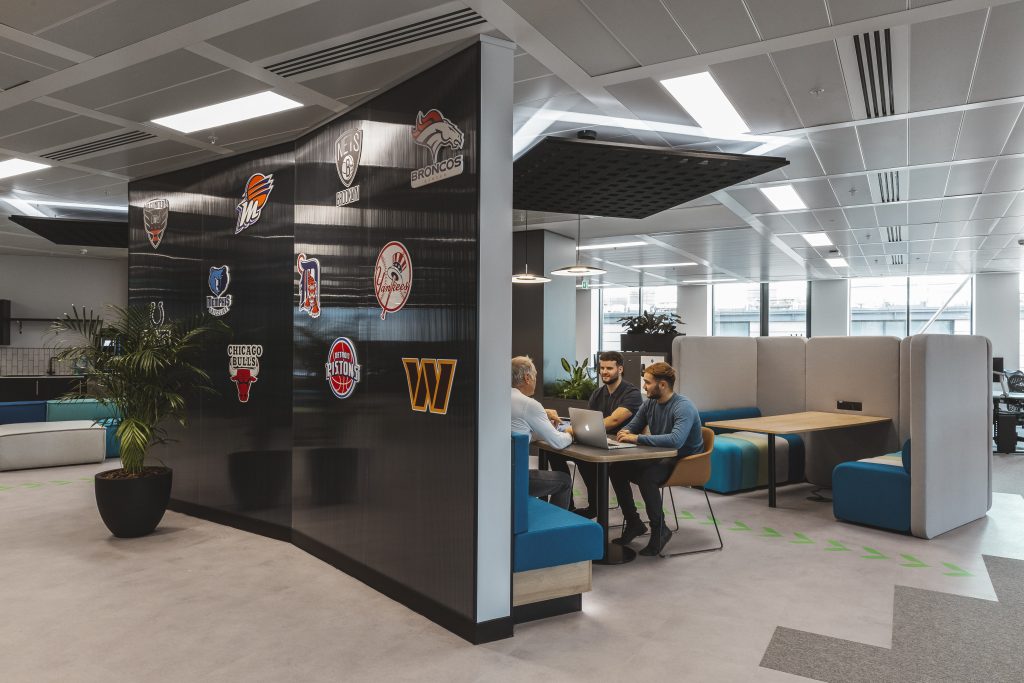
How workplace design can influence employee wellbeing and psychological safety
Posted: 21 Mar 2025When we spend ⅓ of our entire lives at work, it’s reasonable to want to work somewhere that makes us happy. But there’s more to workplace design than scattering a few house plants, and opening the windows.
Many of us can relate to the feeling of dread when going into the office: not wanting to deal with the harsh lighting, annoying sounds, inconsistent temperatures, ‘hot desking’ situations, and so much more. This is why workplace design is so important to the ‘Inclusion Safety’ pillar of psychological safety.
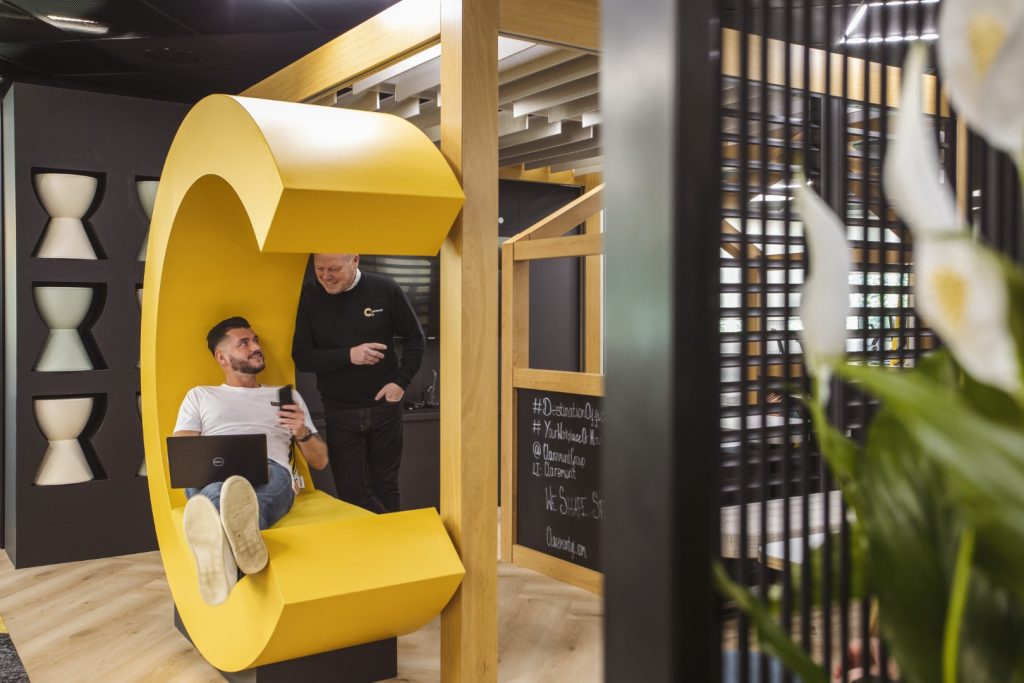
What do we mean by workplace design?
Workplace design refers to the way an office space is physically arranged, and can include factors like lighting, acoustics, furniture, positioning, how different rooms are utilised, and so much more. All of these factors contribute significantly to workplace wellbeing.
We’ve been talking to Claremont, who specialise in office interior design, to shed more light on the factors that contribute to great workplace design, and why they’re so important.
The impact of poor workplace design
When we talk of workplace design, your first thought might be of ergonomic chairs, arm rests and blue light filters. But on closer inspection, you can quickly see why workplace design has become its own profession.
While it’s important to ensure your team has the appropriate back support, it’s also vital to consider everything from ventilation to natural lighting, noise levels, accessibility and more. When workplace design isn’t prioritised, it can lead to:
- Ill health and absence from work
- Poor communication and high stress levels
- Difficulty concentrating
- Issues with sleep hygiene
- Feeling isolated or undervalued
- High staff turnover
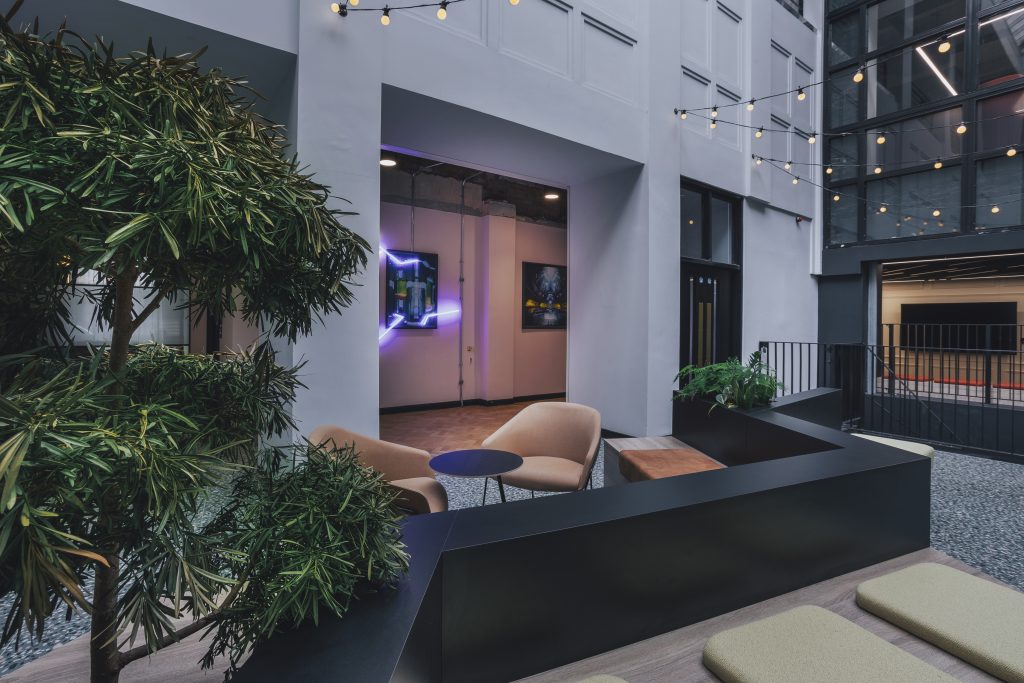
Ways to improve inclusion safety
To better understand how workplace design can be deployed to help safeguard the wellbeing of a team, Safe In Our World spoke with Claremont, who specialise in office interior design. They showed us how deep this rabbit hole can go!
To better illustrate the many ways workplace design can be used to improve productivity and happiness, we decided to look at some common recurring problems in workplaces.
Hot desking ick
Five years ago, COVID-19 changed the way we work. The pandemic saw swathes of people suddenly shifting to a WFH (work from home) situation, only coming into the office when absolutely necessary.
As many places progressed to a hybrid model, or downsized their offices to save money, we saw a spike in hot-desking – where one desk may be used by many employees at different times.
While this may have been necessary for many businesses to survive the pandemic, it does come with a host of problems for employees:
- Hygiene concerns
- Lack of privacy
- Limited personalisation
- Double booking
- Extra time spent setting up/packing down
Having a designated desk is important to me, so I find ‘hot desking’ really stressful. I like the routine and consistency of knowing where I’m going to be, knowing that my space will be clean and items where I left them, and I love being able to decorate my desk a little to make me feel more at home, like I belong.
Claremont emphasized the importance of consistency and availability of workstations throughout a workplace, including factors like having height adjustable desks, and a variety with and without screens. Ensuring spaces are kept clean, and offering additional hygiene products to maintain shared workspaces is essential.
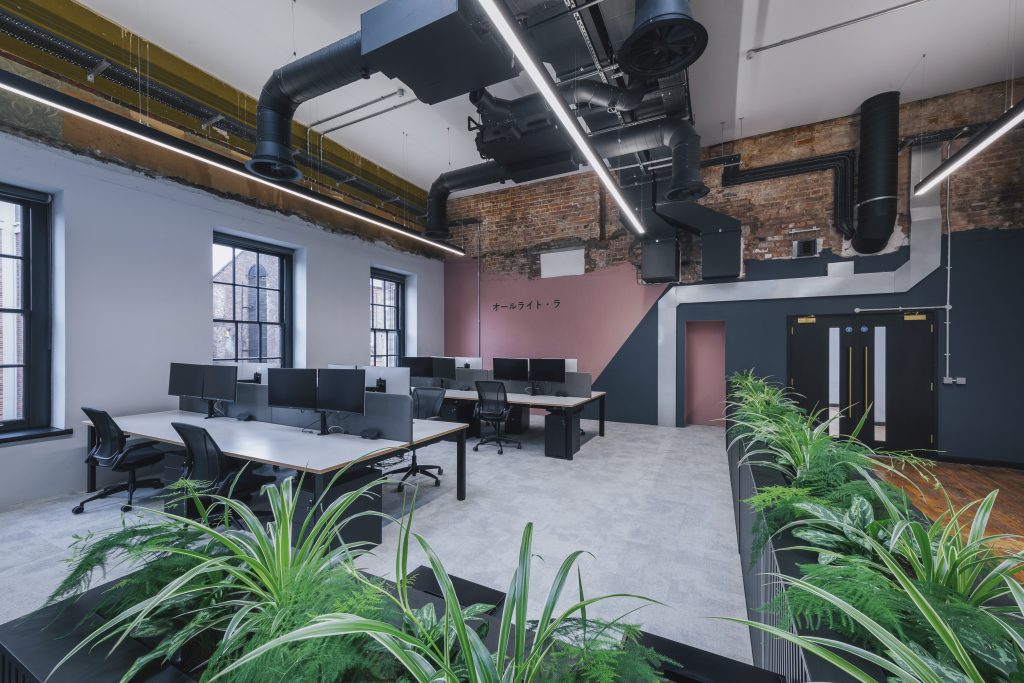
Make space for disabled devs
The UK Games Industry Census 2022 reported that 18% of games industry professionals struggled with a physical health condition, while 38% of people in games reported anxiety and/or depression.
From ramps and reliable lifts, to wide-frame doors that allow wheelchair access, physical accessibility is a vital consideration in workplace design. Here are some further examples of physical accessibility:
- Step-free access to all buildings
- Reserved accessible parking near office building
- Wheel-chair accessible restrooms/WC
- Accessible meeting rooms (or lift access)
- Adjustable desks and work surfaces
- Braille and tactile signage
- Pods that are flush to the floor with no lip
- Accessible product choices
It’s important to also consider invisible disabilities, and how an office space can be transformed to accommodate the whole team.
The road to inaccessibility is paved with good intentions
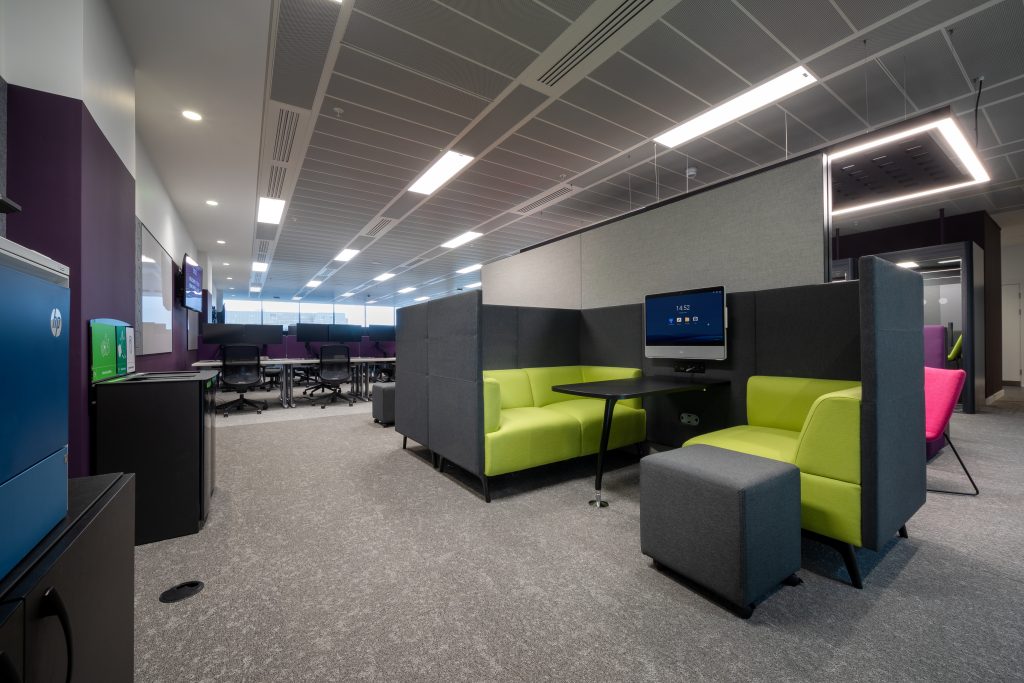
Imagine you’re designing an office, and you make everything open-plan. There’s lots of space between desks, and those desks can be accessed from all sides. Sounds great for manoeuvrability, right?
But have you considered how that open space is now going to have a serious echo problem? Nothing to dampen the sound of desk chair wheels rolling, people typing on a hundred different keyboards, impromptu meetings in the centre of the room, the dreaded phone calls that you can only hear one side of…
Deaf or Hard of Hearing employees might struggle with an environment like this, as loud spaces could interfere with a hearing loop or other hearing technology. Meanwhile, the UKIE Census 2022 also reported that 15% of games industry professionals struggle with anxiety, and 10% have conditions affecting concentration (e.g. ADHD).
Is a wide open space going to provide those people with a space to be comfortable and productive? Or are they going to feel exposed, vulnerable and have their attention diverted every time someone walks behind them?
These are the kinds of considerations that go into good workplace design. These are the questions that Claremont sought to answer, and share in their thought leadership series, “The Inclusion Equation” The Inclusion Equation | Claremont.
A diversity of workspaces
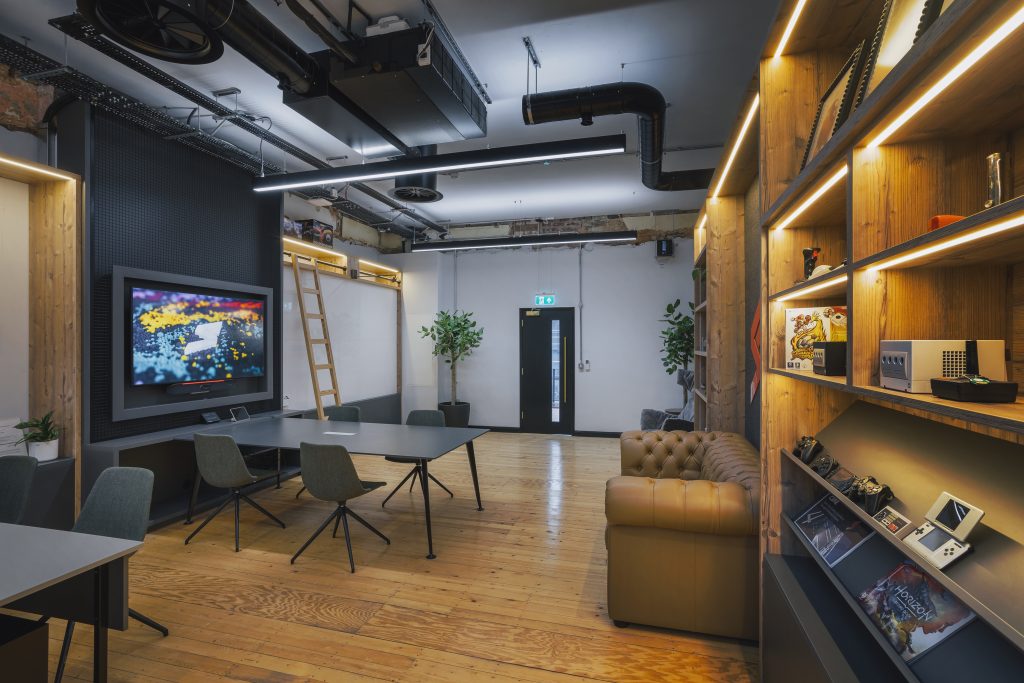
There is no one-size-fits-all solution to what makes a great workplace, but introducing options can help everyone feel more comfortable and productive!
Some workstations can be designed to promote focus, by creating quiet, snug spaces to really zone in on a task. Others could be more open, encouraging collaboration and creativity.
Nobody likes hearing half a conversation, especially when it pulls you out of your focus. Providing a designated space for taking calls can help the rest of the team focus, while taking some of the pressure off the person taking the call too!
Meeting rooms should be varied too! Some meetings may be more sensitive in nature and need absolute privacy. But that shouldn’t compromise comfort. You can create a more formal setting without resorting to corporate imagery, dampening the mood of everyone in that boardroom.
We love the example that our friends at Special Effect set, with their remote robots, designed to let team members who work from home feel more connected and included.
Earlier this year, @aeyvi.bsky.social and I met up at the @specialeffect.bsky.social offices via remote robot!
Keep an eye out on SE’s socials as we’re going to be doing a livestreamed tour of the office using this tech!
— Paige Harvey (@paigehharvey.bsky.social) December 5, 2024 at 4:01 PM
A diversity of spaces to choose from can allow people to choose a space that fits their needs at that moment. So, whether that’s taking a phone call away from your focused team-mates, having an informal catch up by the window seat, or taking a timeout in a wellbeing space after a stressful conversation – an adaptable work environment can make all the difference!

Asking for adjustments
Adjustments in the workplace can and do often involve workplace design, and can go on to benefit more than just the person who requested the change. Adjustments are there to remove or reduce a disadvantage related to a disability. This could look like:
- Providing more ergonomic furniture
- Changing the lighting in an area of the office
- Installing noise dampening panels
- Providing an adjustable desk
Adjustments could also refer to finding a new way to do something, a change to someone’s work arrangements, or providing specific equipment, services or support. To request an adjustment, you usually need to talk to your manager or employer, to explain the situation and discuss potential solutions.
You don’t necessarily need to come with a solution in mind, but it can help to have ideas on what might reduce or remove the disadvantage. For example, if you’re struggling with migraine and the panel lighting above your desk is too harsh, and you suspect it’s a trigger, you could ask for a different, softer light to be installed.
You can make the request in writing (e.g. an email or letter), or in a meeting, or there may be an existing formal process for adjustments – it entirely depends on where you work and what their process is.