
Oloolua Forest: Joanna Oluoch’s augmented reality hiking game for environmental and cultural conservation
Posted: 21 Oct 2025Did you know that the highest-grossing film of all time is actually about conservation and climate change?
Avatar has held that title since 2010; it was briefly overtaken by Avengers: Endgame in 2019 but reclaimed the crown after a 2021 re-release in China.

Just like the characters in the film, Joanna Oluoch, the creator of ArGO, an augmented reality (AR) hiking game, grew up deeply connected to nature. Thanks to her mother’s scientific career, for the first 12 years of her life, Joanna called Oloolua Forest in Kenya her home, a place she always dreamed of giving back to.
And, much like James Cameron, Avatar’s creator, Joanna believes stories and experiences move people more than facts alone.
Instead of giving people a lot of information about the dire state of the world, it’s better to bring them on an adventure where they can see for themselves and choose to take action. The choice is important since people are more likely to stick to a cause they willingly chose than something that was chosen for them.
Her philosophy has proven true. Since ArGO’s inception in 2024, the team has raised over 5.9 million Kenyan Shillings in cash and in-kind support, reaching more than 700 people through immersive outdoor gameplay and creative coloring sessions.
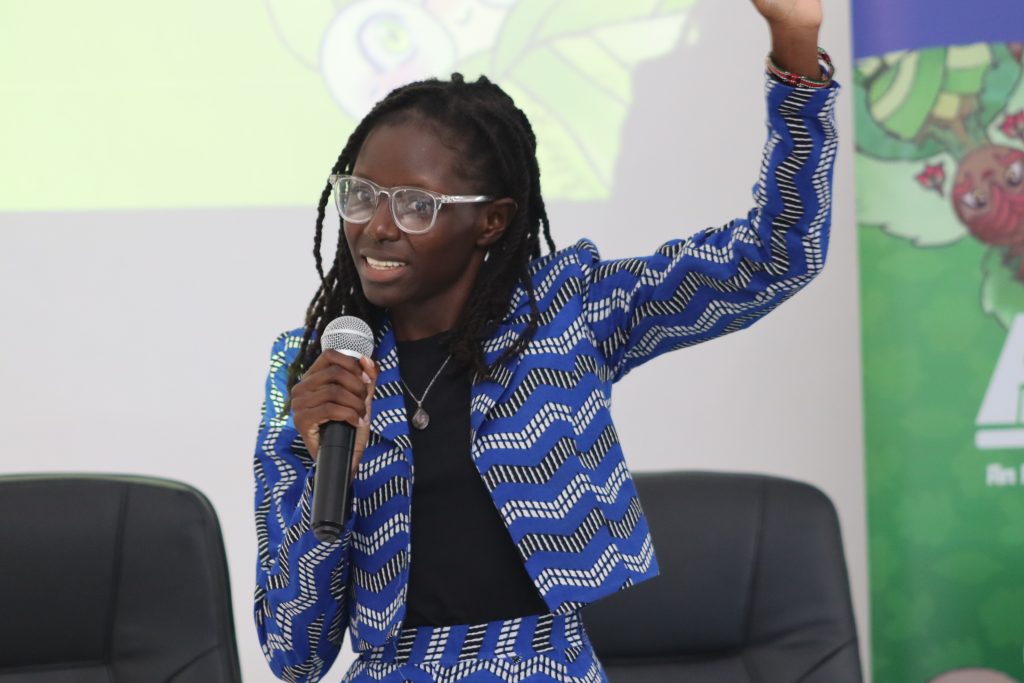
Beyond conservation, ArGO also integrates art therapy, while its hiking adventures help players reconnect with nature and clear their minds.
This vision didn’t just appear out of nowhere, it’s rooted in Joanna’s own childhood. Growing up in Oloolua Forest shaped how she saw the world, and planted the seeds of the philosophy she lives by today.
Joanna had a different kind of upbringing, she recounts, “My parents didn’t buy us Disney movies or cartoons. Instead, we watched documentaries like The Life of Plants narrated by David Attenborough and the full box set of Blue Planet.
When we eventually got DSTV, one of our favorite channels was NatGeo Wild. So from a young age, my sibling and I were immersed in stories about animals, plants, and ecosystems. Oloolua was the perfect backyard for that. We spent our days outside, discovering secrets, getting lost, and always finding our way back home before dark. I loved the forest deeply and still do.”
Sharing my love of for the forest
As she grew older, she became more aware of the damage being done to the environment, including Oloolua. “I was devastated,” she recalls. “I once promised my parents I would chain myself to the gate into the forest if people kept destroying it. I also dreamed of becoming a scientist like my mother and working at the government labs at IPR (now KIPRE). That dream shifted as I moved into engineering, then video games. Eventually, I asked myself: Can I share my love for the forest through games and AR?”
That question made her reflect on the role Oloolua had always played in her life. “When I’m overwhelmed, I take a walk. In Oloolua, I used to walk home barefoot to feel the ground under my feet. I wanted ArGO to carry that same feeling of peace, of being part of something alive and larger than yourself, and also the responsibility to care for it.”
ArGO is a mobile game that takes you outside.

The team noticed how being glued to our screens often makes us feel disconnected from the world around us. So, they designed ArGO to change that. It encourages players to step back into nature through a medium they already love and use every day.
Building on that mission, Joanna shared an observation about the unique way ArGO blends play with nature: “The video game draws kids in, but once they’re outside, they explore, hike, learn, and engage with each other. We all learned during the pandemic how important being outside is for our mental health, and ArGO brings us back outside and encourages us to look around at the world with fresh eyes.”
Finding my voice
That passion for connecting people with nature is deeply personal for Joanna. Long before developing ArGO, she wrestled with an inner conflict, a deep desire to do conservation work while facing her own personal struggles.
Joanna confided, “As a child, I felt powerless. I was quiet, awkward, and didn’t fit in. I never thought my voice mattered, so I stayed silent. Eventually, I gave up on conservation. I thought, ‘Even if I care, I don’t have the skills or voice to make a difference.’
Then I met people my age doing the impossible. I met artists challenging systems and healing trauma with their work. As I got more into the Kenyan creative and games scene, I met more people who were passionate about a good cause and fighting every day to make it a reality.
Their passion inspired me. So I made a promise to my younger self: I’d do something for Oloolua, whether or not anyone believed in me. I was raised with the proverb, ‘If you don’t know where you are going, know where you are coming from.’”
Joanna was raised by Oloolua Forest, and thanks to knowing and valuing where she comes from, the nature trail now has proper signage for the first time in over a decade. The map has been updated, and she has even worked with the scientists at KIPRE who were once her childhood heroes. These changes may seem small, but they mean the forest is easier to navigate for everyone who visits.
The philosophy behind ArGO
For Joanna, though, the deeper mission goes beyond signs and maps. ‘I remind people that they are visitors in the forest. How they treat it now affects those who come after,’ she explains.
That same philosophy shapes her work with AR and game design. ‘I didn’t want to show up with a game and just leave. I wanted to contribute something lasting, something everyone could benefit from. It isn’t just about putting a fancy AR installation in the forest, but about improving the whole experience for everyone.’
The team captured the imagination of 77 children. I recall how much I loved seeing them paint under tents surrounded by trees, an image that captured the spirit of ArGO.
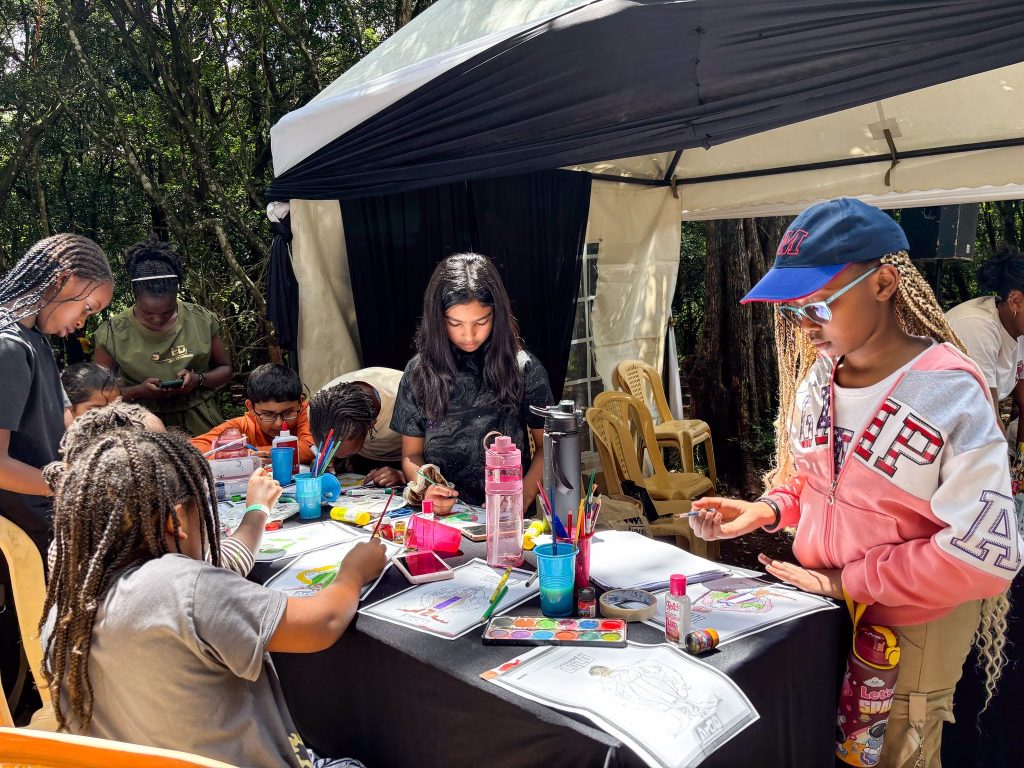
When asked why having that many children engaging in mental health practices was so important to her, Joanna shared that she sees a spirit of resistance and healing in today’s younger generations.
I love that younger generations are saying, ‘This ends with me,’ when it comes to generational trauma and the stigma around mental health. It shows we care not only about ourselves, but also about future generations. I want to carry that same spirit into environmental conservation, where it’s not just about individual benefit, but about how we, as a collective, can create change through many small, individual actions.
Play is vital, no matter your age
Joanna is equally outspoken about the need to rethink hustle culture in Kenya. ‘For me, play is vital, no matter your age. It keeps your body, mind, and spirit healthy. In Kenya, hustle culture is glorified to an unhealthy degree. People brag about working nonstop, going without sleep, but rarely address their mental well-being. There’s a huge stigma around mental illness, and it’s basically taboo to mention it, even though it’s very much part of our daily lives.’
Her own approach to mental health has heavily influenced what we experience through ArGO. ‘I believe games, art, and nature can help rebalance that. I do my best to care for my own mental health, and it tends to be in ways people don’t think of immediately, like hiking, going to art events where I can learn a new skill and make a mess, crocheting, planting, and painting. Usually this is with friends, and I try to stay connected to the activities that brought me joy growing up.’
The preservation of indigenous culture
I loved that during the launch of the game at Oloolua Forest, the ArGO team invited members of the Maasai community, an indigenous tribe who also live in the forest and are widely known for preserving their culture more than any other in Kenya. This moment reminded me of Avatar, where the Na’vi, the indigenous humanoids of Pandora, protect their culture and safeguard their forest and all its inhabitants.
Oloolua Forest itself is part of the Maasai’s ancestral land, which makes their involvement in restoration and rehabilitation efforts not only important but necessary. True conservation here requires multi-stakeholder collaboration that recognizes and works alongside indigenous knowledge and guardianship of the land.

The project has been made possible with support from Electric South, the National Film and Video Foundation (SA), the Ford Foundation, Fallohide Africa, and the French Embassy in Kenya, in collaboration with Alliance Française, through the Creation Africa 2025 Program. Their backing reflects the importance of telling African stories through innovative, creative, and sustainable mediums.
Experience the forest
If you’d like to experience this unique blend of play, art, and conservation for yourself, ArGO is available on the Play Store here. You’ll need to be at Oloolua Forest or one of its exhibitions to play it fully. So far, the team has held over 10 exhibitions and showcases, mostly in Kenya, but also in South Africa, Mozambique, and Tanzania. A 2D version of the game that can be played anywhere is currently in the works.
For updates, follow ArGO on social media: Twitter/X, Instagram, LinkedIn, or visit their website, because sometimes, the best reset button is found outdoors.
Wendi Ndaki Mutisya
Wendi is a Safe In Our World Ambassador from the class of 2025. She runs WAI Network in Kenya, hosts the animated podcast Creative Tech Convos, and is a fierce advocate for mental health and inclusion.