
Grief is something almost everyone has to deal with in their life, and the best way to cope with it varies from person to person and experience to experience. Games can be a window into ways to cope with complex emotions like grief and can help people work through their own situation (or help them better understand someone else’s).
Playing The House of Hikmah made me feel seen in my own experiences of grief and further helped me understand how different those experiences can be for others. Showing how unhealthy coping mechanisms for grief can affect both you and others, and discussing better ways to work through it, made this game emotionally educational and a great place to start understanding how to process grief.

Representing grief in a video game
One thing The House of Hikmah conveys really well through each character is that everyone grieves and reacts to loss differently. Maya, the player character, uses jobs and distractions to avoid dealing with her grief and regret.
Showing her as lost, confused, angry, frustrated, and sad at different points throughout the game made her feel like such an accurate representation of the emotional ‘whirlwind’ that comes with grief, and did a good job of not romanticising how truly messy processing grief can be.
Allowing her to make mistakes and act out without those actions being seen as childish or unnecessary created a safe space to feel these emotions without judgement.
Omar Khayyam, on the other hand, shows how guilt and regret can overtake grief alone when you don’t reach out and process your emotions. His grief being shown as much quieter than Maya’s throughout the game, most likely in an attempt to protect her, displays how repressing grief causes it to grow and ultimately present itself much worse.
While his unhealthy coping strategies are different to Maya, they both ultimately feel overwhelmed by their emotions at different points in the game due to their repression and distraction. His frustrations being directed internally as opposed to Maya’s external expressions of anger show another way grief can present itself differently, and sometimes in ways that can be harder to see.
Game mechanics and their messaging
The game’s own mechanics and puzzles, which you have to take time to work out on your own, are a way of displaying grief in a way only games can really do. Having you use Maya’s father’s key, and with varying levels of help from the scholars, it shows that support can help you through the process; however, working through your grief is something to do in your own way, at your own time.
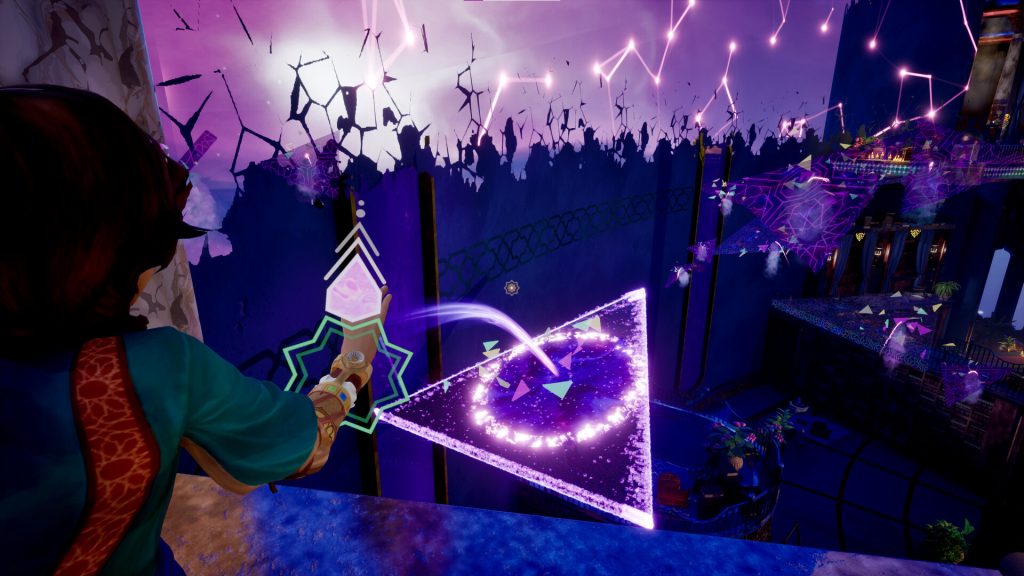
Having you play as a character constantly helping others and being so resistant to facing your own struggles and grief once again portrays the very real, and often unhealthy, coping mechanism of ignoring your own feelings and distracting yourself with no other outlet for your emotions.
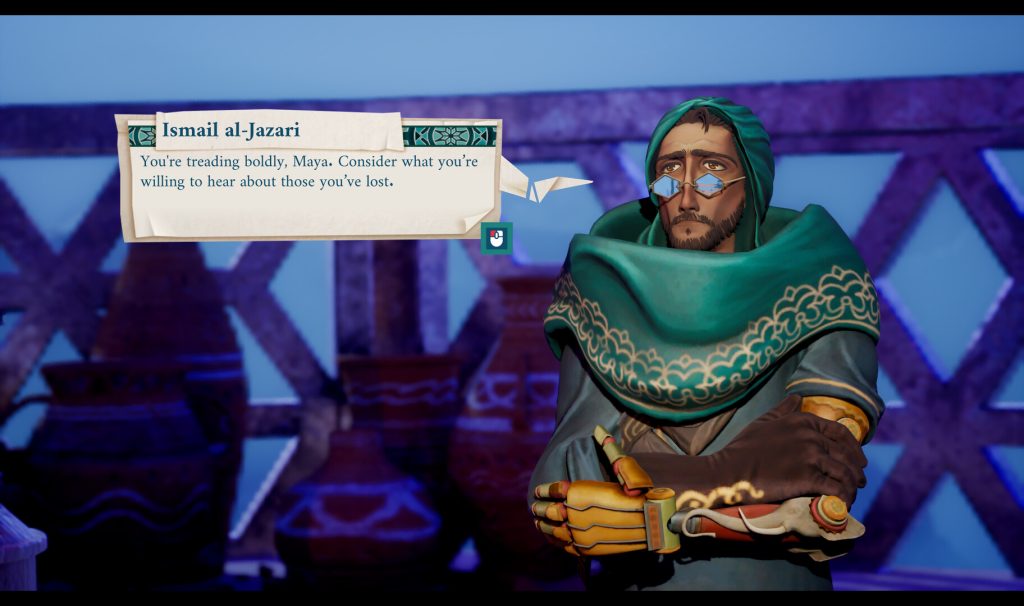
Each of the scholars reacts slightly differently as well, from isolation and depression to anger and cynicism. Having their own stories of losing those close to them adds to the depth of loss that can be felt when you have already gone through grief. Mariam al-Asturlabi mentions the loss of her own father and having no one to teach her about him as a person, only his prototypes and work. Ismail al-Jazari talks about the death of his brother, seeing parts of him in Maya and how the death of her father has compounded with his already existing grief.
A quote that was particularly powerful to me was from Ismail: “Sometimes fresh losses rattle the ground where older grief was buried.”
Visual representations of grief
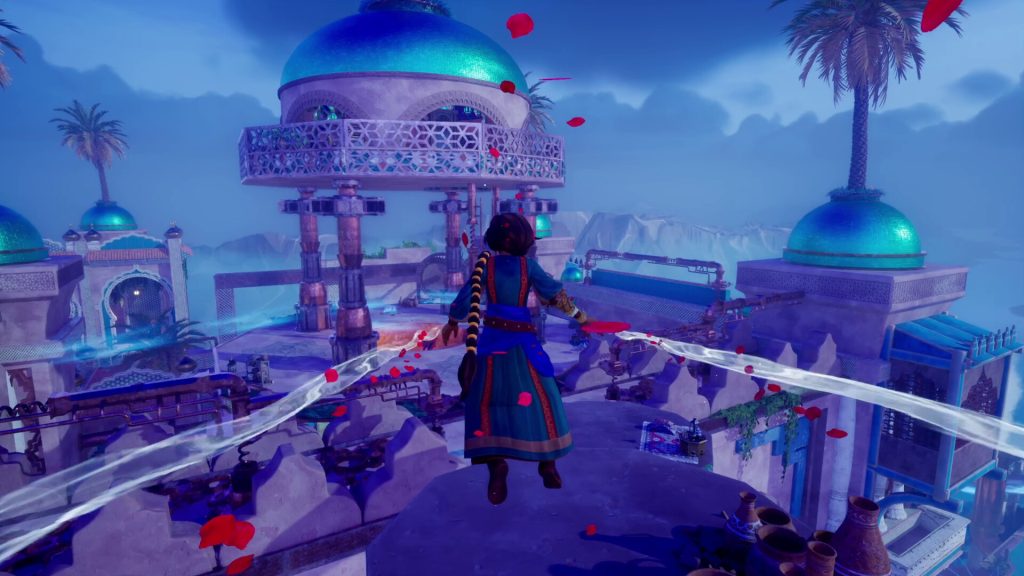
The physical manifestation of grief as black mist, infecting the scholar’s domains and whispering intrusive thoughts, further adds to the game’s depiction of grief growing, compounding, and overtaking other emotions, thoughts, and responsibilities.
Having such a visual depiction of the negative emotions, the use of visual ‘memories’ of Maya and her father to represent therapy was a good complementary choice. Having her see why she was holding onto her guilt along with her grief, and advising that the grief will stay, but the guilt, regret and fear can be worked through, while potentially considered frequent advice, does not become any less true.
I personally haven’t played many narrative games that reference therapy so freely, so seeing it discussed was refreshing. Having the comfort of Religion is also mentioned, though not in depth.
The concept of legacy
Something that is intrinsically linked with the death of a loved one is legacy: wanting to continue their story when they can no longer do so themselves. It can be seen in the little comparisons to their behaviour, to the expectation to take up their work or business.
Maya is frequently compared to her father throughout the game, in both welcome and unwelcome ways. The dissonance that she feels with the person she hears about in the stories and comparisons hit an emotional note that I could personally relate to. The feeling that you didn’t really know the one you are grieving can be very hard to deal with and further adds to the guilt and frustration tied so closely with grief.
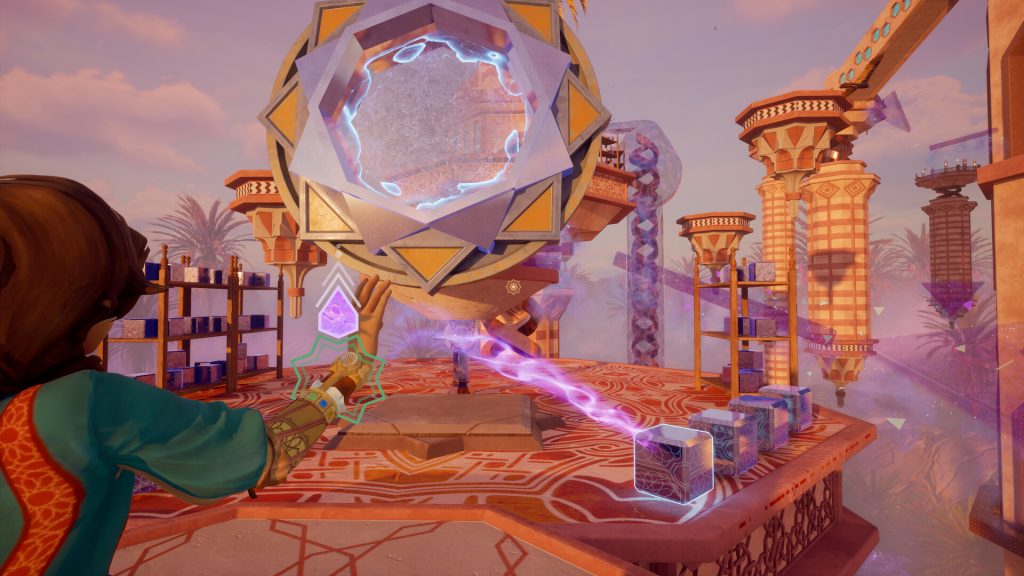
Maya working throughout the game with a device her father made to solve her own puzzles is a beautiful display of one of the game’s messages, as she doesn’t follow his path exactly, but learns from him and creates her own.
You are told this early on in the game: “Your father didn’t leave you riddles. He left you a trajectory. One you can only find by moving.”
You are encouraged to try things and figure out the path without direct instructions, mirroring Maya’s character development in the puzzle design. Having the game start with an open invitation to visit the house when she is willing and ready adds to this even more, and shows Maya’s desire to learn more about her father and his work, on her own terms and without obligation.
The legacy of Maya’s father is also present in how it affects the other scholars, not just those related to him. Their stories and comparisons show the impression he left, and their want to continue spreading his story. Omar in particular feels guilt about her father’s death, and wants to continue the work they did together, even to his own detriment. These different depictions of legacy show characters dealing with the difficulty of finding their own path while still honouring those they have lost.
Maya is shown to use similar ideas when trying to help Ismail al-Jazari, asking if his brother would have wanted him to have isolated himself and ‘let time stop’ around him. Her having an admittedly heavy-handed approach (while also being realistic for a child) shows her own lack of understanding of her own situation and emotional response, when she does not take similar advice others have given to her.
Reframing grief through a lens of hope
Overall, for a relatively short game, it showed a range of reactions and responses to grief, and examined the meaning of legacy in a heartfelt message. Finding ways to carry grief without letting it consume you, making the part you do carry the happy memories, stories, and lessons they taught you, is a long journey that isn’t a straight line.
The House of Hikmah shows the start of this journey with a hopeful outlook for the future that is a great representation, without diminishing the difficulties it comes with. In the end, I couldn’t end this with anything else, but the quote used in the game’s credits:
“You went away but remained in me, and thus became my peace and happiness.” – Al Hallaj
Written by Caitlin Doleman (Ambassador, Class of 2026)