Sonic the Hedgehog, Lara Croft, Mary Brown and terminal illness
Posted: 31 Jul 2024My grandmother was shaking and I didn’t understand why. Her eyes rolled back, her jaw seized and her muscles tightened. Sonic stood tapping his foot on the television screen behind us, and the melodic Greenhill Zone anthem played endlessly, over and over and over.
My granny Mary was having an epileptic fit, right there on the living room chair. My parents were in the kitchen making us dinner, and I, aged just five years old at the time, clearly had no idea what was going on.
A few months earlier – in January 1991, when Mary Brown was only 63 – my grandmother had suffered a subarachnoid haemorrhage, an uncommon type of brain haemorrhage caused by bleeding on the surface of the brain, which is indeed as harrowing as it sounds. One of the worst things about the illness was that it didn’t kill her. Not immediately, at least.
This may sound harsh, but I still believe it, simply because my granny’s quality of life towards the end had become so diminished that she needed 24-hour round-the-clock care. She was relegated to a wheelchair. She’d become incontinent. She’d lost the ability to speak. In essence she spent years dying, unrecognisable to the proud woman of her formative years.
While one terminal illness need not compete with the next, Mary’s was one which had no obvious end. Extensive surgery in the immediate wake of the hemorrhage kept her alive and an archetypal Glasgow lifestyle of frequent social drinking, little exercise and heavy smoking were determined factors likely integral to her sickness. These were in turn, as you may expect, factors that narrowed her chances of survival.
Mary lived, though, and spent the next six years in and out of hospital – and latterly a nursing home – suffering a multitude of Transient Ischaemic Attacks (mini-strokes), as well as a number of regular strokes in the interim. Given the variable nature of the illness, doctors were neither able to suggest a best or worst case scenario. She was given no timeline, no schedule, no structure.
Looking from the outside in, this may have seemed like something to be positive about – “take every day as it comes”, an unhelpful adage that springs to mind – but, although my grandmother was never a burden on anyone, when a family member requires regular-to-constant care, such a framework is a luxury.
I was just short of five years old when my granny took unwell, and was on the cusp of turning 11 when she passed away. I’m now 38, therefore my memories of that time and indeed Mary herself are muted, but video games were a constant during that period of my life.
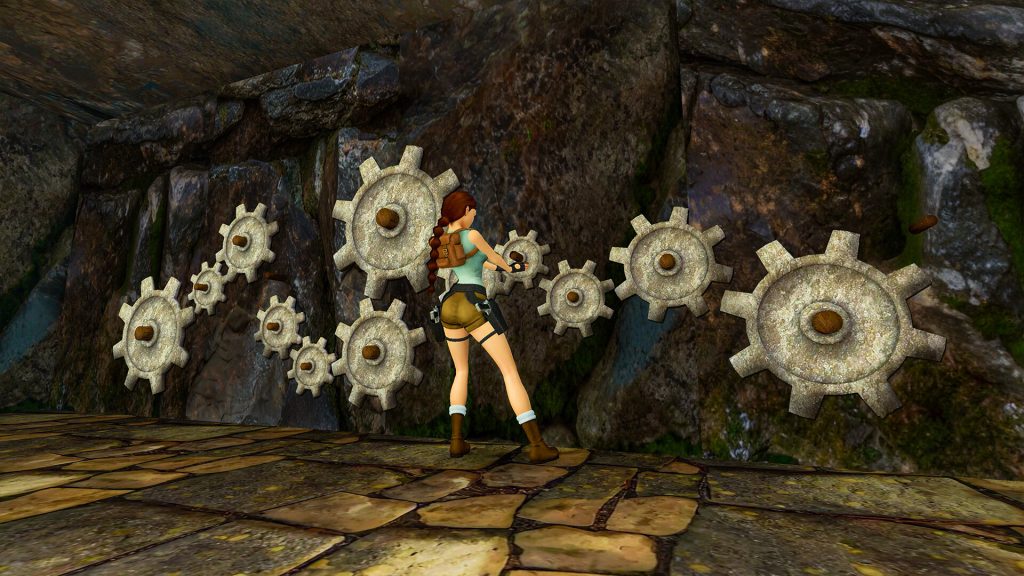
It’s hardly the fondest recollection, but I think of my granny every time my children and I play Sonic the Hedgehog today. I remember throwing myself into Tomb Raider in the days that followed her funeral, and when she required round-the-clock care in a nursing home towards the end, I recall showing her Mario Golf and Tetris on my Game Boy.
One hospital visit in particular stands out in my mind when Mary was beginning to lose grip on her reality.
“Are you going to get that?” my granny asked as she nodded towards my mother. A phone rang somewhere along the interminable corridors of Glasgow’s Southern General Hospital. It chimed within earshot, but far enough away to be ignored. “Where do you think you are?” my mother replied.
My mother knew the answer: Mary was at home. She was back in Pollok, the area in which she lived in the Southside of Glasgow, watching Blind Date, preparing dinner and feeding Suzy the cat.
She was not in Ward 67.
I look back on this memory with fascination. I may have been too young to realise it then, but me playing The Legend of Zelda: Link’s Awakening at Mary’s hospital bedside was a form of personal escapism – and yet here was Mary, striving to make sense of her own fractured world, seeking to deny the forced escape that her illness had thrust upon her.
By 1997, my grandmother had stopped speaking altogether. Every Thursday after school I’d visit, I’d do my homework and my mum would engage Mary in cordial one-way conversation. We’d sit for a few hours and leave.
Although I still treasure these memories, this characterisation is the only one I have of my granny: one where she sits quietly, vacant, watching my mother talk at her, watching me scribble into an A5 jotter before showing her whatever video game was occupying my time on my hand held or regalling her with whichever adventure awaited me at home.
On March 31, 1997, complications from a chest infection killed Mary. Given her lengthy deterioration to this point, it was a fairly quick and painless way to go. For that I’m thankful. I don’t think I ever realised how close my granny was to dying at the time, but I never took for granted the time spent with her or the glint in her eye when I spoke passionately about Lara Croft and Sonic and Link.
I’m sure Mary left this world for a better place, while I made do with Hyrule and Green Hill. To this day, I’m so glad to have had both.

For mental health resources and support, click here.

Joe Donnelly
Joe Donnelly is a Glaswegian writer, video games enthusiast and mental health advocate. He has written about both subjects for The Guardian, VICE, his narrative non-fiction book Checkpoint, and believes the interactive nature of games makes them uniquely placed to educate and inform.
