
Misinformation and mental health: the road to bias and barriers
Posted: 20 Mar 2025Safe In Our World discusses the consequences of misinformation around mental health and what we can do to get back on track.
Ending the stigma surrounding conversations of mental health and mental illness has always been firmly on our agenda as a charity supporting gamers and games professionals with their emotional wellbeing – and we feel there’s been progress! So it’s been frustrating to see signs of regression lately, with the spread of misinformation and intolerance across social media spaces and in mainstream media.
Today we wanted to tackle one emerging piece of misinformation that’s circulating, which could have a significant and detrimental impact on the progress we’ve already made as an industry, and as a society, towards better understanding and navigating our mental health.
Is mental illness over-diagnosed?
Firstly, mental health is not mental illness. It’s an important distinction, because everyone has mental health, in the same way as everyone has physical health.
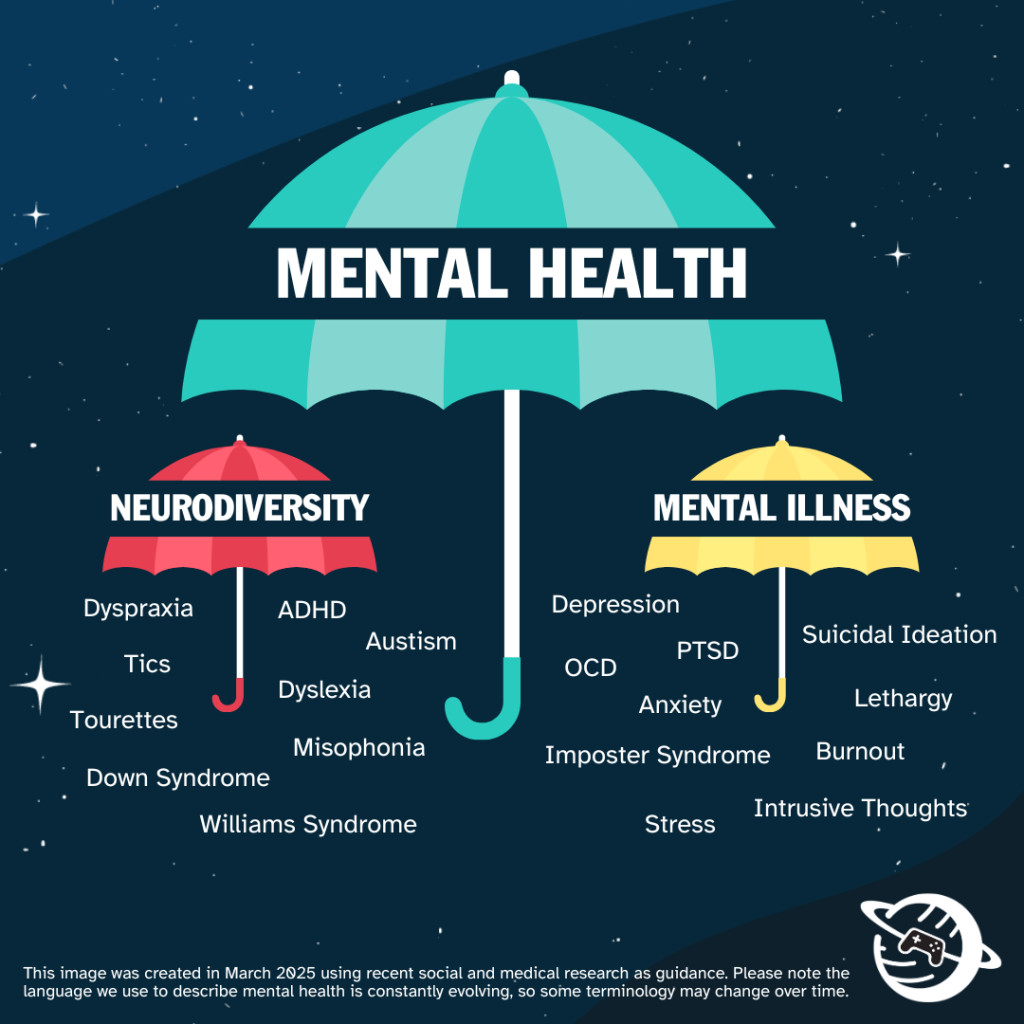
Anyone can experience mental ill health. In fact, 1 in 4 people will experience a mental health problem of some kind each year. It’s likely that you’ve experienced some struggle with your mental health, or you know someone in your family or circle of friends who has experienced some level of mental ill health.
Does that mean too many people are struggling with their mental health? Well, yeah. We would like to see a world where mental illness is drastically reduced, and those who do face said challenges can access fast and effective care. But is there an “overdiagnosis” of mental illness? No. There is no evidence to support any claims of an overdiagnosis in mental illness.

What do we know about mental illness?
To better understand why we categorically reject this idea of “overdiagnosis”, we first need to understand what we already know about mental health – and what we don’t!
Our understanding of mental health has come on in leaps and bounds over the last century, though we still have a long way to go. Mental health wasn’t even referenced as a field or discipline of study before 1946, and even today our appreciation for what mental health is is constantly evolving and changing. This context is essential to consider (and remind others of) whenever we see mental health being discussed in the news, in the workplace, or among friends and family.
There is a tendency to see rising numbers of diagnosis as a sign of “overdiagnosis”. But correlation does not imply causation, and this rise could just as easily be explained by an increased understanding of mental illness – or literally any other sources of mutual stress (e.g. climate crisis, political unrest, loss of financial security).
![Image depicts 4 circles with 4 statistics around what external factors can affect our mental health. '1 in 6 people in post-conflict situations struggle with mental health disorders.' 'Over 45% of young people feel like climate change affects their daily life.' '~60% of young people feel “very” or “extremely” worried about climate change.' 'of people experiencing financial instability [related to the impact of Covid-19] report high levels of psychological stress.'](https://safeinourworld.org/wp-content/uploads/2025/03/Mental-health-external-factors-stats.png)
The impact of misinformation
People who experience mental ill health at some point in their life report that their symptoms worsen if their experience is challenged. Current research suggests that misinformation leads to systemic bias, which creates barriers in accessing care. This is particularly true for marginalised communities!
Sometimes this is referred to as Medical Gaslighting – an act that ‘invalidates a patient’s genuine clinical concern without proper medical evaluation, because of physician ignorance, implicit bias, or medical paternalism’ (The American Journal of Medicine).
Lived experience is our greatest source of information. There’s still so much to learn in the field of mental health, and listening to individual stories and perspectives provides crucial context, empathy and understanding. This also plays a vital part in developing an individual’s personalised recovery plan.
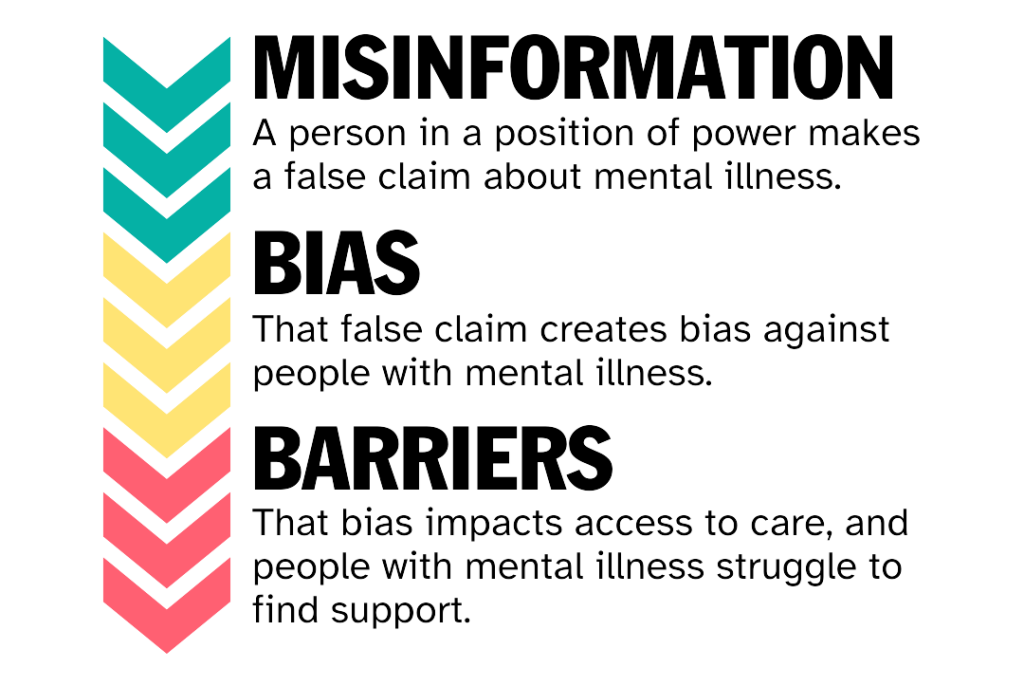
Punishing people who are struggling with their mental health, by questioning the validity of their diagnosis, will not help them recover. We believe that stigma around mental health is one of the biggest barriers to improving mental health. So let’s take a look at what we can do, collectively, to help challenge misinformation, improve awareness, and encourage empathy.
Breaking down stigma helps to encourage conversations, and conversations help to break down stigma. This is why we prioritised lived experiences! Talking about mental health can encourage people to take that final step towards seeking care.
Learning about these topics empowers us to better support each other through difficult times, and there’s no shortage of those. Mental health support should be preventative as well as reactive – not only to catalyse more efficient care, but to mitigate causes of mental illness wherever we can.
Next steps to better mental health
Causes of mental illness are numerous and complex, so much so that we couldn’t hope to cover every angle in one article. Zooming in on our small corner of mental health in the games industry, there are areas we can pinpoint as sources of stress, anxiety and burnout.
Many people in games, and in the wider tech industry, experience overworking (crunch), a lack of psychological safety or support in the workplace, job insecurity, and systemic discrimination. These can feel overwhelming, but there are resources you can access, and support you can find to help navigate these challenges.
Here are some resources we have on our website that we would like to share that may empower you on your own mental health journey:
- To find local mental health support in your country and area, please see our helpline database. Ranging from suicide crisis phonelines, to domestic abuse support, to LGBTQ+ mental health community groups, we can signpost to individual support in over 100 countries worldwide.
- Learn the language to help you advocate for yourself – watch our Free Self Advocacy Speaking Course! Being able to identify and share how you are feeling with those around you can help you set healthy boundaries, and avoid miscommunication.
- Learn more about Psychological Safety, and how it can be built, to help encourage positive change in your workplace (and even in your personal life)!
- Listen to our Interview with Elitsa Dermendzhiyska on Betwixt to learn more about Emotional Literacy.
We also recommend you check out resources and stories shared by other UK Charities that can take this conversation and your knowledge beyond the games industry: Papyrus, MindOut, Andy’s Man Club, akt, R.S.V.P, and Mind.
References:
The Roots of the Concept of Mental Health
Defining and Evaluating Overdiagnosis in Mental Health: A Meta-Research Review
NHS Publication: Adult Psychiatric Morbidity in England
Understanding Correlation VS Causation
Statistics on Climate Crisis and Anxiety
Data on Mental Health Disorders in Post-Conflict Situations
Statistics on Financial Instability and Psychological Stress
Information on Recovery and Mental Illness
