
Using Cosy Games to Support Routine, Grounding, and Regulation (Exploring Games as Bereavement Support Pt.2)
Posted: 3 Dec 2025Bethany Rainbird continues the conversation for Grief Awareness Week (2nd-8th December) as Safe In Our World joins the mission to raise awareness around grief and bereavement.
How grief disrupts our lives
Losing a loved one can turn our world completely upside down, and things that once felt easy can suddenly become impossible. Grief has its way of breaking us, leaving us without structure, motivation, or direction. By taking small, gentle actions to care for ourselves, we begin to rebuild that structure and re-establish a sense of belonging in our own lives.
Everyone experiences grief differently, but many of the common responses can make it hard to stay regulated. These might include:
- Exhaustion
- Struggling to eat, drink, or sleep
- Maintaining hygiene
- Losing motivation or lacking a sense of purpose
- Losing track of time
- Struggling with memory
- Experiencing brain fog
- Emotional and behavioural disregulation (not acting like yourself)
There can also be indirect impacts. Taking time off work or stepping away from social circles can be a vital break when dealing with the aftermath of loss – but it can also make it harder to keep up healthy habits.
Without that structure, we can start to feel isolated and unsure how we ‘fit back’ into everyday life. It’s easy to think withdrawal is the answer, and feeling like an outsider can make that detachment feel justified. But sometimes a gentle push back into the wider world is what helps us feel like ourselves again.
How cosy games can help
Cosy games can act as a gentle, non-judgmental space to start rebuilding a sense of structure and self-regulation. They give us something to show up for – even if it’s only digitally. Through manageable and digestible daily interactions, like watering the flowers or talking to NPCs, they can quietly help us practice the habits that are missing from our real lives.
Building Routine
We briefly touched on Animal Crossing in our Introduction to Grief Awareness Week, where it allowed us to maintain a sense of normalcy during the pandemic. Its daily rituals (talking to villagers, watering flowers, selling seashells) provided familiarity and flow when real-life days felt empty and heavy. Cosy games like this offer a sense of low-stakes structure: small, simple check-ins that mimic real-life habits.
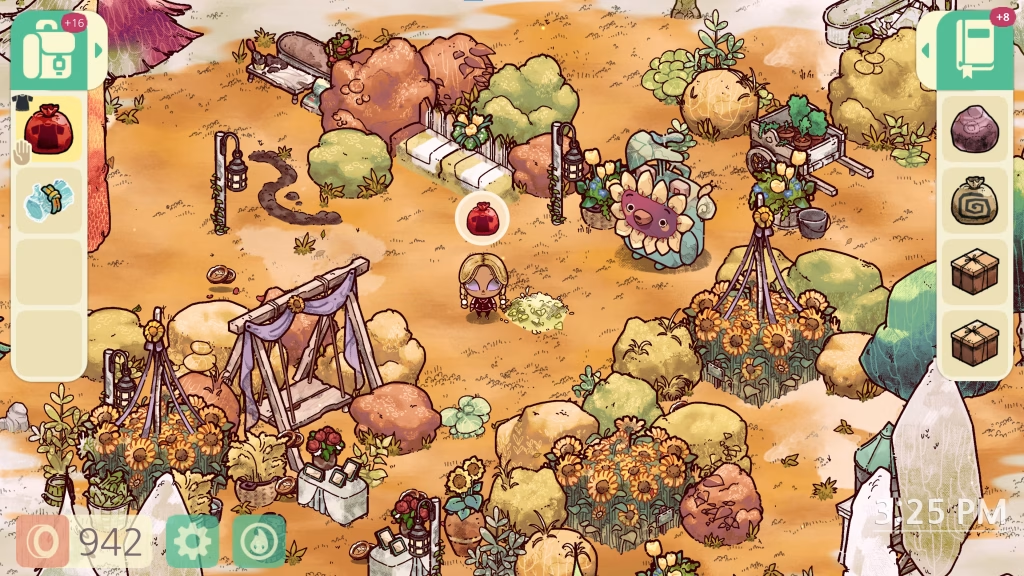
When grief or depression leaves us struggling with motivation, these digital routines can help us to re-learn consistency and purpose at our own pace. Forgetting or neglecting parts of our real-life routines can result in a lot of self-criticism, affecting our self-esteem and self-worth. But in these virtual worlds, there’s no pressure. No judgment for missing a day, falling behind, or ‘failing’. Just a low-pressure, comforting world for us to practice in.
Recommended Games
These are games with low stakes or low pressure tasks you can regularly check in on.
- Animal Crossing
- Cozy Grove (pictured above)
- Disney Dreamlight Valley
Grounding
Grief can leave us lost. Time feels strange, days blur together, and we can lose touch with both our bodies and minds. Cosy games can help to re-anchor us in calm, sensory ways. Predictable and meditative environments, with soft music and visuals, can provide a sense of comfort and safety that we may be missing in the wake of change.

In some cases, these games can mimic grounding techniques – like the 5-4-3-2-1 method, where we name things we can see, touch, hear, smell, and taste. Tactile elements like controller vibrations or responsive sound effects can ground us back within our bodies and remind us of the present moment. Real-time clocks, day/night cycles, and seasonal events can also remind us of the passage of time, and help us feel connected to the world at large.
Recommended Games
These are meditative games with soothing and therapeutic sensory experiences for the player.
- Abyssirium (pictured above)
- Penguin Isle
- Viridi
- Unpacking
Regulation
Keeping our thoughts, emotions, and actions steady is a skill that takes a lot of practice in the best of circumstances, and grief can make it feel impossible. Games can offer guidance in regaining that control over ourselves by giving us space to pause, set small goals, and manage our feelings in ways that feel safe and achievable.

Many games can encourage mindfulness and self-care. Those that allow us to name our emotions, like Voidpet Garden, can make it easier to recognise what we’re feeling and if that may have an impact on our thoughts and actions. Games like Finch, which reward self-care tasks and goals, can provide the encouragement we might be missing. And caring for something else, like feeding your Neko Atsume cats every morning, can nudge us towards remembering our own needs.
Being able to engage with these mindful games at our own pace is key; some days will feel easier than others, and when things are hard, these forms of mental health first-aid can provide the support we need.
Recommended Games
These are games that encourage mindfulness, self-care, and offer mental health first-aid.
- Bird Alone (pictured above)
- Voidpet Garden
- Amaru
- Finch
Forming Healthy Habits
It’s important to remember that whilst video games can provide a source of comfort, they’re most useful when used as a supportive tool – not as a replacement for real-life. Spending too much time in virtual worlds can make it harder to maintain the real-world habits that keep us well. Times of emotional vulnerability, like bereavement, can make it tricky to know when to stop playing, so it’s worth being aware of boundaries and avoiding any long, unintentional binging sessions that could do more harm than good.
When used with intention, cosy games can help us practice the skills that grief makes us forget that we have. They remind us that even the small acts of care – digital or otherwise – can be meaningful stepping stones towards healing.
In our next article, we’ll be exploring how games can help us reconnect with our bodies, our surroundings, and the world beyond the screen.
Written by Bethany Rainbird