
Set in a fictionalised version of the 1920s where the lines between modern psychiatric treatment and pseudoscience are still muddy at best, Sanatorium is a card-based workplace adventure where you test, diagnose, and treat patients.
Shoreline Games’ newly published ‘Sanatorium: A Mental Asylum Simulator’ explores the history of mental health stigma and the cruel ways in which mental illness was treated.
Safe In Our World chatted with the team behind the game to gain a deeper understanding of the passion and motivations behind developing a game that tackles mental health stigma. We asked the team about their process and what they want players to take from the experience.
The Inspiration Behind Sanatorium
Sanatorium: A Mental Health Asylum Simulator addresses some pretty heavy topics, such as the awful and archaic treatment of patients. What inspired you to tackle these intense topics through the medium of video games?
The core inspiration was the fascination with a ‘profession’ where the rules are constantly shifting or where adherence to regulations is expected – but with the crucial twist that we allow players the opportunity to break those rules.
A mental asylum in the 1920s offered the ideal framework for this. This era is particularly revealing because it shows us how much the period’s ideas of ‘normalcy’ were reflected in the diagnoses being made. For instance, consider Prohibition: even minimal alcohol consumption led to a diagnosis of ‘Inebriate’ – a condition deemed in need of treatment.
Although the treatments shown in the game are historically documented, we have combined them in ways that would likely not have occurred in the reality of the 1920s.
An Authentic Development Process
During the development process for Sanatorium, what sort of steps did you take to ensure you were covering this topic sensitively, while not shying away from the reality of what has happened in the past?
We took several key steps to navigate this sensitive topic. The most crucial decision was making it clear that the target of our satire and critique is the institution and its practices, not the patients themselves. We wanted to emphasize how patients were historically treated like ‘something that needs to be worked through.’
To keep the game experience respectful, we implemented strict limitations: there is no direct depiction of violence or gore. Hurting patients is impossible; the treatment mechanics are highly abstract and are represented only by playing cards, with just a few accompanying sound effects.
On the research side, we ensured accuracy by taking a field trip to the Museum of Psychiatry in Bern, Switzerland, and consulting with its curator, a professor of psychiatry. This fieldwork provided essential insights into the threats patients faced and the stark difference between institutional life then and now.

Giving Control to the Players
Sanatorium gives players the opportunity to make decisions about how they care for patients, allowing them to choose a more compassionate treatment option, or one that is crueller (but more historically accurate). Why did you decide to give players the responsibility of making this choice?
We decided to give players this responsibility because the game’s core challenge is rooted in a constant moral and economic balancing act.
Your objective is to earn enough money and build a reputation without losing face, but the institution itself only cares that the doctors perform their job. The truly interesting point for us is how players react when they are put in a tight spot.

For example: A wealthy patient pays significantly more per day than a poor one. You have the option to keep them even after they are ‘healed’ to justify using more expensive (and profitable) treatments. We leave it up to the player to decide: Are you willing to cross that line?
And what do you hope players will get out of their experience with Sanatorium?
We wanted to make a game people enjoy. Sanatorium is a cartoon, a noir with references to the 1920s… But it’s also intended as an educational tool. We hope that the moral questions raised in the game will leave players thinking about historical attitudes toward mental health.
Thoughts from a Level Up partner
Safe In Our World sent keys to some of our ambassadors, Level Up partners, and charity friends, keen to try out Sanatorium: A Mental Asylum Simulator for themselves. Will Dyball, from friend and Level Up partner Futurlab, shared his thoughts with us after playing the game.
Sanatorium: A Mental Asylum Simulator puts you in the shoes of a struggling journalist in the roaring twenties. After receiving a cryptic letter about a story at Castle Woods Sanatorium, you adjust your credentials, secure a job, and begin investigating.
The story unfolds across four wards, gradually raising the difficulty by introducing new brain region categories and symptoms. Progress hinges on increasing your reputation by accurately diagnosing and treating patients.
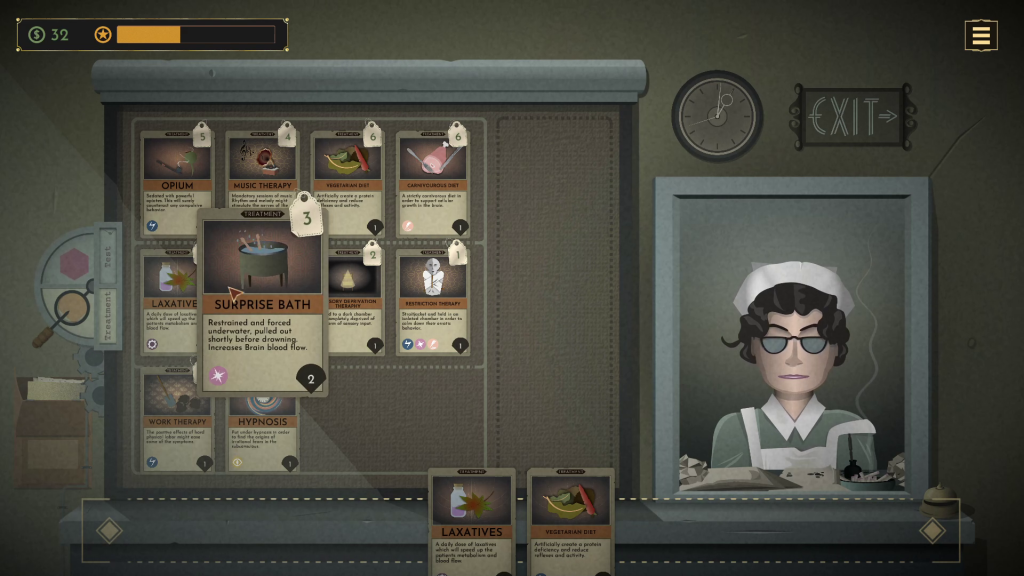
The core gameplay loop consists of four phases: prep, diagnose, treat, and explore:
- PREP – Purchase diagnosis, treatment and upgrade cards using the station briefing as a guide of upcoming symptom categories.
- DIAGNOSE – Listen to the patient and use the diagnosis cards to identify and categories symptoms.
- TREAT – Use treatment cards on patients (failing to reach a minimum treatment requirement for any patient harms your reputation).
- EXPLORE – Wander the asylum, collect objects, and interact with characters to uncover hidden mysteries.

The game’s 1920s aesthetic shines through the art style and moody atmosphere, echoing the asylums of the era.Sections of the asylum appear poorly maintained and the patients are locked behind large metal doors. The primitive psychiatric practices of the time are present, from the lingering belief in phrenology to treatments such as lobotomies and physical restraints. Together, these elements remind the player just how severely people suffered within institutions like this.
“Sanatorium serves both as an engaging historical simulation and a reminder of the progress we’ve made.” – Will Dyball, Futurlab
Since the 1920s, mental health care has shifted dramatically from institution-centred models that often restrained, isolated or subjected patients to untested therapies, to today’s patient-first, evidence-based practice that stresses informed consent and collaborative treatment planning. Modern practitioners recognise recovery as a personal journey and that empathy, cultural sensitivity and a strong therapeutic alliance are now key to any treatment. This shift reflects society’s growing view of mental illness as a medical condition deserving dignity rather than stigma.
You can learn more about Sanatorium: A Mental Asylum Simulator on their website.