
Choose Your Character: Representing Real Bodies in Games
Posted: 10 Feb 2024Please be advised, this story discusses body image, weight, body descriptions, and gender stereotypes.
I struggled with body image in my teen years and into my twenties, like a lot of people. The two things that most led to me criticizing my fleshy prison were fashion trends and video games, two things I cared about a great deal. Nowadays I care much more about video games, but I think the two examples have significant similarities that are important to point out.
Growing up, video games often showcased two very specific looks: huge buff men and skinny women with massive breasts. We all are familiar with this blueprint for character design. When it comes to fashion trends, they don’t look the same on everybody, let’s be real. There’s a lot of discourse on whether or not we should care about what’s flattering, but that discourse doesn’t matter to an insecure teenager. If the fashions that are in trend don’t suit your body, you feel inferior, wrong, built weird. Trends are cycling faster and faster nowadays, but one thing stays the same: being fit and thin are always in. So for both games and fashion, there was usually a body type that you saw more often.
During part of my teenage-hood, the beauty standard for women went from being as skinny as possible to being curvy, and during this time I consumed a lot of video games with the blueprint of character design I discussed above. Essentially, all of the media I was consuming told me that if I was a woman, I had maybe one or two options for how to look, and if I was a man, I had to look that other way. Neither were particularly enticing options for me or most of my peers. It’s incredibly restricting to be fed that messaging from a young age. The thing that impacted me the most was how extremely these two genders were being portrayed. These hyper-feminine and hyper-masculine portrayals of characters really reinforced bodies existing in a binary, which is so wrong and harmful.
Most of us can relate to having some issues with our body image, no matter who we are. Video games often present a skewed reality of beauty standards for all genders. These standards are not only limited to gender but also extend to race, ability, and overall representation. Frequently, characters in games depict an unrealistic ideal – tall, slim, muscular, white. This lack of diversity fosters unrealistic expectations and dissatisfaction among players of all backgrounds. The gaming world needs to embrace a wider array of body types, skin colors, genders and abilities to reflect the true diversity of its audience.
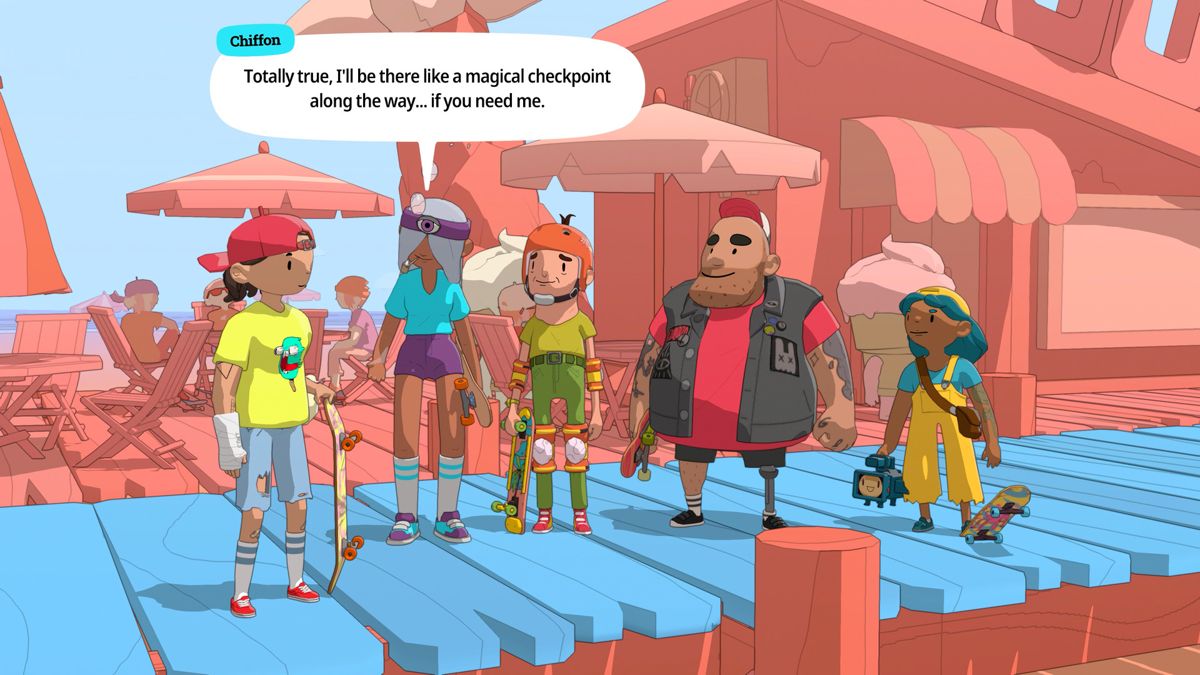
Diversity in character representation is already happening in a wide variety of games, which is something to celebrate! I think the media landscape we have today is much more varied and inclusive than how it was 10-20 years ago. I asked my community for some examples of games that have had any sort of impact on their body image, and one person mentioned that it was cool to see a fat skater in the game OlliOlli World. Seeing characters that look like us is great, and character customization that has more options is a really natural way to give that joy to as many players as possible. It’s amazing that “The Sims” has added custom pronouns, medical wearables, and inclusive scars. This effort sets them apart in the realm of mainstream gaming. The Sims is renowned for its customization and player choice, and these additions are a natural extension of its inclusive ethos. The enthusiastic response from the community reinforces the need for such progress. However, there’s more work to be done, especially regarding how clothing fits on different body types in the game. This is a lesson for other game developers: inclusivity goes beyond mere character creation; it extends to how these characters interact with their world in a way that feels authentic and respectful.
This is a lesson for other game developers: inclusivity goes beyond mere character creation; it extends to how these characters interact with their world in a way that feels authentic and respectful.
As an indie game designer, I want to give the most to my players. It’s not always possible to showcase a wide variety of bodies, but it is always possible to keep this conversation going and do the best with the resources you have. In my game Sleep Swimmer, the only human character is the player character, Aria. She is surrounded by humanoid salamander creatures and a whole other cast of sea creatures. Aria is just one girl, and she can’t represent everyone all at once. We ended up deciding to give her (and all of the salamander people) very gender neutral style bodies. I’m definitely not saying this is the answer to everything I mentioned above, it’s just what felt right for the game. Gender really doesn’t play a big part in the narrative, it’s just about anxiety and overstimulation. And marine noise pollution…there’s a connection, I swear!
As a community, we can help each other with our individual body image journeys through representation and through continuing a narrative that discusses these topics openly. There’s no blanket solution and things do get better over time. It’s an age-old problem to be uncertain in the body you were given, and I’m really glad it’s becoming more normal to talk about.

Written by Julia (she/they)