Roll for Connection: How TTRPGs can positively impact mental health
How does collaborative storytelling contribute to positive mental health? We unpack the mental health benefits of TTRPGs with charity ambassador and dungeon master Jamie Naden.
There’s more to TTRPGs than an evening of entertainment. At a time when loneliness and social isolation are affecting wellbeing on a global scale, tabletop role-play heals hurts, builds relationships, and helps players find their confidence.

Social connection and belonging
Sometimes we play solo; sometimes we play together – each has its own benefits. Taking time for yourself to switch off and relax is important for your mental health, but studies also show that social connection can lead to better health and a longer life. Where better to find community and connection than at the table?
Through tabletop role-play, you can find new friendships or strengthen existing ones. You can improve your communication and decision-making skills, practice solving problems alongside others, express yourself, and find a sense of community quite unlike anything else.
“Active listening is the secret sauce to the best tabletop games during role-play. Feeling truly heard, considered and giving someone a spotlight to not only express but also be heard and reacted to, there’s nothing more engrossing in any kind of game.” – Jamie
Whether you’re investigating a mystery, going into battle, or having a great time quaffing make-believe ale and tearing up the town with your party, TTRPG provides a space where people can feel accepted, included, and valued.
“Collaborative storytelling is never done alone. Before any feelings of acceptance, inclusion, or sense of value within the story being told, there needs to be a sense of safety. That safety starts with consent from all parties, discussing boundaries, and everyone knowing the kind of adventure they are embarking on together.” – Jamie

Exploring inner truths through role-play
Role-play can give TTRPG players a unique way to explore parts of themselves through the character they play. Much like we can often see ourselves in the characters we play in video games, TTRPGs can reflect inner truths about ourselves – only there’s more control and opportunity for deeper exploration and customisation.
Playing as someone else can open up opportunities to experiment with emotions, make different choices, form relationships they wouldn’t usually explore, and respond to challenges without the same pressure as you’d feel in a real-life situation. You’re free to fail, reinvent yourself, and learn something new in the process.
“Role-play has allowed me to express myself in ways I’ve not done outside of Dungeons & Dragons. Unpacking the trauma that loss brings, the shame of feeling like a failure, the want to express love, joy, anger, insecurity, anxiety, and the elation at that sense of expression, is so incredibly freeing.” – Jamie
Role-play can also encourage empathy and help you adopt a new perspective. Playing someone with different motivations and life experiences encourages the player to imagine why that character might think or feel differently. Empathy is vital to improving mental health awareness and ending stigma, and a skill that shouldn’t be undervalued.
An exercise in confidence
TTRPGs provide a fictional setting where players can experiment with behaviours and decisions in a relatively low-stakes environment. This can help players build confidence when thinking on their feet, and over time, they may feel more comfortable speaking up and participating socially.
Successfully overcoming obstacles as a party feels good. Players who make space for everyone to contribute ideas and work together to reach a solution create an environment of acceptance – where everyone feels heard and valued.
“Players new and old can come alive when given the permission to feel at the table. A new player to my table changed entirely when asked in character, “How does it feel as you feel your chance at success slipping away, and what would you give, what would you sacrifice instead to succeed. When given the permission to feel like their choice held weight, that action would have consequence, a person who typically was seen to be distant, disconnected from the party, using humour a lot in the face of anything, became incredibly grounded and rooted in the present moment, totally immersed.” – Jamie
Join us at the table
We’re thrilled to share the news that Jamie Naden will be hosting an extra-special livestreamed one-shot D&D campaign on October 17th, to raise funds for Safe In Our World. The party will feature much-loved voices from across the games industry, including voice actors from Baldur’s Gate 3, The Witcher, and more.
You’ll be able to influence the story as it plays out in real time by donating to unlock events and engaging in Tiltify polls. The campaign is sponsored by Jagex, Dwarven Forge, and Iron Shield Army, not to mention a number of sponsors who’ve provided prizes and incentives (we’ll reveal more soon).
“This story is based on the first D&D game I ever ran, elevated to new heights. I’m incredibly excited and honestly a little anxious about sharing it! I’m incredibly thankful for the belief and support shown by the entire team involved in bringing this game to life and to every single organisation that’s worked with us, to help shine a spotlight on the importance of mental health.” – Jamie
If you’re heading to London Comic Con in October, pop along to our panel with Jamie Naden, discussing The Power of Play: How Role-playing Games Promote Positive Wellbeing. We’ll dive deeper into this topic with Jamie and a bunch of other amazing guests, hosted by our Head of Programmes, Sky Tunley-Stainton.
Skills utilised:
News
Safe In Our World Is Hiring a Senior Marketing Manager
We’re looking for an experienced creative professional to join our small but passionate team and develop our charity’s marketing strategy to help improve mental health in games.
If you’re passionate about the games industry, love to deliver creative and meaningful campaigns, and want your work to help improve mental health across the video games ecosystem, we want to hear from you.
Key Details
You’ll be helping to raise the profile, reach, and impact of Safe In Our World across the global games industry and gaming communities. You’ll work closely with our Charity Director and wider team to develop and deliver strategic marketing campaigns, promoting our programmes, engaging new and existing audiences, and helping to ensure that our message reaches the people who need it – and need us.
Hours per week: 37.5 (flexible hours)
Location: UK-based (remote)
Salary: £35,000 – £40,000, depending on experience
Closing Date: 25 October 2026, 11:59pm GMT

The Role: Senior Marketing Manager
As our Senior Marketing Manager, you’ll lead on marketing activity for Safe In Our World, balancing strategic thinking with hands-on delivery. You’ll help shape and maintain a strong, recognisable Safe In Our World brand.
A big part of this role will be bringing our existing initiatives to life through effective marketing and helping the team launch new programmes and projects aimed at both the games industry and global gaming communities.
You’ll also play a key role in growing our digital presence, including developing short-form content strategies across platforms such as TikTok and YouTube, while helping to deliver regular and meaningful content for Safe In Our World’s website.
You’ll build relationships with key game industry press outlets, coordinate press activity around our campaigns and charity initiatives, and help our work reach a global audience. Alongside this, you’ll track and measure the effectiveness of our campaigns, using insights and performance data to help shape future marketing activity.
The Ideal Candidate
We’re looking for someone with experience of working with stakeholders and external partners to deliver marketing campaigns. You’ll have strong written and verbal communication skills and be comfortable creating a range of content, including website copy and press releases.
An understanding of the video games industry and its ever-changing landscape will be important, while knowledge of content creators and influencers will be beneficial.
We’re a small team, so flexibility and a willingness to support others are essential. We’re looking for a candidate with strong management skills, who can balance multiple campaigns, deadlines, stakeholder relationships, and KPIs.
Importantly, we want someone who shares our passion for mental health and gets excited by the opportunity to use their marketing experience to support positive change across the games industry and gaming communities worldwide.
How To Apply
If this role sounds like a good fit, we’d love to hear from you. Read the full job description and apply with a Cover Letter and CV via our form.
You’ll hear back from us regardless of the outcome by no later than 6 November 2026, and we plan to begin the interview process in early November. There is an option to include any accessibility needs in the application form, but you’ll have the opportunity to ask for accommodations before your interview, too.
Our interview process will include three stages:
- An initial phone screening where we’ll provide some more information about Safe In Our World, answer any questions you have, and get to know you a little better.
- A first interview with our Charity Director and Head of Programmes, where we’ll ask questions about your skills and experiences in relation to the role.
- A second interview with our Charity Director and one of our Trustees, which will involve a brief presentation task.

Why Safe In Our World?
Safe In Our World is a small but passionate charity based in the video games industry, safeguarding the wellbeing of those who make games and those who play them. You’d be joining a team making a positive difference in the games industry and global gaming communities, helping to reduce toxicity, improve safety, and create a more welcoming and inclusive environment for all to enjoy.
We offer a range of benefits, such as private health insurance, an Employee Assistance Programme, and flexible working hours. Our team works from home, and we organise team days to strategise and do team-building activities.
We’re so excited to hear from you. Good luck!
Safe In Our World is an equal opportunities employer. We encourage applications from anyone and do not discriminate based on age, sexual orientation, gender, pregnancy, religion, nationality, ethnic origin, disability, medical history, marital status, parental status, or any other characteristic. We ensure our selection process is fair and merit-based, and provide equal opportunities relating to training, promotion, and remuneration. We ensure our selection process is fair and merit-based, and provide equal opportunities relating to training, promotion, and remuneration.
Skills utilised:
News
How Safe In Our World defends mental health in the games industry and gaming communities (+ other charities to watch)
For International Day of Charity, Safe In Our World shares its ongoing mission to improve mental health in games, the positive impact already felt across the industry, and top picks for other charities to support.
Today marks another International Day of Charity, a yearly observance (on September 5th) to encourage charitable efforts and raise awareness around the globe. We want to use this day not just to tell you about how you can support our mission to improve mental health across the gaming ecosystem, but also to signpost you to other charities that do amazing work for our community.
There’s a mental health problem in games
People across the video game industry are navigating challenges that significantly impact their mental health. Be it the endless burn and churn or the ongoing avalanche of layoffs, wellbeing across the games industry is suffering.
We’ve already surpassed 10,000 estimated layoffs in 2026 alone, and the latest UKIE games industry report indicated that 60% of the UK games industry live with mental ill health. The pressure is being felt across the globe, and the need for mental health tools, training, and resources has only grown since Safe In Our World was established.
Gaming communities are struggling with their mental health too! Gamers often find themselves navigating high levels of toxicity online, with 74% of gamers reporting that they encounter toxic behaviours in multiplayer games.
This toxicity can perpetuate mental health stigma, making it harder to reach out – and even when you do, long wait times for support can mean problems start to pile up.
Supporting wellbeing in the games industry
So that’s a lot of bad news. Now let’s look at what we can actually do to help, because that’s why Safe In Our World was established. Back in 2019, a group of leaders in the games industry came together to create something that could make a real difference: a charity to support the mental health of those who make games and those who play them.
The mission was simple: to advance mental health awareness across the gaming ecosystem, to empower conversations, and to end stigma. That’s what we’ve been doing over the last six years (nearly seven), by removing barriers to accessing mental health support, resources, and training.
Unlocking mental health support with Safe In Our World
We launched our Level Up Mental Health programme, providing companies of all sizes with access to free toolkits, templates, and downloadable resources that support workplace wellbeing.
We run monthly live webinars (with an exclusive catch-up service for Level Up partners), covering topics such as self-advocacy, compassionate leadership, giving and receiving feedback, and more.
We created the games industry’s first and only mental health accreditation (the Mental Health Star Accreditation), which helps companies of all sizes boost their workplace wellbeing and team retention.
We even provide a subsidised Employee Assistance Programme, allowing everyone (e.g. creators, freelancers, small studio owners) who works in or with games to enjoy the benefits of an affordable EAP.
Ways to help gamers with their mental health
Through partnerships with companies like Ubisoft and AbleToPlay, we’ve been able to bring mental health initiatives to life and help gamers learn about mental health and their own emotional wellbeing.
Following the success of the original Good Game Playbook in 2023, we partnered with Ubisoft to create three downloadable playbooks – this time for kids, teens, and parents. We adapted to the varying ages of young gamers and provided parents with tools to help their children engage safely with online games.

Last year, Safe In Our World partnered with AbleToPlay – a free, community-driven platform that helps gamers with disabilities find games they can fully enjoy. Our collaboration resulted in a brand-new category – Headspace – to help gamers filter out potential triggers, find games that fit their mood, or even discover games that offer educational insights on mental health.
You can read more in our Impact Report for 2025-2026.

How partnering with Safe In Our World can help
Everyone has the potential to help further our mission, whether you’re a creator with a passion for fundraising, or a studio leader who shares our vision of a safer games industry for all.
We’re always on the lookout for:
- Charity patrons, ambassadors, and collaborators
- Sponsors in the games industry
- Aspiring Level Up or Accreditation partners
- People to help us with research
- Writers willing to share their lived experience
- Fundraisers ready to shoot for the stars
We’ve already helped over 300 companies (70,000+ employees) with free mental health resources, and delivered over $450,000 in free training across the industry. We’ve made online communities safer by training 350+ community leaders in Mental Health Awareness and First Aid.
We’ve published a self-care journal, delivered a global game jam, amplified voices across the industry to increase empathy and understanding – and we’re not done.
Get in touch with our Business Development & Fundraising Manager, Eben, to discuss how partnering with Safe In Our World can help you, your team, and the wider games industry.
Other charities making a real difference in (and out of) games
But it’s not International Day of Safe In Our World – that’d probably be our birthday, October 10th (World Mental Health Day), which is coming up soon, so get in touch if you want to do something special with us! In the meantime, we’d like to tell you about just some of the other charities we love.

At every event we attend, we’re crossing our fingers in the hopes to run into the wonderful team behind Special Effect. This organisation is levelling the playing field for disabled gamers. Using customised technology such as eye-tracking, chin switches, modified controllers, and more, they adapt gaming setups to a player’s individual physical needs.

Then there’s Into Games (launched the same year as us), a UK-based non-profit organisation with a mission to create a fair and equitable pathway to skill development and career progression for the games and immersive industries.

YGAM is the UK’s leading charity for preventing gaming and gambling harms among young people – a vitally important step in safeguarding mental health. The training they provide helps people develop a deeper understanding of young people’s digital lives and contribute to safer digital spaces.

And we couldn’t finish up without telling you about our friends at Blueprint For All – empowering young people across the UK to kickstart their careers by connecting them with opportunities, resources, events, and bursaries. While they weren’t established with games in mind, they play a vital role in removing barriers to the education and support young people need to reach their potential – and for that we applaud them!
Further support with your mental health
You can find many more charities, organisations, helplines and crisis lines on our Find Help page if you (or someone you care about) need mental health support.
Whoever you choose to support, thank you for making time and contributing your energy to charitable organisations. We can only do what we do because of the people behind us, donating, sponsoring, fundraising… empowering us. Let’s keep making this world safer together.
Skills utilised:
News
Why 30 Days: A Sobriety Simulator chose to explore addiction recovery as a video game
Safe In Our World spoke with Tate Pollock, Creative Director of Not Right Now Studios, about their upcoming visual novel RPG, ‘30 Days: A Sobriety Simulator,’ to discuss addiction recovery and how video games can open up more nuanced conversations about difficult real-world experiences.
Content Warning: This article discusses addiction and substance use, relapse, bereavement, and mental health challenges related to living with or supporting someone experiencing addiction.
What’s the story behind 30 Days: A Sobriety Simulator?
30 Days: A Sobriety Simulator follows you, a recovering addict returning to New Miami, a cyberpunk megacity, after a life-threatening overdose. Struggling with the recent death of your father and a growing dependence on the “good dream” drug Stardust, you are given an ultimatum by a family physician: stay sober for thirty days, or risk death.

Throughout 30 Days, players build strong relationships, explore the massive city, and work a soul-crushing office job, all in an attempt to build a life you want to live in, rather than escape from.
The goal is deceptively simple: make it to Day 30 without using Stardust. However, staying off Stardust isn’t a guaranteed outcome. It’s difficult to heal, to avoid relapse, and we want to reflect that in our gameplay.
When players relapse, it’s not simply game over. Their sobriety counter resets, but the game keeps track of all the progress they’ve made with the people and world around them, even as they face temporary setbacks.
What begins as a personal story about grief, addiction, and recovery gradually expands into a larger mystery involving powerful corporations, buried secrets, and a community of people working together to change the future of their city.
Why create a game about addiction and recovery?
My family has struggled with addiction for generations. My sibling (and assistant director) Liz and I were exposed to the harsh realities of addiction from a young age, losing our father, brother, stepmother, and uncle – most of them to opioid addiction. These experiences have shaped the story and mission behind this project.
In 2025, I obtained a PhD in Neuroscience, specializing in addiction research. While Liz finished film school, I gained experience as an educator. Our backgrounds have helped us approach 30 Days with care, not merely as an educational game or a piece of media about addiction, but something that could help people gain a deeper, contextualized understanding of recovery.
Making a game centred around addiction has been something we’ve both talked about doing for years, but there was always a reason to say “not right now.”
There came a point where we decided it was now or never, and so Not Right Now Studios was born.
Our debut title, 30 Days: A Sobriety Simulator, is about what happens after the crisis. Many stories about addiction focus on hitting rock bottom; we wanted to explore what comes next.

How does 30 Days tell an authentic story of addiction?
The game examines addiction from an intersectional perspective, portraying the many different lived experiences of its characters. Why was this important for you to include, and how has it shaped the game design process?
There is no one template for addiction, or for someone dealing with a substance use disorder, even if popular culture often treats it that way.
Many people picture addiction as something obvious: someone living on the street, someone whose life has completely fallen apart, or someone whose substance use is visible to everyone around them. In reality, it can be significantly less obvious. The friend who parties a little too hard every weekend, the boss who happily chugs a twelve-pack after work, or the acquaintance who slowly becomes dependent on opioids prescribed for an injured back.
People begin substance use for many reasons, including mental health struggles, chronic pain, loneliness, social pressure, grief, or simply because a substance was available at the wrong place or time. Inevitably, recovery journeys are equally if not more diverse.
Because of that, we wanted the player to meet a wide variety of characters. Not everyone in 30 Days agrees with one another, and no one has the exact same experience. Real recovery communities are full of people with immensely different stories who still find common ground, and we wanted to reflect that.

It was also important to avoid a narrative where every character’s struggle revolves around drugs or alcohol. In 30 Days, every major character has a Vice, that represents an unhealthy habit, a coping mechanism, or a behavior that causes problems in their day-to-day lives.
Some Vices are more direct, like substance use, overwork, chasing attention, and adrenaline-seeking behaviors. Others are quieter. A character’s Vice might manifest as isolation, dwelling on past mistakes, refusing to ask for help, or even sacrificing their own well-being to take care of everyone else.
That design choice reflects something I learned from both studying addiction and life experience: everyone struggles with something. By broadening the conversation beyond substances alone, we can tell stories that are universally relatable while still remaining true to the realities of addiction and recovery.
Why did you choose simulation over story?
30 Days doesn’t just tell a story of sobriety; it simulates one. Why did you choose to address the topic in this way, and how does it impact gameplay?
There are so many great books, films, documentaries, and personal stories about addiction and recovery. I don’t think games need to replace any of that. What games can do, though, is let the player participate in the experience rather than just watch it happen to someone else.
We didn’t want the player to just watch a character stay sober. We wanted them to feel, in a safe and fictional way, how many small choices and trade-offs can build up across a day, a week, or a month.
A big part of that is Resolve, one of the game’s main resources. Players spend Resolve on work, relationships, hobbies, self-care, and other choices throughout the day. Then, at night, they may be faced with the temptation to use Stardust. Resisting that temptation also costs Resolve.
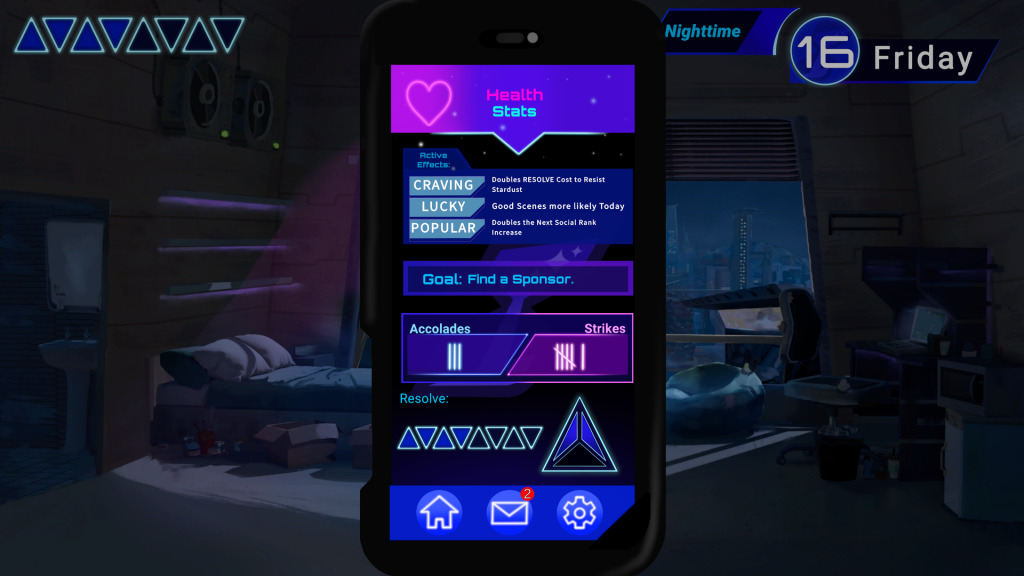
So the challenge is not really “can you say no in one dramatic moment?” It’s “what kind of life are you building that makes saying no possible?” If you are isolated, burned out, stressed, and running on empty, resisting becomes much harder. If you are building routines, friendships, support, and reasons to keep going, your capacity changes over time.
That is what Resolve represents to me. It is not just willpower. It is your mental, physical, and emotional capacity to keep going, and it’s different for everyone.
We also use randomness to reflect the messiness of real life. Players can choose where to go on the map and what kind of life they want to build, but a lot of the moment-to-moment scenes come from an evolving pool of events. Sometimes something beautiful happens when you don’t expect it. Sometimes something awful happens on a day when you were already barely holding it together. You do not control everything that happens to you, but you do often control how you respond.
We let players make bad choices. If they want to spend the night partying, ignore their responsibilities, or use Stardust, they can. The game is not there to lecture them. But choices do carry forward. They affect your relationships, your resources, your opportunities, and the version of the story you end up creating.

We also wanted to avoid presenting recovery as one clean path. Every playthrough can look different. Players might lean on different friendships, pursue different hobbies, explore different parts of New Miami, uncover different secrets, or struggle with entirely different problems depending on how they play. With at least 20 major characters and nearly 40 locations, most players will not see everything in one run, and that is intentional. Some players may not even make it to Day 30.
The main thing we keep coming back to is that recovery is incredibly hard to do alone, and setbacks do not mean failure.
Support can come from many places: friends, family, faith, therapy, education, work, hobbies, support groups, or just having people who remind you that you are still worth fighting for. The important thing is to keep moving forward and keep trying. People help you do that. We want to show that with our game.
How have you signposted to real-world support?
Much thought has been given to signposting and encouraging people to seek support in the game. Can you tell us more about why and how you approached this?
We knew from the beginning that authenticity came with responsibility. The goal was never to position the game as a form of treatment or as a replacement for professional support. Instead, we wanted it to encourage reflection, reduce stigma, and point players toward help when appropriate.
We’ve worked closely with Safe In Our World and put significant effort into ensuring players understand that support is available, even when it doesn’t feel that way.

In addition to creating in-game support resources, many of which have counterparts outside the fiction, we’re also exploring ways to incorporate real-world support resources directly into the experience. That includes crisis lines, organizations, useful websites, and other services that players can access for immediate help.
Many people struggling with addiction don’t actively search for help. We wanted support resources to feel visible, normal, and present in our worldbuilding.
Some resources may appear in traditional places like the credits, but we’re also interested in weaving them naturally into the world itself. A billboard might display a helpline. A character might text the player a legitimate website. A support group banner could include information about where to seek help.
Our hope is that players encounter these resources organically rather than only after they’ve finished the game. Ultimately, if even one player leaves knowing where to find help for themselves or others, then that extra effort will have been worth it.
Tell us about the team behind 30 Days: A Sobriety Simulator
I’ve been fortunate to assemble an incredible international team at Not Right Now Studios, including artists, veteran programmers, award-winning musicians, writers, and addiction consultants who bring New Miami to life responsibly and authentically.
Many members of the team have also been affected by addiction in some way, whether personally or through loved ones. Those experiences have shaped the world, characters, and themes of the game in ways Liz and I could never have accomplished alone.
The result is a project shaped by many different perspectives, rather than one person trying to speak for everyone. No singular person defines what the “correct” recovery story should be. Any story of recovery is “correct.”
Check out ‘30 Days: A Sobriety Simulator’ on Steam, visit the Not Right Now Studios website, and follow the Kickstarter page to be notified when the campaign goes live.
Join our Level Up Mental Health programme to gain access to a wealth of mental health resources for your workplace, including a brand new guide for supporting addiction recovery, co-authored by Tate Pollock.

Skills utilised:
News
Safe In Our World Offers Subsidised Employee Assistance Programme for UK Video Games Industry (Small Studios, Freelancers and Creators)
Safe In Our World renews its Employee Assistance Programme to provide small indie teams, creators, and self-employed people in the UK games industry with affordable wellbeing support.
What is an Employee Assistance Programme?
An Employee Assistance Programme (EAP) is typically a workplace benefit provided by an employer that gives employees access to a range of services to support personal and professional wellbeing.
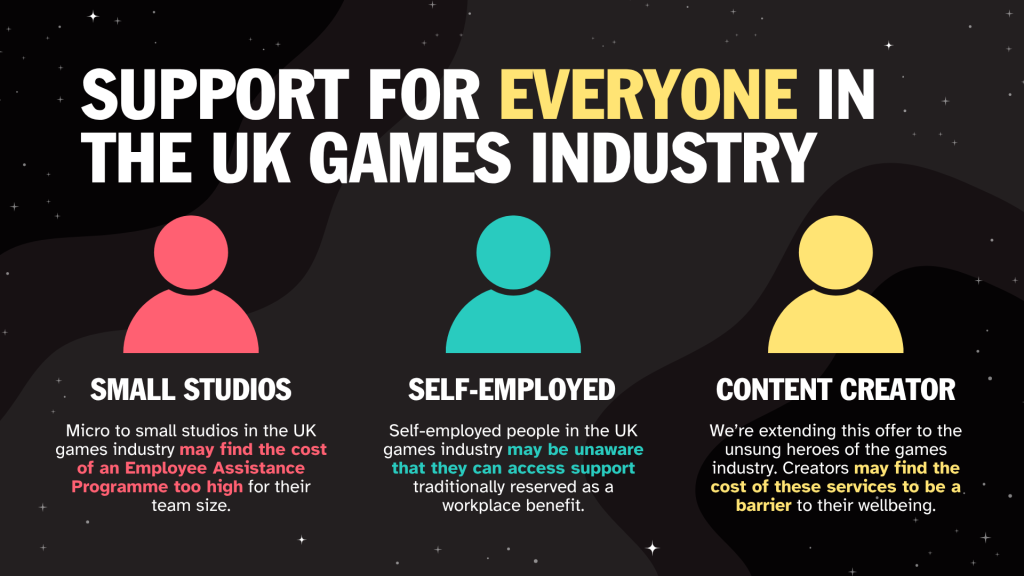
If your first thought is “but I’m not an employee”, then read on, because Safe In Our World’s EAP can also be a huge help to freelancers, creators, and self-employed people across the UK games industry.
What’s included in an EAP?
Employee Assistance Programmes vary in what they offer, but they generally provide access to mental health support, such as therapy, and practical advice on work and financial matters.
The EAP provided by Safe In Our World offers a comprehensive range of support and services, including mental and emotional health, financial and life coaching, and more.*
Mental health and personal development
Many mental health benefits cap the number of sessions you can access per year, but life tends to ignore rules like that. You simply cannot predict the kinds of challenges you’ll face each year, or how many of them you might need some extra support with.
Our EAP gives you access to 10 therapy sessions per issue, per year. After an initial assessment, you’re matched with a therapist based on your preferences. Together, you’ll work through whatever it is you’re struggling with (e.g. bereavement, stress at work, anxious thoughts, etc.), with options for face-to-face, phone calls, or online video appointments.
And when therapy isn’t the solution you’re looking for, there’s also Life & Leadership coaching. This option is ideal for people looking to pursue their personal development:
- Developing communication skills
- Improving time management
- Creating work-life balance
- Reducing the risk of burnout
- Navigating times of change
Work health and financial advice
Worrying about your finances can have a significant impact on your mental health, and poor mental health can affect how you manage your money. Through our EAP, you’ll be able to access Munny – a financial coaching service providing personalised, confidential financial guidance.
Munny can help with a variety of financial matters, including:
- Buying a house
- Buying or leasing a car
- Avoiding or navigating debt
- Making the most of your pension
And if you find yourself needing to take time off work, our EAP provides Active Care – effective intervention on the very first day a fit note is received for stress-related absence, helping you to feel more in control.
Something we know will benefit small companies, and that anyone on our EAP can access, is the Peninsula HR Advice line. Whether you’re a business owner or a freelancer, you’ll be able to talk to a CIPD-qualified consultant. Get advice on anything from risk assessments to sick leave, contracts to redundancies.
Daily self-care and wellbeing
We talk a lot about self-care as a mental health charity, because it’s one of the kindest things you can do for yourself. It’s also a habit, and habits can be hard to form. That’s why using tools like the Wisdom app can be beneficial.
- 24/7 helpline & live chat access to 2000+ qualified counsellors
- Track your mood, sleep, activity, and health trends
- Access a library of webinars, articles, meditations and other perks
- Fitness & music zones to help manage stress
Why access an EAP through Safe In Our World?
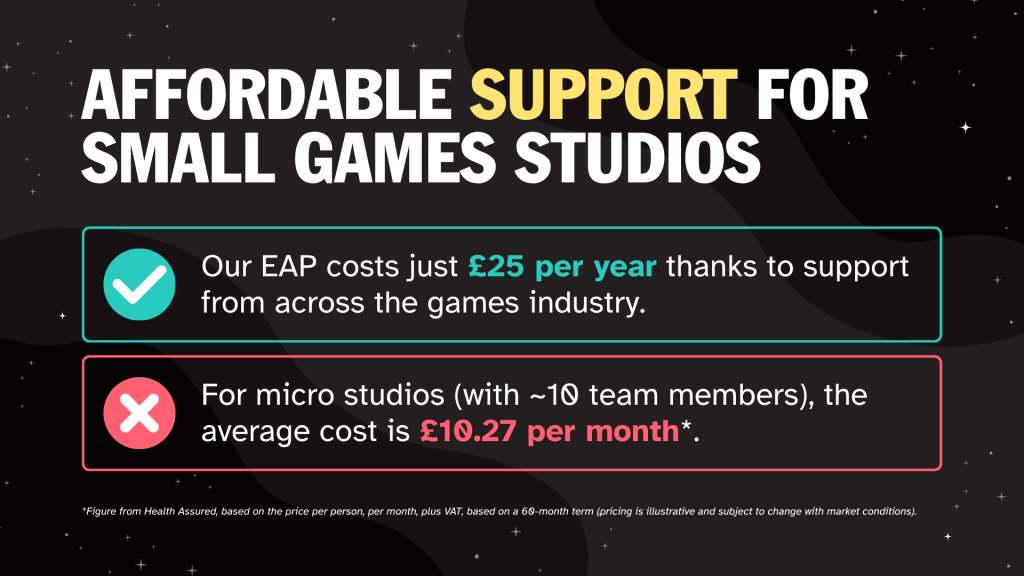
Smaller companies may find the cost of an Employee Assistance Programme too high and uneconomical for their team size. Safe In Our World has always existed to remove barriers to mental health support in games, and our subsidised EAP provides that support.
Joining our EAP costs just £25 per person for the entire year (calculated pro rata from August 1, 2026). Meanwhile, studios with ~10 employees would spend an average of £10.27 per employee per month** to access the same support (that’s £123.24 per year).
In combination with our Level Up partnership, which gives games industry companies (of any size) access to a wealth of free mental health tools, training, and resources, our EAP takes your workplace wellbeing to the next level.
Get in touch for more information, to sign up to our EAP, or to become a Level Up partner with Safe In Our World.
*Figure from Health Assured, based on the price per person per month, plus VAT, based on a 60-month term (pricing is illustrative and subject to change with market conditions).
**Our EAP offer is only available to games industry teams, self-employed games industry professionals, and video game-focused content creators based in the UK at this time.
Skills utilised:
News
A recap of Develop:Brighton 2026 with Safe In Our World
The Safe In Our World team returns from another busy Develop conference in sunny Brighton. Here’s what happened, and what’s to come!
We went to Develop:Brighton as a team of four, and returned with five. Before we crack on with our recap, we’d like to first introduce you to Eben Cunningham – Safe In Our World’s new Business Development and Fundraising Manager.

Eben dived into the deep end with his new role at Safe In Our World, spending his first week getting to know the team, the trustees, patrons, and charity friends at one of the industry’s busiest events. If you attended Develop:Brighton, Eben probably cornered you for a conversation already – but you’re welcome to drop him an email to discuss potential partnerships and sponsorship opportunities.
It was thrilling to jump into my new role at Safe In Our World, with access to one of the most important networking events in our industry. Thanks to everyone who came to say hello, to wish me well in my new position, and to offer support to our charity – I cannot wait to work with you in the future and make the games industry a safer, healthier place for everyone to enjoy. – Eben
Day 1: Unity Dev Day Raffle
We’re always honoured to be invited back to the annual Unity Brighton Developer Day to kickstart our week with a raffle – and this time we broke a record, raising a whopping £1070 in just one afternoon!

Event-goers were spoiled for choice thanks to the prizes donated to us by mental health advocates and allies across the games industry. Get in touch if you’d like to donate prizes or game keys to support mental health.
Day 2: Safe Break Mixer
We were raring to go on Tuesday morning, with the promise of gentle networking, great food, and familiar faces from across the games industry arriving at our annual Safe Break mixer. We were also pleased to see new faces in attendance, as our mixer grows year on year.
We spent the morning filling in compliment banks, discussing strategies for anxiety, and sharing our self-guided mindfulness toolkits. We spent the afternoon soaking in vitamin D on the sunny rooftop terrace of Sea Lanes in Brighton, connecting with industry friends and discussing our Level Up programme.

Instead of wellbeing becoming an afterthought at the end of a long, intense day of networking, our mixer incorporates self-care. We made time for drawing, colouring, sharing stories, and sitting listening to lo-fi tunes from our favourite video games.
Day 3: Breaking Down Barriers to Mental Health
With the expo in full swing, it was time to team up with Safe In Our World Ambassadors who helped us run our booth this year. You may have met Jamie, Nate, Jessie, Alex, Mivi, Jack and JJ – some of our fantastic ambassadors helping to bring mental health to the forefront of the conversation in games.

We were able to show off our newly printed publicly available Impact Report, detailing some of the wonderful mental health initiatives and collaborations we’ve been able to explore over the last year.
Our Programmes Coordinator, Izzie, also hosted a roundtable discussing barriers to implementing mental health support. There were some incredibly thoughtful contributions from attendees, acknowledging the barriers they faced but also coming up with ‘easy win’ solutions to breaking down these barriers – here are some of our favourite crowd contributions.
- Making time for non-work chat (especially when remote working!)
- Scheduling emails and/or not expecting a response outside of working hours
- Advocating for taking breaks / leaving loudly
It was great to see how many people were keen to contribute to a conversation around better mental health support, and it’s clear that despite the barriers individuals and companies face, there really is a desire to do better. I hope we can continue to support folks across the industry by removing as many barriers as possible. – Izzie
To learn more about how to implement better mental health support, consider joining our FREE Level Up programme, which provides you with all the tools to get started or improve existing practices. Or, get in touch to discuss becoming a Mental Health Star with our flexible, scalable accreditation.
Skills utilised:
News
Safe In Our World announces free workshops to help the games industry protect their mental health through redundancy
The last month has been the worst for games industry layoffs this year, and with over 8,000 people impacted by redundancy in 2026 so far, Safe In Our World is facilitating free, expert-led sessions to build resilience and protect your mental health amid job insecurity.
For many people, redundancy is a scary word. For people in the video game industry, it’s also a familiar word. Navigating the uncertainty that comes with a job loss (or even the looming possibility of being out of work) can have a significant impact on your mental health.
What if I can’t find anything else?
What if I need to reskill to find work?
What if I am not good enough?
Your mind might be swimming in “what ifs”, making it hard to see a path forward. If this feels familiar, you might benefit from Safe In Our World’s free online workshops for people facing uncertainty due to games industry layoffs.
Protect your mental health during games industry layoffs
There are no easy answers to the challenges you’re facing, but there are strategies you can learn to help control the panic and manage the stress of redundancy. There are tools to support your mental health during this difficult time, and we’re here to help you access them.
Stuart John Chuan, experienced psychologist and member of Safe In Our World’s Clinical Advisory Board, will return to deliver three interactive online workshops for people impacted by job losses in the video game industry.
Stuart is such a good host, very knowledgeable, calm and allows people time to share… Really helpful information and actionable points. – Attendee

Build your toolkit for emotional resilience
Our workshops will be free to access, and they will focus on providing you with practical psychological tools to maintain your wellbeing during periods of change. You’ll learn how to:
- Process the emotional impact of change with self-compassion
- Cultivate your resilience to manage stress and uncertainty
- Nurture your identity and self-worth
- Develop an effective problem-solving approach for the challenges ahead
- Build acceptance for circumstances beyond your control
Through guided activities, personal reflections, and group discussions in a confidential setting, you’ll gain valuable insights into how to navigate change with greater psychological resilience. Book now and build your own wellbeing toolkit to navigate games industry layoffs.
📅 Wednesday 5th August – 12:30-1:30pm BST
📅 Friday 7th August – 4:00-5:00pm BST
📅 Tuesday 18th August – 11:30-12:30pm BST
Upon completion of the workshop, you will receive a resource sheet summarising key learnings, as well as activity sheets for daily or weekly mental health check-ins to help you track changes in how you’re feeling as you apply what you’ve learned.
Skills utilised:
News
Your essential self-care checklist for Develop:Brighton
This isn’t an article; it’s a checklist – helping you practice good self-care at Develop:Brighton 2026.
We’ve done this before, and we’ll keep doing it so long as it helps just one person stay healthy and happy at video game industry events like Develop:Brighton. Let’s start by taking a look at your wellbeing toolkit.
Pack your self-care essentials
What you carry with you will make all the difference to your wellbeing. You want to prioritise essentials that help you hydrate, fuel your body, and self-regulate. Remember, you’ll be carrying this bag all day, so it’s important not to weigh yourself down.
Everyone’s needs will be different, but here are some common essentials to get you started…
- 500ml water bottle (ideally one that’s easy to refill)
- Lightweight, shelf-stable snacks (e.g. protein bars)
- Small fidget toys
- Travel-sized personal care products (e.g. hand sanitiser, sunscreen)
- Earplugs, noise-cancelling headphones, etc.
- Portable hand fan
- Any medication/pain relief
- Throat lozenges (thank us later)
- Phone charger or portable battery
Choosing the right bag can help reduce your stress at events! Make sure it’s comfortable to wear and has compartments to help you find what you’re looking for, fast. If your bag doesn’t have compartments (e.g. a tote bag), you can avoid rummaging by keeping your smaller essentials (e.g. hand sanitiser, lip balm, fidget toy) in a smaller pouch – that makes transferring between bags easier too!
Plan your self-care strategy for Develop:Brighton
Nobody can expect to bring their best self to an industry event when their best self isn’t receiving self-care. With the pressure felt across the video game industry, it’s understandable if you feel you need to make every moment count at events like Develop:Brighton. Productivity is the name of the game – but here’s the thing: self-care is productive.
With that in mind, here are some important reminders to help you reframe your schedule and make space for more than just meetings…
- Stay hydrated – dehydration can cause fatigue, headaches, and negatively impact your memory (not great when you’re trying to remember people’s names.
- Don’t skip meals – you’re probably expending more energy than usual, flitting between meetings and roundtables. Now is not the time to ditch your usual eating habits!
- Allow yourself regular breaks – you’re going to do a lot of walking, so give your body time to rest too. Be the person who suggests sitting down; you might help someone else as well as yourself.
- Get fresh air – you might not notice it at first, but the quality of air suffers at big events, which can cause headaches and tiredness, so don’t forget to step outside and breathe in that salty sea air.
- Check in with yourself – make time to consider how you’re feeling, physically, mentally, and emotionally. This can help you avoid overstretching yourself and feeling burned out.
- Say no – you are allowed to set boundaries. That means if you don’t want to attend a party, or have an alcoholic drink, or go somewhere you’re unfamiliar, or stay up late… you can say no.
- Prioritise your sleep – a poor night of sleep will negatively impact your memory, concentration, and overall enjoyment of the event. Listen to your body and give it the recovery time it needs.
You might not feel there’s much use in scheduling in self-care, because surely these are just things you’ll remember or won’t even need to consciously think about. But you’d be surprised what gets forgotten when you’re in the thick of it. Don’t leave your wellbeing to chance. Make a conscious effort to look after yourself (especially at an event that has historically been very warm).
Provide self-care reminders to others
Maybe you feel you’ve nailed self-care at events. We tip our proverbial hats to you! In all seriousness, these aren’t easy habits to get into, so well done.
You might remember what it was like before you started to pay closer attention to your self-care. Maybe you felt silly doing check-ins with yourself, or you felt pressure from your peers to crack on and push through.
Be the voice you needed to hear back then. You can do this by reassuring people they’re okay to take a break and a breather, but you can also lead by example. When you decide to refill your water bottle, suggest your peers accompany you to do the same. If you think it’s time for some fresh air, suggest you take the conversation outside. When you think it’s time for food, ask what everyone’s lunch plans are! It’s those small reminders that get us all into better habits.
We hope you have an enjoyable, productive, and safe time at Develop:Brighton. Remember, you can find Safe In Our World at our official Safe Break mixer on Tuesday (14th July 2026), and at the expo on the Wednesday and Thursday!
You can also visit The Wellbeing Hub for a free-to-access space to pause, reflect, and recharge (and there’ll be paid activities like yoga, sound baths, and more – with the funds raised supporting us and our friends at SpecialEffect).
Skills utilised:
News
10 ways to be a better disability ally
July is Disability Pride Month, and we’re exploring some of the ways you can be a better ally to your loved ones and colleagues who identify as disabled.
The Medical VS Social Model of Disability
Disability means different things to different people. The medical model of disability argues that physical and/or mental limitations or impairments are what make a person disabled. While this framework has had a significant impact on medical progress, it doesn’t account for an individual’s social and geographical environment.
Disabilities are seen as something that deviates from what’s typical; something that needs “fixing”. Put bluntly, under the medical model, if you can’t walk, your legs are the problem – not the lack of a ramp or lift.
The social model of disability considers disability to be the social consequence of having an impairment in a world that has not been built to accommodate it. It looks at ways to remove barriers and challenge systemic issues.
Redesigning the world with disabilities in mind can allow disabled people to live independent and equal lives in society. Revisiting our previous example, under the social model, if you can’t walk, the lack of a ramp or lift is the problem – not your legs.
Disability stereotypes in the media
Many of us have been influenced by the way disability has been portrayed on screen. We’ve seen the blind character on TV, wearing dark glasses and using a cane. We’ve encountered Deaf characters with a significant speech impairment.
We’ve witnessed wheelchair users wielded as a narrative device about overcoming adversity, autistic characters depicted as a young, white boy throwing a temper tantrum, or savants needing to be isolated in an institution (think Rain Man).
The media’s tendency to perpetuate stereotypes by oversimplifying disabilities has a huge impact on visibility. It regularly overlooks chronic conditions, intersectional experiences, and the fact that every disability exists on a spectrum.
Authentic representation is vital, powerful – it shapes public opinion by educating those who wouldn’t otherwise have much interaction with disabled people. It encourages a more inclusive society by making disabled people feel seen, and it helps us develop empathy.
Hidden and Dynamic Disabilities
Disabilities aren’t always visible. Be it a job advertisement encouraging disabled people to apply or the sign for accessible car parking, we often see wheelchair users depicted to communicate “disability”.
As we work towards meaningful inclusion and psychological safety, disabilities need to be recognised beyond that which we can see. Organisations like Unseen Aware make it their mission to educate people in how to become better allies.
Disabilities like hearing loss, ADHD, or stammering are all often overlooked because they’re less visible, and they often have dynamic symptoms – where symptoms, severity and impact can change day to day, or even hour to hour).
For people with dynamic disabilities like arthritis, fibromyalgia, or Ehlers-Danlos syndromes, it can be hard to predict how they’re going to feel each day. In addition to the lack of recognition, these disabilities often face increased stigma due to the different levels of support needed on different days.
Disability and Intersectionality
According to the World Health Organization, approximately 16% of the world’s population experiences a significant disability. Furthermore, disabled people who fall into other marginalised groups are more likely to face other health issues due to the additional stress related to being marginalised.
- One in three LGBTQ+ people are disabled
- One in five women globally live with a disability
- One in four Black people live with a disability (CDC)
When people don’t have equal rights or aren’t accepted in society, it directly impacts their physical and mental health. If more than one part of a person’s identity is considered marginalised, they’re more likely to experience discrimination and face barriers in all aspects of our society.
Being a better ally
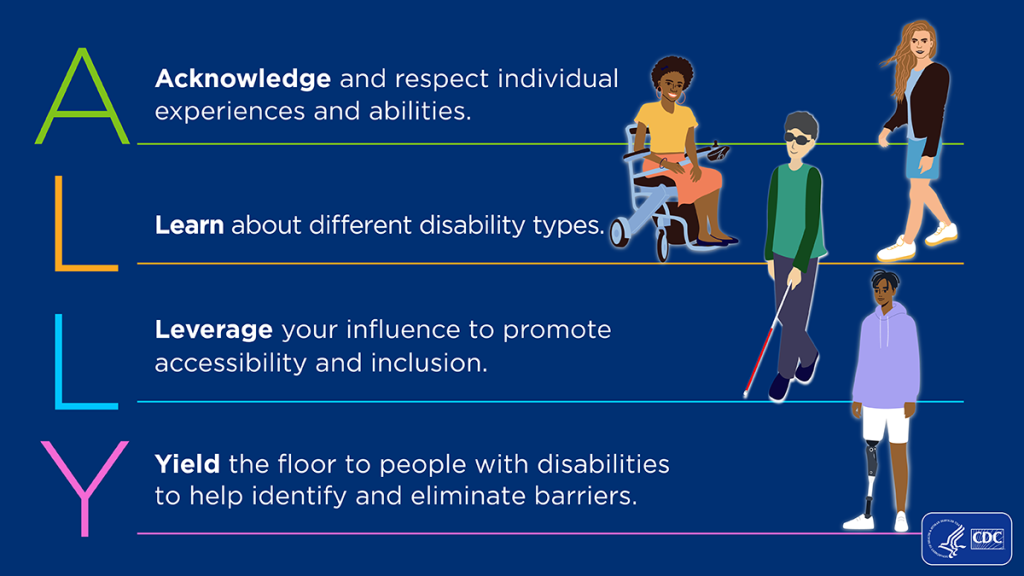
A disability ally is someone who actively supports the rights of disabled people without being disabled themselves. Being a good ally takes more than verbal support, so we’ve pulled together a list of 10 steps you can take to better support disabled people.
- Educate yourself on disabilities. Take initiative and start learning about different disabilities, challenges that disabled people may face, and adjustments that could help them.
- Actively listen! The disabled community has a saying: nothing about us without us. Make it a priority to listen and discuss the needs and concerns of disabled people in your life.
- Do not assume. Take what you’ve learned in this article about hidden or dynamic disabilities, and don’t assume someone is or isn’t disabled by how they look. Don’t assume they’re exaggerating, or faking, just because their symptoms fluctuate – and avoid assumptions about a person’s capabilities based on their disability.
- Empathise and be respectful. Language is powerful, so make sure to avoid using stigmatising or exclusionary language. You can ask questions to better understand without being invasive, and you can encourage someone while trusting and respecting their boundaries.
- Use your privilege to advocate. 9 out of 10 disabled people have experienced negative attitudes at work.
Creating a more inclusive workplace
Designing workplaces with inclusivity in mind benefits everyone, not just disabled people. With one-third of our lives spent at work, it’s crucial to create work environments that allow for psychological safety, inclusivity, and positive mental health. To continue our list, here are some best practices for employers when building more inclusive workplaces:
- Develop your knowledge in workplace accessibility. Safe In Our World has created a workplace accessibility toolkit, providing guidance and information from hiring and onboarding practices, to ongoing communication and social accessibility.
- Give your leadership the right tools. Provide line managers with disability inclusion training, as well as the tools and knowledge to support to support employees with reasonable workplace adjustments. Invest time into upskilling communication skills in management to build trust and psychological safety.
- Listen to disabled employees and colleagues. Actively listening to disabled employees will help you gain a better understanding of their lived experiences, needs, and concerns. It’ll help you understand accessibility barriers, improving workplace culture and ways of working.
- Design inclusive physical workplaces. Prioritising workplace design doesn’t just mean providing ergonomic chairs and opening windows regularly. Consider accommodations for physical and developmental disabilities alike: from step-free access and accessible meeting rooms, tactile signage and adjustable desks, to quiet rooms and natural light.
- Amplify disabled voices! Beyond policies and accommodations, disability inclusion is about ensuring employees with disabilities are represented in projects and leadership positions. Consider establishing culture groups for disability advocacy, and supporting growth through mentoring and development programmes.
Become a Level Up partner
If you’re looking for more support with workplace inclusivity, become a Level Up partner. Our free mental health initiative provides you with even more resources, webinars, and toolkits to help your leaders and your teams become more confident in creating accessible work environments that support their mental health.
References
- Unseen Aware
- World Health Organisation: Disability
- Pride, Power, and Accessibility: Exploring the Intersectionality of LGBTQIA+ and Disability Communities
- Viewing Disability Through Intersectionality
- Infographic: Adults with Disabilities: Ethnicity and Race
- Racial/Ethnic Disparities in Disability by Health Condition
- SCOPE – Disability facts and figures
Skills utilised:
News
Safe In Our World reveals game-changing collaborations and mental health initiatives in its first-ever public Impact Report
Safe In Our World has just released its Impact Report 2025 – 2026, a breakdown of all the mental health initiatives our charity has delivered over the last 12 months – supported by our trustees, patrons, partners, ambassadors, and friends across the video games industry.
This is an exciting announcement for us! Something we’ve wanted to do more as a team is shout about all the cool projects and important work we get to do as a mental health charity in the video game industry. And what better way to celebrate a year of exciting creativity, campaigns, and collaborations than with an Impact Report?
Mental health in the video game industry
The video game industry has a big burnout problem. The pressure to perform, to crunch, to deliver in the face of job insecurity – it’s having a significant impact on the mental health of the people making our industry tick.
It’s a tough thing to lose that spark – the very thing that makes your imagination run wild and allows creativity to blossom. With over 3,000 games industry professionals already made redundant in 2026, it’s even harder to hold on to your passion and protect your mental health.
That’s why what we do is so important, so vital, to the health of our industry. Safe In Our World is answering the need for mental health training and resources in our workplaces. We’re increasing awareness and providing practical tools to boost workplace wellbeing across the global games industry.

We’ve been working to protect your mental health
Since Safe In Our World was established, we’re proud to have supported 70,000+ employees across the video game industry with free mental health resources. Our charity has now trained over 400 video game industry professionals in mental health awareness, delivering $450,000 in free training to date.
“Individuals and organisations have felt the instability and mounting pressures that threaten jobs, businesses, and livelihoods. We believe no one should be left to face mental health challenges alone.” – Sarah Sorrell, Charity Director
Last year, Safe In Our World launched the games industry’s first-ever mental health accreditation, the Mental Health Star Accreditation. This flagship offering represents a significant step towards recognising the companies driving positive change in mental health within the industry. It also provides practical tools and insights on how companies can better support their employees.
We’ve also given our Level Up Mental Health programme an overhaul this year, to further reduce barriers to information about mental health and workplace wellbeing. Our monthly live webinars are now open to all, with a catch-up service and additional mental health resources available exclusively to our Level Up partners.

Sky (Head of Programmes) and Sarah (Charity Director) attending gamescom to bring mental health resources to the games industry.
We support gamers with their mental health
Safe In Our World has also been working hard this year to improve the mental health tools and resources available to gamers. In 2025, we collaborated with Ubisoft to deliver three downloadable resources for kids, teens, and parents (available in five languages). The Good Game Playbooks help young people navigate online toxicity and protect their mental health while playing online games.
And this year, we teamed up with AbleToPlay to introduce a new category on the game search platform, helping players find games that align with their mental health needs and interests. Headspace launched in May, and gives gamers the ability to discover games that share educational insights about mental health, centre mental health in their narratives or design, or can directly help the player’s mood.

“Thousands of players have found games with the new Headspace category. Players have told us this new category is a game-changer – a seriously positive source of support for their needs.” – Arman Nobari, Co-founder of AbleToPlay
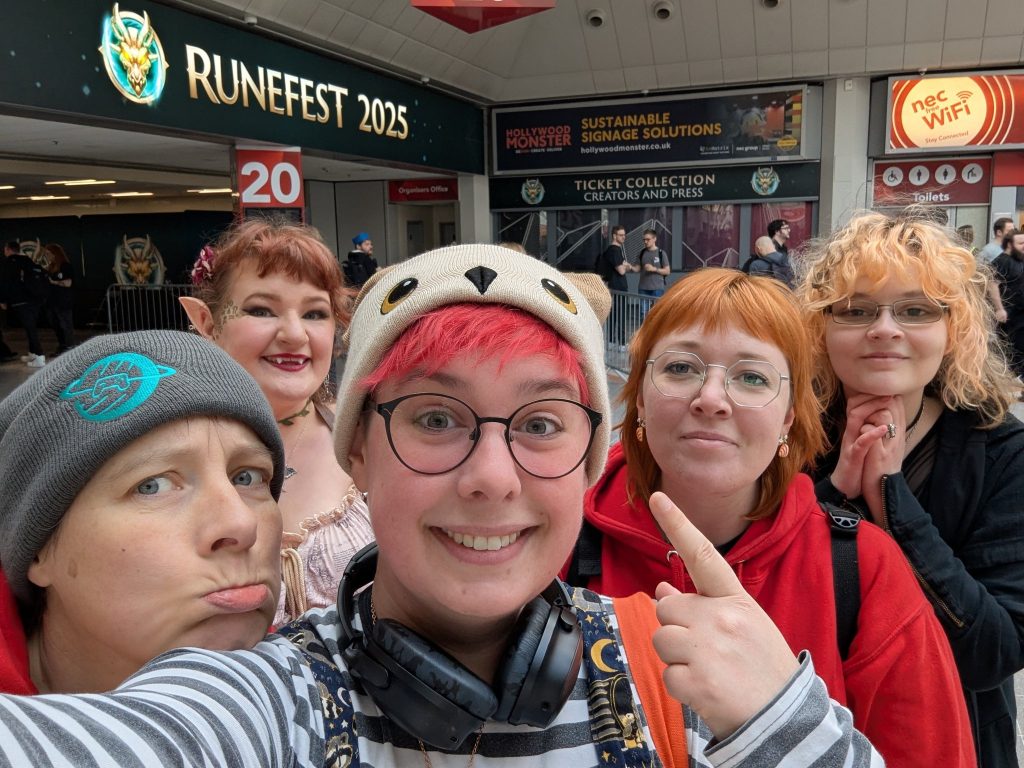
Safe In Our World team and volunteers attending RuneFest 2025 to bring mental health resources to gamers.
A new chapter for Safe In Our World
Safe In Our World is excited to start another chapter in our charity’s story. As the video game industry grows and changes, so will we, adapting to the needs of those who play games and those who make them.
Going forward, we’re focusing on building strong foundations for our charity’s future and amplifying our existing work to ensure everyone can benefit from our free mental health tools, training, and resources.
We’re also excited about securing new revenue streams and partnerships, so if you’re thinking maybe my games company would look good in Safe In Our World’s Impact Report next year (and if you weren’t, you are now), then get in touch.
But most of all, we’re committed to continuing our mission and boosting support for gamers through new mental health initiatives. It’s why we’re here, it’s what we do, and we feel honoured to do it.

The Safe In Our World team raising awareness and providing mental health training and resources at Develop:Brighton 2025.
Skills utilised:
News
Safe In Our World’s mixer, Safe Break, returns to Develop:Brighton for its second year!
Safe In Our World will be hosting its second Safe Break mixer at Develop:Brighton to share mental health best practices for the games industry.
Safe Break is back for year two at Develop:Brighton, this time at sunny Sea Lanes. Last year, we welcomed games industry professionals and aspiring devs to our inaugural Safe Break mixer. It was a space for gentle networking and discussions on best practices for self-care at events and conferences.
This year, we’re excited to welcome you back for more discussions around mental health best practices in the games industry. Much has happened in the last 12 months, including the launch of Safe In Our World’s Mental Health Star Accreditation.

Join us on the sunny rooftop terrace of Sea Lanes to talk with us about getting accredited, or becoming a Level Up partner, and accessing free mental health tools, resources, and monthly training opportunities.
Safe In Our World is committed to providing alcohol-free, relaxed mixers that welcome both new and seasoned Develop:Brighton goers. Ease into the hustle and bustle of the event, see familiar faces, make new connections, and take a safe break.
What’s on at Safe Break 2026
Alongside networking opportunities, our annual mixer gives you a chance to self-regulate and check in on your mental health. We’ll have:
- Discussions around mental health and workplace wellbeing
- Self-care activity sheets
- Safe In Our World goodie bags
- Coffee, pastries, and sandwiches (V, VG available)
The entire Safe In Our World team will be at our Safe Break mixer, making it an ideal opportunity to meet the people behind our charity and learn how we can support you and your workplace.
📅 Tuesday 14 July, 11am – 2pm
📌 Sea Lanes, 300 Madeira Drive, Brighton BN2 1BX
🎫 Get your tickets for Safe Break 2026
Tickets are £5, which goes directly to supporting our charity. We’re mindful that the cost of admission may be a barrier for some event-goers. Please reach out to us if this applies to you – email hello@safeinourworld.com for support.

📢 Safe In Our World would like to thank Electric Square for sponsoring our Safe Break mixer this year.
Getting ready for Develop:Brighton
Last year, we shared 7 event self-care tips for surviving Develop:Brighton. Staying hydrated, making time for breaks – sure, they sound like the basics now, but when you’re in the thick of it, they’re often the first to be forgotten.
When the pressure is on, and we’re all preoccupied with productivity, that stress begins to take a toll on our mental health – but there are things you can do!
Check out the Event Safety Standards Guide, made in collaboration with Take This, for guidance on attending game industry events, staying safe, and accessing local support.
TicketSource is set to a £5 minimum donation, but you are welcome to donate more. All proceeds from ticket sales for this event will go towards Safe In Our World’s mission to support mental health in the games industry and global gaming communities. If you choose to donate more, additional donations can be used to give individuals experiencing financial difficulty the opportunity to attend this event free of charge.
Skills utilised:
News
Headspace: Discover games with mental health benefits through AbleToPlay
Safe In Our World has partnered with AbleToPlay to create “Headspace” – a new mental health-focused category on the community-driven platform that helps gamers discover accessible games!
We’re thrilled to announce that Safe In Our World has been working with the amazing folks at AbleToPlay to develop a new way for gamers to discover games with mental health benefits. But first, what is AbleToPlay?
AbleToPlay helps players find accessible games
AbleToPlay is a free, community-driven platform that helps gamers with disabilities find games they can fully enjoy. You can create a private profile of your physical and cognitive accessibility needs, then search for games that meet them. Whether you’re looking for subtitle customisation, cross-platform coop, or simply want to avoid games with spiders, AbleToPlay is the platform to turn to in your search.
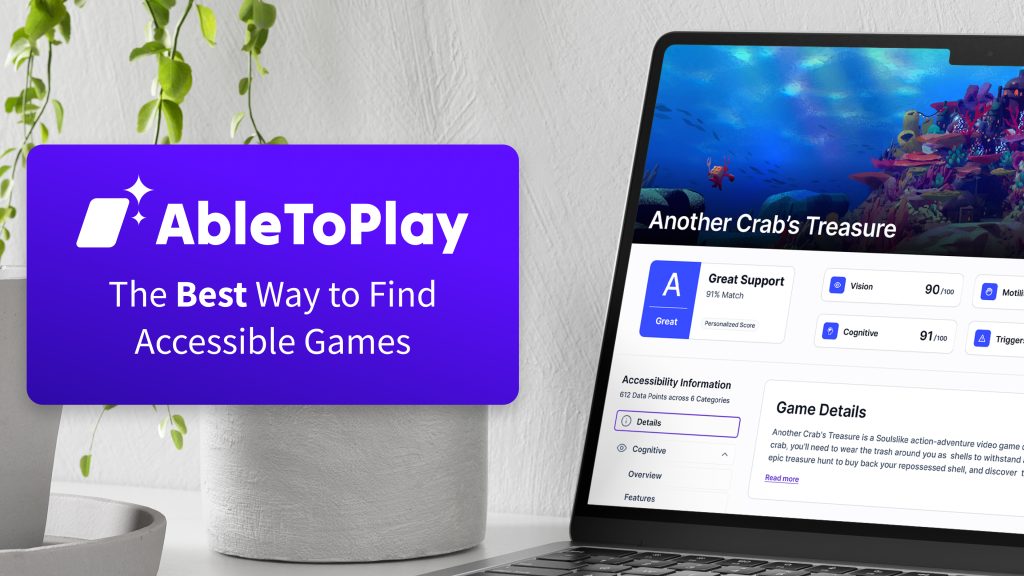
Safe In Our World jumped at the chance to collaborate on a new category for AbleToPlay, focusing on finding games that can help players relax, encourage social connection, offer a creative outlet, and much more. And so, Headspace was born!
“Mental health is a fundamental part of accessibility, and knowing what kind of game you’re about to jump into can be the difference between finding a new favorite, or being caught off-guard,” said Arman Nobari, co-founder of AbleToPlay. “Our partnership with Safe In Our World seeks to bring new kinds of support to gamers everywhere, to find games that truly fit their needs.”
Headspace highlights the mental health benefits of gaming
With the input of our Clinical Advisory Board, Safe In Our World determined the criteria for the Headspace category. We wanted Headspace to help players appreciate the scope of how games can support their mental health, which is reflected in the options presented to users.
You can refine your search to include low-pressure games that help you unwind, or find games that challenge you in meaningful ways. You can opt for games that feel familiar, soothing, and safe through task-based play, or team up to build relationships through cooperative gaming.
If you’re in the mood to learn, Headspace help you discover games that share educational insights about mental health, or games that centre a personal mental health story or lived experience as the narrative or design. There’s even the option to help you find games that teach self-soothing or therapeutic techniques, such as grounding or breathing.
“Games have an incredible capacity to educate and support mental ill health and mental illness,” says Sky Tunley-Stainton, Head of Programmes at Safe In Our World. “We are thrilled to have been able to work with AbleToPlay on the Headspace Mental Health category to help gamers identify titles that can support them in gaining knowledge, skills, or simply a relaxing escape for managing their own mental health.”
We’re excited for you to discover the many benefits that AbleToPlay brings to the video game community – and explore how Headspace can help your mental health! Why not set up a profile and see for yourself?
Skills utilised:
News
Safe In Our World Ambassadors try out modular gaming hardware for Global Accessibility Awareness Day
Two Safe In Our World Ambassadors tested accessible gaming hardware designed by Thumb Soldiers for Global Accessibility Awareness Day (GAAD) 2026.
THUMB SOLDIERS: IN A NUTSHELL
Safe In Our World met with David Chapman and Roxanne Needham, the founders of Thumb Soldiers, who shared their mission to revolutionise how we engage with video games. Designed by gamers, for gamers, their modular gaming controller attachments were developed to improve comfort and performance during play.
“Thumb Soldiers tackles problems like pain during play, limited grip or dexterity, or even just fatigue after a short session,” says David, who shared his own struggles with thumbstick control since starting gaming in the 80s.
“It’s like footwear,” explains Roxanne. “You wouldn’t wear the same shoes for football, racing, or golf. You’d wear the right shoes to perform at your best – and it’s the same with thumb grips when you’re gaming.”

HARDWARE FOR GAMING ACCESSIBILITY
At Safe In Our World, we believe that video games can be a great source of comfort, offering opportunities to connect, create, and blow off steam! As a mental health charity in games, we’re proud advocates for accessibility. Everyone should be able to play games and enjoy the benefits to their mental health.
So, we were curious to learn more about how Thumb Soldiers could help improve accessibility during gaming, addressing physical barriers (that we sometimes don’t even notice). We asked two Safe In Our World ambassadors to test the hardware and share their feedback.
“GAMES ARE MY JOY!”
After trying out hardware from Thumb Soldiers for their Nintendo Switch, Ladell, Class of 2023, shared that the Stud and Rock n Roller attachments opened up new gaming opportunities. “I was able to play games that I’ve not previously been able to focus on, such as Hades (1 and 2). The hardware lessened my thumb cramp and strain – and allowed me to rest them a lot easier on a bigger surface area.”
To our delight, Ladell also reported less pain after using the attachments compared to their usual levels. “I have chronic pain, so holding controllers (especially a handheld like the Switch) for long periods of time is never fun – but games are my joy!”
“Having this tech allows me to ease the strain,” says Ladell. “It did make me feel more hopeful about what games I can now play on my Switch.”
“GAMES ARE ALREADY SO EXPENSIVE”
When asked about accessibility in games and how this impacts mental health, Ladell said, “I rely on games as one of my key mood boosters. My body can have up days and down days, and not being able to play due to a lack of accessibility angers and upsets me. I can find myself retreating and feeling isolated because of things out of my control.”
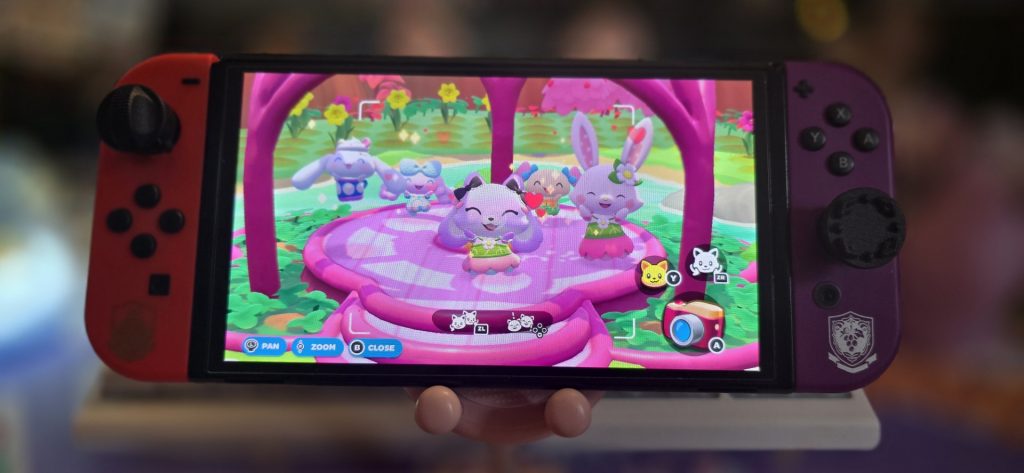
Ladell noted that they wished the attachments came in more colours (ideally pink), but that it was a joy to discover affordable hardware to improve gaming accessibility. “One of my biggest problems with accessibility is the pricing behind it,” Ladell explains. “Games are already so expensive.”
“I’m currently unemployed, so knowing there’s tech out there that can enhance my gaming, that doesn’t require me to sell my soul, makes me smile.”
“IT FEELS LIKE SOMETHING YOU TAILOR TO YOURSELF”
Codie, Class of 2026, noted that she loved how modular the hardware is and how simple it felt to swap pieces around. “Thumb Soldiers aren’t trying to make this a one-size-fits-all solution. It feels like something you tailor to yourself, which I think is really important for accessibility.”
Codie goes on to say, “I could quickly tell these are very specialised tools, and something you’d need to experiment with to find your perfect setup.”
Conveniently, Thumb Soldiers has a 30-day Risk Free Returns policy, so if you’re not satisfied with your order, you have 30 days to return the product for a full refund.
“Gaming should feel fun and inclusive, not tiring or frustrating because of physical barriers.”
“I DIDN’T REALISE HOW MUCH I WAS COMPENSATING”
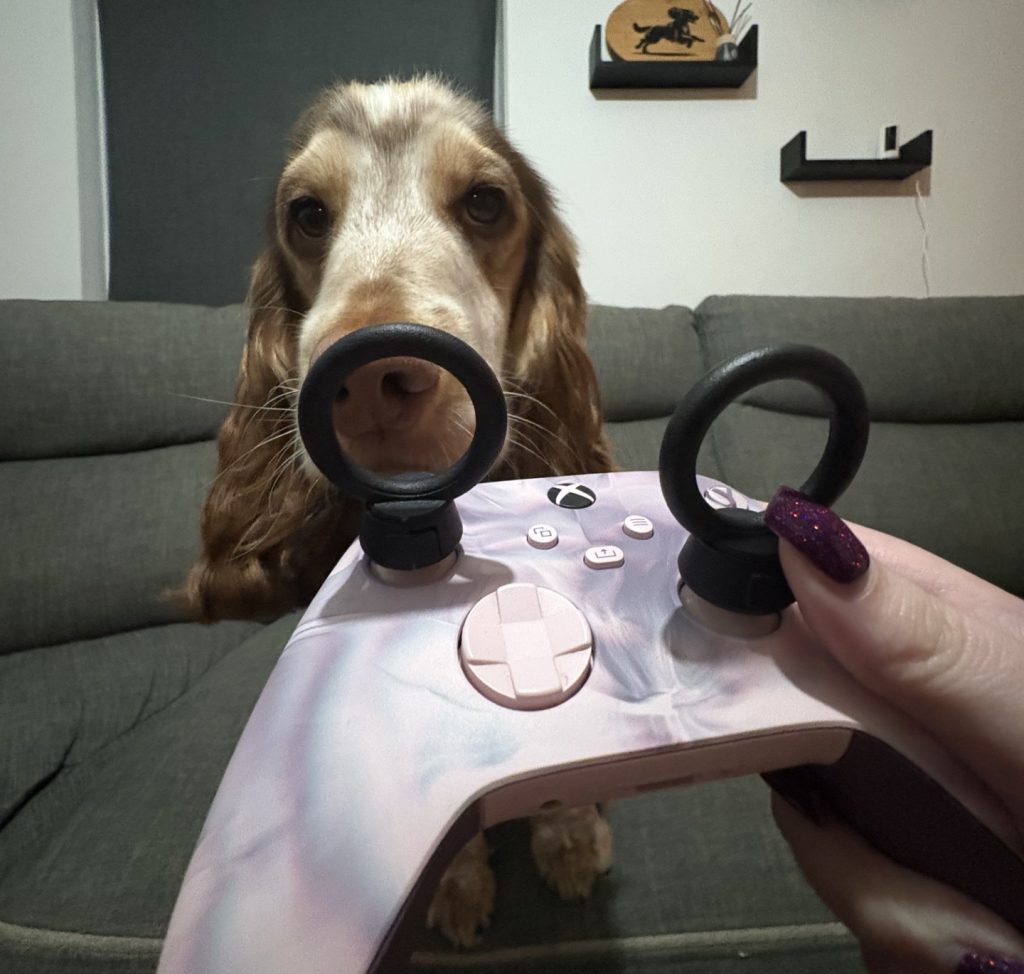
Breaking down her experience, Codie described the types of hardware she tested and how it impacted not just her, but her partner’s gaming experience. “The biggest benefit was the Shroom thumbstick. I have hypermobility and extended joints, especially in my thumbs, and I didn’t realise how much I was compensating until I used it.”
“The added height from where it has to sit on top of the standard thumbsticks actually made things feel a lot more natural and comfortable. Meanwhile, my partner’s experience was quite different. The added height from the hardware caused strain in his wrists, and due to his FND (Functional Neurological Disorder), that strain very quickly led to fatigue. So, while it helped me, it didn’t work for him.”
“DON’T BE AFRAID TO EXPERIMENT”
Trying out Thumb Soldiers led Codie to reflect on her gaming experience, realising she’d been overlooking a source of discomfort. “It made me realise that I had been experiencing strain while gaming, and had just normalised it.”
“Trying something different and finding a massive improvement in comfort has made me much more aware of what I actually need, and that was a really good feeling. It made me excited about what could work, rather than discouraged by what didn’t.”
“Realising that I didn’t have to just put up with discomfort, and that there are ways to improve it, made me feel a lot happier and more positive about gaming.”
When asked if Codie had any advice she’d give to others who might be curious about Thumb Soldiers to improve their comfort when gaming, she said, “Don’t be afraid to experiment! What works for one person might not work for another, and that’s completely okay.”
“Think about your specific needs, rather than guessing based on something saying it’s accessible. Read reviews, watch videos of the kits in action. It’s definitely a process of trial and error, but even small changes can make a big difference – so it’s worth exploring!”
Ladell adds, “Choose a controller you use the most at first and think about what might reduce the strain the most. Then think about what types of games you play, and how the accessories might best support playing those games. I selected attachments that I knew would help me in many of the games I play.”

Skills utilised:
News
What We Learned at GDC Festival of Gaming 2026
Safe In Our World were back in San Francisco this year for GDC Festival of Gaming, and we wanted to share some of our key takeaways from talks at the event.
What’s holding us back?
Sarah and I kicked off the week with Cecile Hemery’s workshop From Reliable to Respected: Breaking free of the ‘good job trap.’
This workshop centred on the feeling that you’re doing everything right, but something still feels off. The feeling that doing a really good job isn’t enough anymore, identifying which “trap” you may have fallen into, and how to move forward.
It was a very well-attended session with some great insights from the other attendees, who were at all stages of their careers. We looked at the archetypes of Reliable, Impulsive, Overlooked and Respected, understanding the different dynamics that these types of people may form within a team, and how it impacts you on a personal level.
Something that stuck with me from this session was how the cycle of validation we experience from a very early age, often starting in school, can impact us well into adulthood and lead us to doing things for approval, rather than doing them for impact.
What’s it like to navigate the industry after reaching 50?
Later in the week, we attended Tülay McNally’s roundtable, Level 50 & Above: Navigating Games Careers Beyond Mid-Life. This was a great opportunity for individuals to come together and share their experiences, frustrations, and recommendations, as people over 50 in games. A huge number of topics were covered, but the ones that stood out the most to Sarah and me were:
Ageism in the Industry
People mentioned “hiding” their experience on their CV, due to fears that having job history going too far back would mean they were less likely to be selected for interviews. We also touched on experiences around an ‘assumption’ being made that if older professionals were not applying for management-level roles, they must be “uninspired” or “lacklustre” employees.
Grief and Dealing with Change
We touched on how many individuals in attendance felt grief at the loss of how making games used to be, and the importance of being able to keep up with a changing landscape. Many attendees highlighted different ways they had embraced change and learnt new skills to ensure their expertise stayed relevant.
This roundtable could have gone on for hours longer, but it was a great start to open up some vital conversations around mental health and wellbeing that can often go overlooked.
How can we ensure respect and accuracy when portraying other cultures in games?
And finally, we caught Kate Edwards’ talk on Building the Cultural World of Indiana Jones & The Great Circle. This was a fascinating look into how ‘culturalisation’ goes beyond localisation, and seeks to truly understand and respect the location and subject matter being portrayed in-game.
Kate highlighted how the world of Indiana Jones & The Great Circle had to strike a balance between the Real World (providing an authentic experience) and the Fantasy World (with an emphasis on imagination and uniqueness), and how in a world steeped in real-life geography and politics like Indiana Jones, the Fantasy World must not override the Real World.
The talk covered heaps of examples from symbols and writing to gestures and dance, and really seemed to inspire attendees to consider culturalisation more in their own work, which was wonderful to see.

We covered ways we can achieve fairer games industry in a chat with Rami Ismail on an episode of our podcast, Safe Space: The Video Games Mental Health Podcast.
Listen now >
What can we do to recognise and mitigate signs of stress within ourselves?
This one might be cheating a little, but we hosted our own workshop at the end of the week on Understanding and Managing Stress. We wanted to share some of the awesome insights our attendees shared.
Firstly, we looked at identifying our personal stress signatures: really having a moment of introspection to think about the small – and not-so-small – signs that we’re struggling.
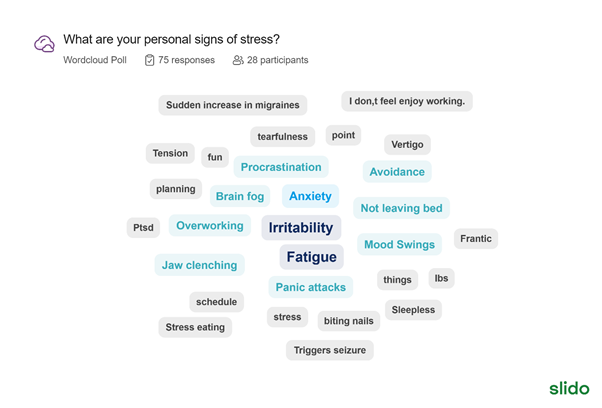
We noticed some common signs like irritability and fatigue, but also a wide range of sometimes contrasting symptoms. This demonstrates how differently stress can present from person to person.
We then moved onto discussing coping strategies for managing stress, and our participants once again highlighted some fantastic recommendations.
- Creative outlets such as singing, listening to music, playing guitar, painting, or cooking.
- Reach out to support systems: talking to friends, going for coffee, chatting to people online, or speaking to your partner.
- Practice mindfulness through writing about your feelings, acknowledging your emotions, changing your physical environment by taking a shower, or practicing breathing.
- Make time for exercise and movement by going to the gym, taking a walk in nature or even a walk around the house, or stretching.
There were loads of other suggestions, too, which proves that self-care doesn’t have to look a certain way. It’s up to you to determine how you want to decompress, while focusing on positive, helpful activities rather than unhelpful coping mechanisms.
—
There was heaps to learn at GDC this year, not to mention all the wonderful conversations we had with other attendees. We hope you found our recap helpful and we’re looking forward to sharing even more insights from future events!
If you would like to collaborate with us, just fill in our contact form or email us directly at hello@safeinourworld.com.
Skills utilised:
News
World Parkinson’s Day
World Parkinson’s Day is celebrated on April 11th each year.
As the second most common neurodegenerative disease in the world, Parkinson’s disease (also called Parkinson disease) affects roughly 2-3% of adults over age 65 (Zafar et al., 2025). People with Parkinson’s experience challenges with motor function (i.e., muscle movements/coordination), cognition, and communication (e.g., quieter-sounding voice, less enunciated speech) (Mammen et al., 2025) that often make it difficult to participate in conversations and other daily activities (Duncan & Earhart, 2011).
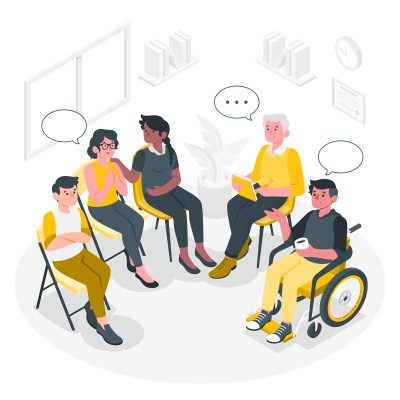
(Group Therapy Isometric Illustrations from Illustrations by Storyset, n.d.)
Combined with the neurological (i.e., brain-based) changes that happen, these challenges often contribute to depression and reduced well-being in people with Parkinson’s disease (Fresan et al., 2026) and their primary caregivers (Fresan et al., 2026; Henry et al., 2021).
What is Parkinson’s disease?
Parkinson’s disease is a progressive neurodegenerative disease, meaning that symptoms tend to become more severe over time. While we’re still learning more about what exactly causes Parkinson’s disease, we know that symptoms happen due to a progressive loss of dopamine-producing cells in the brain over time (Zafar et al., 2025; Kouli et al., 2018).
With less dopamine available, we tend to see the hallmark symptoms of
- tremor (i.e., shaking due to changes in brain-to-muscle messaging systems)
- slowed movements (i.e., bradykinesia), and
stiffened muscle movements (i.e., rigidity; Zafar et al., 2025; Kouli et al., 2018).

(Image from Parkinson’s Care and Support UK, n.d.)
How does it impact mental health and well-being?
Research indicates that social isolation becomes increasingly more common as adults age. At the risk of offending some of our readers, we’ll gently note that “older adults” are generally defined as adults age 65 or older (National Institutes of Health, 2025).
Even in “healthy adults” (i.e., those who do not have a chronic or ongoing condition requiring medical care; Menassa et al., 2023), we typically see more loneliness and social isolation in older adults than in younger age groups (Ohiokpehai et al., 2025). When you add in motor (i.e., muscle movement), cognitive, and/or communication challenges (e.g., voice/speech changes), older adults with Parkinson’s disease can experience even more social isolation, which can further worsen depression and diminish well-being.
Using Games to Cultivate Social Connectedness
Games can be a valuable tool for building relationships and enhancing social connectedness, particularly among older adults (Alweis & Alweis, 2025; Ballard & Spencer, 2023). As our mission indicates, we at Safe in Our World maintain that intentional game design, development, and gameplay practices can create positive change by promoting and supporting mental health and well-being. Here are some suggestions to try:
For Players with Parkinson’s Disease and their Gameplay Partners (Friends, Family Members/Caregivers, etc.)
Since Parkinson’s disease can create motor, cognition, and communication challenges, consider these steps to create a more inclusive gameplay environment:
Take your time
- People with Parkinson’s disease: Let yourself take the amount of time you need (e.g., opt for turns without time limits, take breaks as needed)
- Gameplay partners: Give people the time they need to play the game, allowing for rests and breaks as needed.
Prioritize Clear Communication and Understanding
- People with Parkinson’s disease:
- Supporting cognition: Ask for clarification of game instructions, game information, etc., as needed. Better yet, consider keeping a written copy of the rules/information you want to remember nearby as you play!
- Supporting communication: If you’re speaking during gameplay, consider asking your gameplay partners to let you know when they need you to say something louder/clearer, or when they need you to share your thoughts another way (e.g., via chat/writing).
- Gameplay partners:
- Supporting cognition: Give people time to decide on their in-game turns and actions. Provide clarification on game instructions or information as needed, and consider keeping the rules/target information handy to help you!
- Supporting communication: Discuss communication strategies beforehand. If you need someone to repeat what they said to help you understand them, politely ask them to repeat themself (e.g., “I didn’t quite hear you there. Could you please say that again louder / clearer?”).
Create Supportive Environments for Gameplay
Optimize the environment by…
- Reducing or limiting background noise (e.g., turning background music down or off during gameplay)
- Adjusting lighting or brightness for greater visibility
- Considering how the number of game players (e.g., 1-3 vs. 5+) may impact the gameplay experience
- For people with greater cognitive/communication challenges, smaller gameplay groups may reduce the stimuli they need to attend to (Thilakaratne et al., 2026), making it easier to focus on gameplay activities.
If you’d like to find out more about good practices in playing together, we teamed up with Ubisoft to create the Good Game Playbook, a resource designed to provide players with knowledge and support with regards to experiencing in-game toxicity.
For Game Designers/Developers
Ben-Sadoun and colleagues (2018) devised a set of serious game design considerations for people with neurodegenerative diseases (Ben-Sadoun et al., 2018). Consider these recommendations* to create more inclusive games and gameplay spaces for people with Parkinson’s disease:
- Compatibility: Address Parkinson’s disease symptoms (speech, motor challenges, fatigue) in game design for older adults.
- Guidance: Include clear instructions and built-in breaks to manage cognition/communication challenges and fatigue.
- Workload: Minimize cognitive/physical strain by simplifying actions and communication tasks.
- Adaptability: Ensure that your game can accommodate different communication approaches (e.g., voice amplification/personal microphones, Augmentative and Alternative Communication [AAC] devices or approaches) to support varying needs.
- Consistency: Ensure uniformity in instructions, prompts, and feedback to avoid confusion.
- Significance of Codes: Use intuitive, clear symbols and commands to enhance understanding.
- Explicit Control: Ensure that your game/system can respond to the controls and inputs of people with Parkinson’s disease (e.g., tremor, quiet or less enunciated speech).
- Error Management: Provide tools for navigating communication breakdowns (e.g., visual aids).
- Game Rules: Tailor rules to focus on social engagement and manageable cognitive challenges.
* Recommendations are adapted from a presentation by Philippone (2024) at the 2024 Meaningful Play Conference (Pittsburgh, PA, USA). Framework is derived from Ben-Sadoun and colleagues, (2018).
Let Gameplay Be Playful
Games are opportunities to connect and experience community. Lean into that, and feel free to create gameplay experiences that center fun and connection!
Want to Learn More?
For more information, check out these resources:
- Able to Play
- Parkinson’s Foundation – Global Care Network
- World Parkinson Coalition
- Parkinson’s Europe
- ParkinsonNet
- International Parkinson and Movement Disorder Society
Maura Philippone
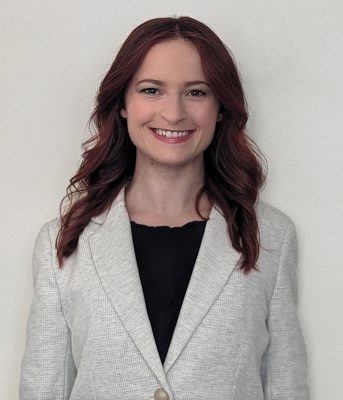
Maura Philippone (she/her), M.A., CCC-SLP, is a PhD candidate in the Communicative Sciences and Disorders Department at Michigan State University (East Lansing, MI, USA). As a licensed and certified speech-language pathologist (SLP), her research investigates how SLPs can “level up” their voice/speech practices and pedagogy (e.g., via XR and game-based speech approaches) to enhance learning and treatment outcomes. Her recent work includes CLEARLY!, a serious game designed to help people with Parkinson’s disease strengthen their clear and loud speech skills through interactive gameplay with communication partners. The game, available on itch.io, won a bronze award at the 2024 Serious Play Conference.
References
- Alweis, E., & Alweis, R. (2025). A Narrative Review of the Benefits of Board Games in Health. Cureus, 17(9), e92484. https://doi.org/10.7759/cureus.92484
- Ballard, M. E., & Spencer, M. T. (2023). Importance of Social Videogaming for Connection with Others During the COVID-19 Pandemic. Games and culture, 18(2), 251–264. https://doi.org/10.1177/15554120221090982
- Ben-Sadoun, G., Manera, V., Alvarez, J., Sacco, G., & Robert, P. (2018). Recommendations for the Design of Serious Games in Neurodegenerative Diseases. Frontiers in aging neuroscience, 10, 13. https://doi.org/10.3389/fnagi.2018.00013
- Duncan, R. P., & Earhart, G. M. (2011). Measuring participation in individuals with Parkinson disease: relationships with disease severity, quality of life, and mobility. Disability and rehabilitation, 33(15-16), 1440–1446. https://doi.org/10.3109/09638288.2010.533245
- Fresan, A., Ochoa-Morales, A., Ramírez-García, M. Á., Chávez-Oliveros, M., Jara-Prado, A., Guerrero-Camacho, J. L., & Dávila-Ortiz de Montellano, D. J. (2026). Predictors of Quality of Life in Parkinson’s Disease: The Role of Mental Health and Internalized Stigma. Actas espanolas de psiquiatria, 54(1), 212–222. https://doi.org/10.62641/aep.v54i1.2130
- Henry, R. S., Lageman, S. K., & Perrin, P. B. (2020). The relationship between Parkinson’s disease symptoms and caregiver quality of life. Rehabilitation psychology, 65(2), 137–144. https://doi.org/10.1037/rep0000313
- Kouli, A., Torsney, K. M., & Kuan, W. L. (2018). Parkinson’s disease: Etiology, neuropathology, and pathogenesis. In T. B. Stoker & J. C. Greenland (Eds.), Parkinson’s disease: Pathogenesis and clinical aspects. Codon Publications. https://doi.org/10.15586/codonpublications.parkinsonsdisease.2018.ch1
- Mammen, J. R., Adams, J. L., Mangrum, R., Xiao, Y., Barbosa, W., Tyo, M., Redmond, C., Carter, C., Cifelli, K., Cifelli, R., Maruzo, H., Meeker, J., Shultz, G., Thomas, C., Bale, C., Davies, E., Kopil, C. M., Marras, C., Mestre, T., Morel, T., … Stephenson, D. (2025). Systematic review and consensus conceptual model of meaningful symptoms and functional impacts in early Parkinson’s Disease. NPJ Parkinson’s disease, 11(1), 65. https://doi.org/10.1038/s41531-025-00907-2
- Menassa, M., Stronks, K., Khatami, F., et al. (2023). Concepts and definitions of healthy ageing: A systematic review and synthesis of theoretical models. eClinicalMedicine, 56, 101810. https://doi.org/10.1016/j.eclinm.2022.101821
- National Institutes of Health. (2025, June 12). Age. https://www.nih.gov/nih-style-guide/age
- Ohiokpehai, J., Gammack, J. K., Siddiqui, M., & Nyahoda, T. (2025). Loneliness and Social Isolation in Older Adults. Missouri medicine, 122(2), 118–123. https://pmc.ncbi.nlm.nih.gov/articles/PMC12021383/
- Parkinson’s Care and Support UK. (n.d.). Symptoms of Parkinson’s Disease [Infographic]. https://parkinsonscare.org.uk/symptoms-and-diagnosis/
- Philippone, M. (2024, October 16-18). Tabletop game design considerations for voice and speech symptoms of Parkinson’s disease [Microtalk]. International Conference on Meaningful Play. Carnegie Mellon University, Pittsburgh, PA, USA.
- Follow this link to access the slides: https://drive.google.com/file/d/1lnrgLGi3O-j7CetlgxLkgnkOpQel9-1h/view?usp=sharing
- Storyset. (n.d.). Group Therapy Isometric Illustrations [Illustration]. https://storyset.com/illustration/group-therapy/amico
- Thilakaratne, R., Wylie, K., Loftus, A. M., & Cocks, N. (2026). Conversation Barriers and Strategies Used by People With Parkinson’s and Their Partners to Support Conversation. International journal of language & communication disorders, 61(2), e70202. https://doi.org/10.1111/1460-6984.70202
- Zafar, S., Lui, F., & Yaddanapudi, S. S. (2025). Parkinson disease. In StatPearls. StatPearls Publishing. https://www.ncbi.nlm.nih.gov/books/NBK470193/
Skills utilised:
News
Safe In Our World is Hiring a Business Development & Fundraising Manager!
Applications are now closed for this vacancy.
We’re looking for a biz dev and fundraising professional to join our small team, focusing on shaping and delivering the Charity’s fundraising strategy.
Key Details
This new role will be responsible for ensuring sustainable growth and increased awareness of Safe In Our World’s mission and services, focusing on identifying opportunities for revenue generation, forming strategic partnerships, and nurturing existing relationships.
Hours per week: 37.5
Location: UK-based (Remote)
Salary: £35,000 – £45,000 per annum, depending on experience
Closing Date: 31 March 2026, 11:59pm GMT
The Role
We’re looking for someone with a good understanding of the games industry, and who is a wizard with client relationship building and management.
You will work closely with our Charity Director and Head of Programmes to implement a comprehensive business development strategy, seek out new partnerships, and deliver activations with key corporate partners.
You’ll think creatively, championing new approaches to fundraising, while staying organised by maintaining records of partner relationships in a CRM.
And ultimately, you’ll help Safe In Our World’s vital mission and key resources reach new audiences for years to come.
Read the full Job Description here!
The Ideal Candidate
Our ideal candidate will have the ability to secure and manage corporate partnerships and sponsorships (though your experience doesn’t have to be in a charity capacity!)
You’ll be flexible, organised and proactive, with strong communication skills. The role will also require occasional travel to national and international events, conferences, and partner meetings, so you’ll ideally be comfortable with travelling.
How to Apply
If this role sounds like a good fit, we’d love to hear from you. Read the full job description and apply with a Cover Letter and CV via our form.
You’ll hear back regardless of the outcome by no later than 10 April 2026. If successful, you will be invited to interview during the week commencing 13 April 2026. There is an option to include any accessibility needs in the application form, but you’ll have the opportunity to ask for accommodations before your interview, too.
Our interview process will include three stages:
- An initial phone screening where we’ll provide some more information about Safe In Our World, answer any questions you have, and get to know you a little bit more.
- A first interview with our Charity Director and Head of Programmes, where we’ll ask questions about your skills and experience in relation to the role.
- A second interview with our Charity Director and one of our Trustees, which will involve a brief presentation task.
Safe In Our World is an equal opportunities employer. We encourage applications from anyone and do not discriminate based on age, sexual orientation, gender, pregnancy, religion, nationality, ethnic origin, disability, medical history, marital status, parental status, or any other characteristic. We ensure our selection process is fair and merit-based, and provide equal opportunities relating to training, promotion, and remuneration.
Skills utilised:
News
Safe In Our World and Fanatical raise $263,582 in annual mental health charity bundle
The Safe In Our World Charity Bundle 2026 was the mental health charity’s most successful bundle yet, raising over $260,000 in just 9 days.
On Friday 6th February 2026, Safe In Our World launched their annual charity bundle, with 22 great games worth over $340 – featuring Landfall Games’ ‘PEAK’ and Oro Interactive’s ‘Easy Delivery Co.’ – 9 days later it was sold out, and had raised a whopping $263,582!

Thank you to our friends and partners
We’d like to take this opportunity to celebrate and thank everyone who contributed to our annual charity bundle this year, from the talented developers and publishers who donated keys, to the fantastic team at Fanatical who host our bundle every year. We’d also like to thank our ambassadors, patrons and charity friends who helped amplify the bundle in their networks and communities.
Our charity bundle featured 22 fantastic games from 22 studios, including Oro Interactive, Worm Club, Perfuse Entertainment, Future Friends, Snowcastle Games, Outright Games, Amplified Games, Slitherine, Cointinue Games, Doot Tiny Games, Bunstack, Landfall, Headup Games, Monster Couch, Merge Conflict Studio, Waving Bear Studio, Wired Productions, Lightshards, Top Hat Studios, Noodlecake, and Abiding Bridge.
Your support goes a long way
We have the honor of supporting the games industry and wider gaming community with mental health tools, training and resources – and that’s made possible through initiatives like our annual bundle.
The funds raised through our charity bundle allow us to continue providing support to games companies of all sizes; independent developers, industry professionals, creators, aspiring game devs, and gamers.
With your support, we’ve launched our Mental Health Star Accreditation, to promote workplace wellbeing across the games industry. We’ve continued to develop our Level Up programme, supporting over 70,000 employees across hundreds of companies. We’ve signposted over half a million people to life-saving resources through the Safe In Our World website.
And we’re committed to continuing this work, to raise awareness, reduce stigma, and start important conversations around mental health in games.
How to get involved
We’d encourage studios (of any size) to consider joining Level Up, and benefit from a wealth of resources to improve your mental health policies and practices in the workplace. You can also take on the Mental Health Star Accreditation, to identify ways you can improve your mental health policies, and celebrate your wins!
To hear the latest charity news, get involved in discussions or new initiatives, or find out when our Ambassador applications open again later this year, we’d encourage you to join our Discord. And you can always email us for any other fundraising initiative that comes to mind!
Skills utilised:
News
Announcing the Safe In Our World Charity Bundle 2026 supporting mental health in games
Safe In Our World’s Charity Bundle 2026 is HERE – supporting the charity’s vital work to improve mental health across the games industry and global gaming community. 🚀
Has it really been a year? 🥹 It feels like only yesterday our charity bundle raised a whopping $200,000 in just six short hours! But yes, it’s that time again… And we’re back with the Safe In Our World Charity Bundle 2026, jam-packed full of fantastic titles. Grab 22 games on Steam, including Landfall Games’ ‘PEAK’ and Oro Interactive’s ‘Easy Delivery Co.’
Our charity bundle is worth over $340 and is available to purchase now on Fanatical for £17.99 / $17.99 / €17.99, with the option to donate more to support mental health in games.
Funding positive change to mental health in games
All proceeds from our annual charity bundle directly support Safe In Our World’s mission to reduce mental health stigma, increase awareness, and facilitate positive change in our industry and the wider global games community. The funds help us deliver:
- Free toolkits and downloadable resources for the games industry
- Vital training and workshops to increase mental health awareness
- Signposting to life-saving helplines and sharing lived experiences to build empathy
- New initiatives to meet the ever-changing needs of the games industry and gaming communities
We’ve delivered tools, training, and mental health resources to over 300 companies since Safe In Our World began in 2019. That’s over 70,000 employees (and growing)! Our website has been a hub of mental health support and stories, providing insights and signposting to over half a million gamers worldwide.
“We’re incredibly proud of what we’ve achieved over the past few years. We wouldn’t be where we are today without our wonderful community – from the talented people who donate games to the bundle to those who purchase it. We knew we wanted to bring our supporters another fantastic line-up of games this year, so we’re thrilled to be launching such an exciting and diverse bundle of games.” – Sarah Sorrell, Charity Director
Unpacking the Safe In Our World Charity Bundle 2026
Let’s dive into what this year’s charity bundle has to offer! There’s something for everyone, with a great mix of award-winning titles and true gems from both our incredible indie studios, through to our talented AA developers!
- ‘Easy Delivery Co.’ from Oro Interactive
- ‘Frog Detective 1: The Haunted Island’ from Worm Club
- ‘Golf It!’ from Perfuse Entertainment
- ‘Gourdlets’ from Future Friends
- ‘Ikonei Island’ from Snowcastle Games
- ‘Jumanji: The Videogame’ from Outright Games
- ‘Little Problems: A Cozy Detective Game’ from Amplified Games
- ‘Master of Magic’ from Slitherine
- ‘Midnight Ramen’ from Cointinue Games
- ‘Minami Lane’ from Doot Tiny Games
- ‘Paquerette Down the Bunburrows’ from Bunstack
- ‘PEAK’ from Landfall
- ‘Pumpkin Jack’ from Headup Games
- ‘Quilts & Cats of Calico’ from Monster Couch
- ‘Re:Fresh’ from Merge Conflict Studio
- ‘STUFFED’ from Waving Bear Studio
- ‘The Falconeer’ from Wired Productions
- ‘Time Rift’ from Lightshards
- ‘Tin Hearts’ from Wired Productions
- ‘Tiny Life’ from Top Hat Studios, Inc
- ‘Winter Burrow’ from Noodlecake
- ‘Wordatro!’ from Abiding Bridge
Every game in our Charity Bundle 2026 has been kindly donated by game developers and publishers. We’d like to thank them for their generous donations, as this really makes a world of difference to Safe In Our World. It allows us to maintain our mission to make the games industry safer for everyone – and we thank you for being part of that! 💚
The Safe In Our World 2026 Charity Bundle is powered by Fanatical. Any and all proceeds from the charity bundle will be donated to Safe In Our World.

Skills utilised:
News
How you can support games industry Community Managers (+ FREE training and resources)
To recognise Community Manager Appreciation Day, Safe In Our World unpack how employers and players can give back to the guardians of the games industry.
🔗 Download FREE Mental Health Guide for Community Managers
🔗 Book Now for Mental Health Awareness for Community Managers
Community Managers serve as the bridge between players and developers, relaying feedback, providing updates, and moderating community spaces. It can be a rewarding role, but it’s also a job that never stops. As one time zone goes to bed, there’s another just logging on.
Finding a good work-life balance can be tricky for anyone working in the games industry, but it’s especially challenging for those who care for our online communities. For Community Manager Appreciation Day, we’ve explored the ways communities, employers and colleagues can support our Community Managers.
Supporting Community Managers as a Player
- Be mindful of time zones (and check the rules on pinging in Discord servers)
- Check the FAQ before asking your question (to save CM from repeating themselves)
- Be patient as CMs get to your question (they’re juggling a lot of responsibilities)
- Be descriptive when reporting a problem (include reproduction steps if you can)
- Approach Community Managers with good faith (they want to help!)
💡 You can help Community Managers by modelling the kinds of behaviours you’d want to see in the community. Being kind, friendly and helpful with other players (and the devs) is a quiet but impactful way to help CMs nurture a healthy, non-toxic community.
One great way to help us CMs is by listening to and respecting our moderators. They provide invaluable support, allowing us to take the time we need to recover. We’ve chosen them because we trust their judgement, so please trust them to look after you and keep the community safe.
Supporting Community Managers as a Leader
- Set a good example with your work-life balance (leave loudly, remind them to take breaks)
- Encourage every team member to turn notifications off when out of office
- Discuss a plan for cover when your Community Manager goes on holiday (so they can fully switch off)
- Send your CM on our free Mental Health Awareness for Community Managers course
- Read our Mental Health Guide for Community Managers (to have a better idea of how they can look after themselves)
💡 For some, switching off from work isn’t just difficult – it can cause anxiety. Worrying about what might go wrong in their absence, or how big their workload will become when they’re back. We’ve got a blog about absence anxiety with recommendations for how to overcome it. It’s a good read for any employer or manager.
CMs shield dev teams from the worst of the toxicity in games communities, but we bear the brunt of it in doing so. We’ll have likely already softened feedback, so please take it in good faith. We’re bringing it to your attention because we believe it’s important – it’s not an attack.
Supporting Community Managers as a Colleague
- Follow your company’s social media guidelines and procedures (if in doubt, ask!)
- Offer to support on communication channels for when your CM is on leave
- Help to develop the process for player feedback so your CM knows what you need (and what to ask your players for)
- Send our Mental Health Guide for Community Managers to your CM(s)
- Consider joining our free Mental Health Awareness for Community Managers course (even if you’re not a CM yourself)
💡 Community Managers take your wellbeing very seriously. Sometimes they go to great lengths to soften feedback and criticism – so it’s important you don’t undo all that effort by doom-scrolling. We’ve got a blog about doom-scrolling and protecting your mental health online, to help you stay safe and avoid harmful behaviours.
Unfortunately there are always some people in communities who are looking for a fight. Don’t give them one. It’s so tempting, and you might think you’re helping us out, but it only makes the situation worse, and it can harm your wellbeing and that of the community.
Training and Resources for Community Managers
We have refreshed our Mental Health Guide for Community Managers, which highlights actions you can take as a CM to maintain your wellbeing in your role, achieve work-life balance, and set effective boundaries. You can download this for free.
We’re also announcing four new Mental Health Awareness for Community Managers courses in collaboration with Mind Fitness. If you’ve done this course before, consider recommending it to your community moderators – it’s free and open to all! Share it with a fellow community manager or your team. Pop it in your community Discord server! See you there.
Skills utilised:
News
It’s time we closed the Pandora’s Box that is Blue Monday (the so-called most depressing day of the year)
Twenty years later, and Blue Monday is still seen as the most depressing day of the year – but does that do us any good? Spoiler alert, no.
Once a story is out, it’s difficult to change the narrative. Many people won’t read past a sensational headline or investigate the legitimacy of a social media post.
We hear Blue Monday, and we agree! January can be rough, money can be tight, and the weather sucks. The festivities are over. We’re back at work, and honestly, I’m not entirely sure what day it is.
But there’s power in a self-fulfilling prophecy. Our beliefs can influence our actions, which in turn impact events, which can then reinforce our beliefs. And around we go!
If you look for the negative, you will inevitably find it – because life is composed of moments, whether good, bad, or simply mundane. Blue Monday is no different, but if all you’re looking for is blue, you’ll miss the rainbow.
Blue Monday: Fact or Fiction?
Let’s play truth or travel advertising! Is Blue Monday based in science, or was it a marketing ploy by Sky Travel to sell holidays?
Two decades ago, Sky Travel sought the help of psychologist Dr Cliff Arnall, whom they tasked to create a formula for the January Blues. It factored in variables like weather and sunlight, financial debt, time since Christmas, motivational levels, and failed New Year’s resolutions.
Those variables can have an impact on how we’re feeling. Still, the formula lacks any scientific backing, and even Dr Arnall has since distanced himself from the term, saying it was never his intention to make the day sound negative.
“I was originally asked to come up with what I understood to be the best day to book a summer trip, but when I started thinking about what motivates people to book a vacation, and remembering what thousands of people had told me about stress management, there were factors that pointed to the third Monday in January as being particularly depressing… But putting that out into the world wasn’t very helpful. Claiming it’s the most depressing day of the year is almost self-fulfilling.” – Dr Cliff Arnall
Great marketing, terrible advice
Misinformation is a Pandora’s box. Once Blue Monday was set loose on the world, there was no stopping it, because it’s relatable! Many people feel less jolly in January, and some really struggle.
But the idea of there being a single “most depressing day of the year” trivialises the experience of depression, Seasonal Affective Disorder (SAD), and other mental health challenges. We can’t reduce the experience of depression to one Monday that may or may not be miserable.
Our Rainbow Monday Challenge
We’ve nothing against the colour blue, but let’s make space for the others. This so-called “Blue Monday” lands on January 19th, 2026 – and we have a challenge for you. Let’s switch up the colours!
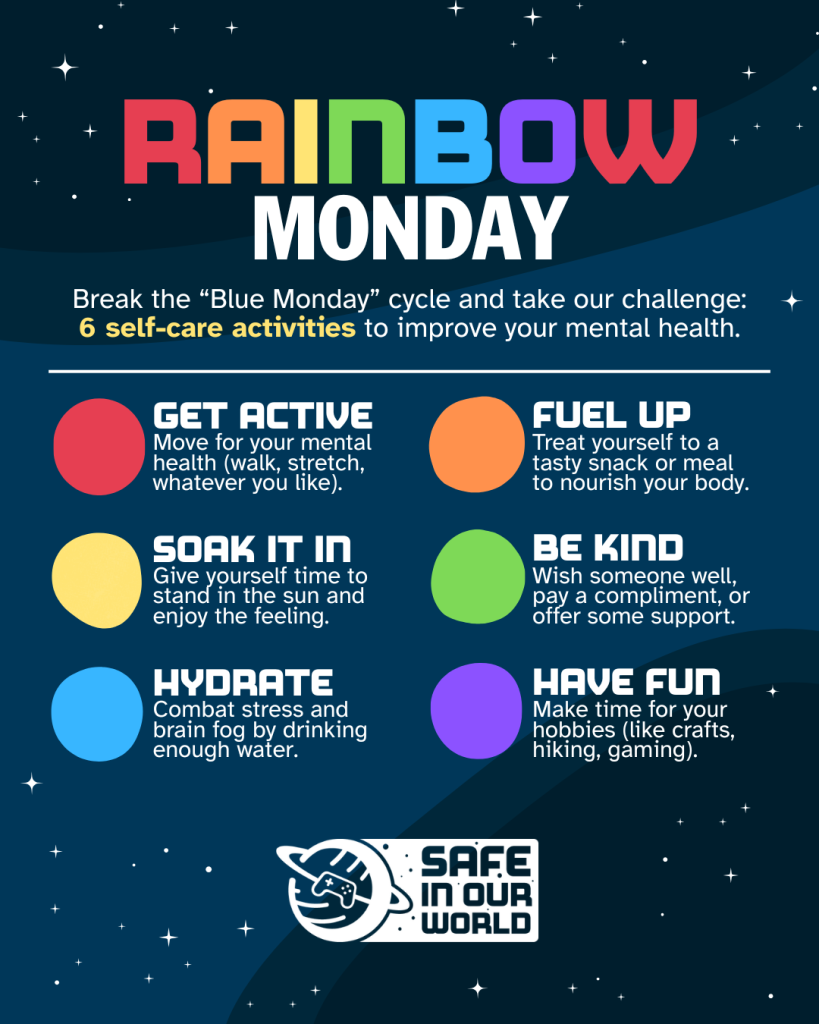
We’ve six suggestions to turn your Blue Monday into a spectrum of colour and joy. Brighten your day, or someone else’s, and help us do away with this harmful narrative for good.
- Move for your mental health! A brisk walk, some stretching, pilates, or a spin class – however you choose to exercise, you’ll be releasing feel-good endorphins.
- Enjoy one of your favourite snacks or a meal. Food can impact our mood, so treat yourself to a snack from your childhood, try a home-cooked recipe, or a nourishing treat to give you energy.
- Stand in the yellow warmth of the sun, light a candle, or cosy up by a fire. Let that warmth spread through you in a moment of mindfulness.
- Send someone a kind message, wishing them well, complimenting them, or letting them know you’re there to talk.
- Stay hydrated. Water is essential to keeping your body healthy, and dehydration can cause brain fog, poor memory, mood swings, and even anxiety.
- Make time for a hobby, be it crafty, outdoorsy, or playing a video game (we’ve lots of indie games you can try from 2025’s Game Dev Champions finalists).
Let us know how you get on. You can join our community Discord server, Safer Together, and join the discussion around mental health and video games.
Skills utilised:
News
Self-care VS Sabotage: Protecting your mental health during the holidays
Is Christmas stressing you out? If you’re not feeling festive, you’re not alone. While some make merry, others struggle with their mental health.
‘Tis the season of feeling entirely overwhelmed and stressed out. Or at least, that’s the experience of many people during the festive period.
- One in three people surveyed reported they struggle with Seasonal Affective Disorder during the winter*
- 31% of people reported that they struggle with sleepless nights attributed to worrying about the festive period*
- 1 in 5 people surveyed reported that they will feel more irritable (and even struggle with headaches) around this time of year*
*Source: Mental Health UK
What turns festivities into frustrations?
The reasons behind finding this time of year so challenging can vary from person to person. It might be that you’re worried about your financial situation – something very relevant to many struggling with job insecurity in the games industry right now. Christmas is expensive, and having to stick to a tight budget might make you feel like you’re missing out!
Some people struggle with the changes to their routine. This can be especially true for neurodivergent folk – and that’s a lot of people in the games industry! When the structure of your day disappears, you might feel a little lost (not to mention potentially being inundated with relatives or social events, throwing your schedule into chaos).
Loneliness is another big factor in poor mental health during the holidays. Surrounded by festive sentiments of love, connection, and family, it’s understandable to feel lonely if:
- You live by yourself
- You’ve lost a loved one
- You’re going through a separation
- You’re estranged from your family
- You don’t currently have a support network
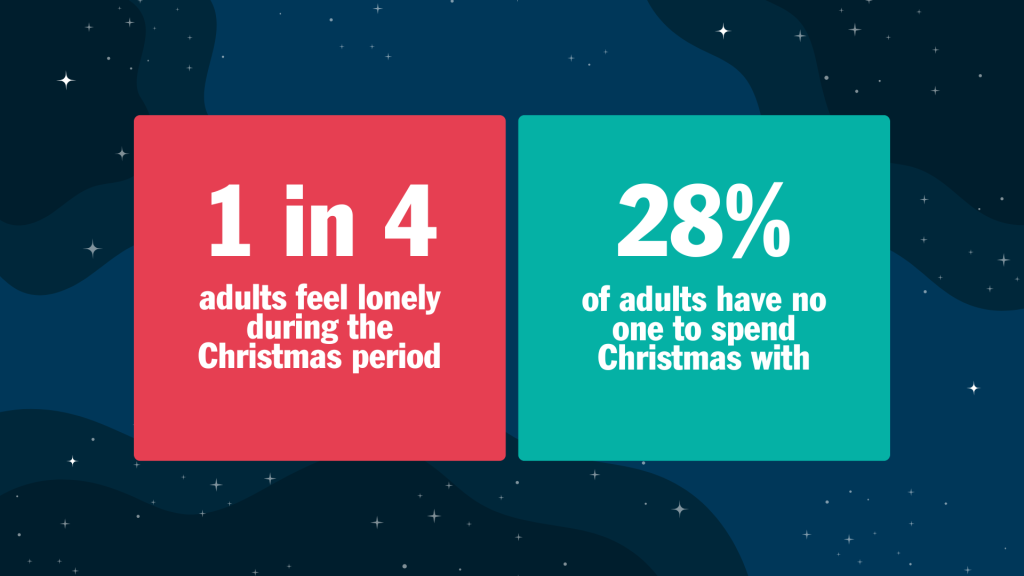
Source: Loneliness at Christmas
The pressure of participation
It can feel like you’re letting people down if you’re not feeling all that festive, but the truth is, you should never be pressured into celebrating. It’s wild that we’ve even got to say that – doesn’t it just sound so bizarre? Being forced to have fun?
And what is fun, anyway? It seems like a pretty subjective concept to us. If your idea of a Christmas Eve well spent is one with a warm drink, some of your favourite snacks, and a quiet, cosy gaming session, then party hats off to you!
If you want to spend Christmas Day walking through a cold, crispy forest, wearing your best woolly hat and throwing a ball for your dog, we support you fully. Getting out into nature can be amazingly beneficial for your mental health.

Don’t sabotage your wellbeing this season
However you choose to spend your time during the holidays is up to you. But make sure you’re mindful of two things:
- Look past the feelings you currently have on the surface, to understand what you want (and need) to get out of this festive period.
- Be careful not to further isolate yourself if what you need right now is connection.
Unfortunately, our emotions can be complex and confusing. We might feel miserable and thoroughly un-festive on the surface, but be craving connection underneath.
We might decline an invitation not because we’re feeling too tired, but because we’re worried about the “vibes” we’re bringing to the party. It’s just too easy to further isolate ourselves by letting those negative thoughts get in the way of opportunities.
If you’re confident that what you need is a quiet holiday period with games and snacks, then go for it. Just be sure to check in with yourself and the motivations behind the decisions you’re making.
Mental health resources for the holidays
Returning to that list of reasons you might feel lonely or sad this festive season, we’d like to point you in the direction of some mental health resources that might help.
If you’re struggling with a bereavement, you might benefit from our grief awareness series, written by charity ambassador Bethany Rainbird. It explores the benefits of video games during periods of grief and recommends a number of games that you could try during the holidays.
- An Introduction to Grief Awareness Week
- Using Cosy Games to Support Routine, Grounding, and Regulation
- Reconnecting With The World Through Games
- Digital Ways to Remember The Ones We’ve Lost
- Safely Engaging With Mortality Through Video Games
If you’re looking for ways to practice self-care during the holidays, check out our recent infographic for a side-quest to help boost your emotional wellbeing and set healthy boundaries during the festive season.
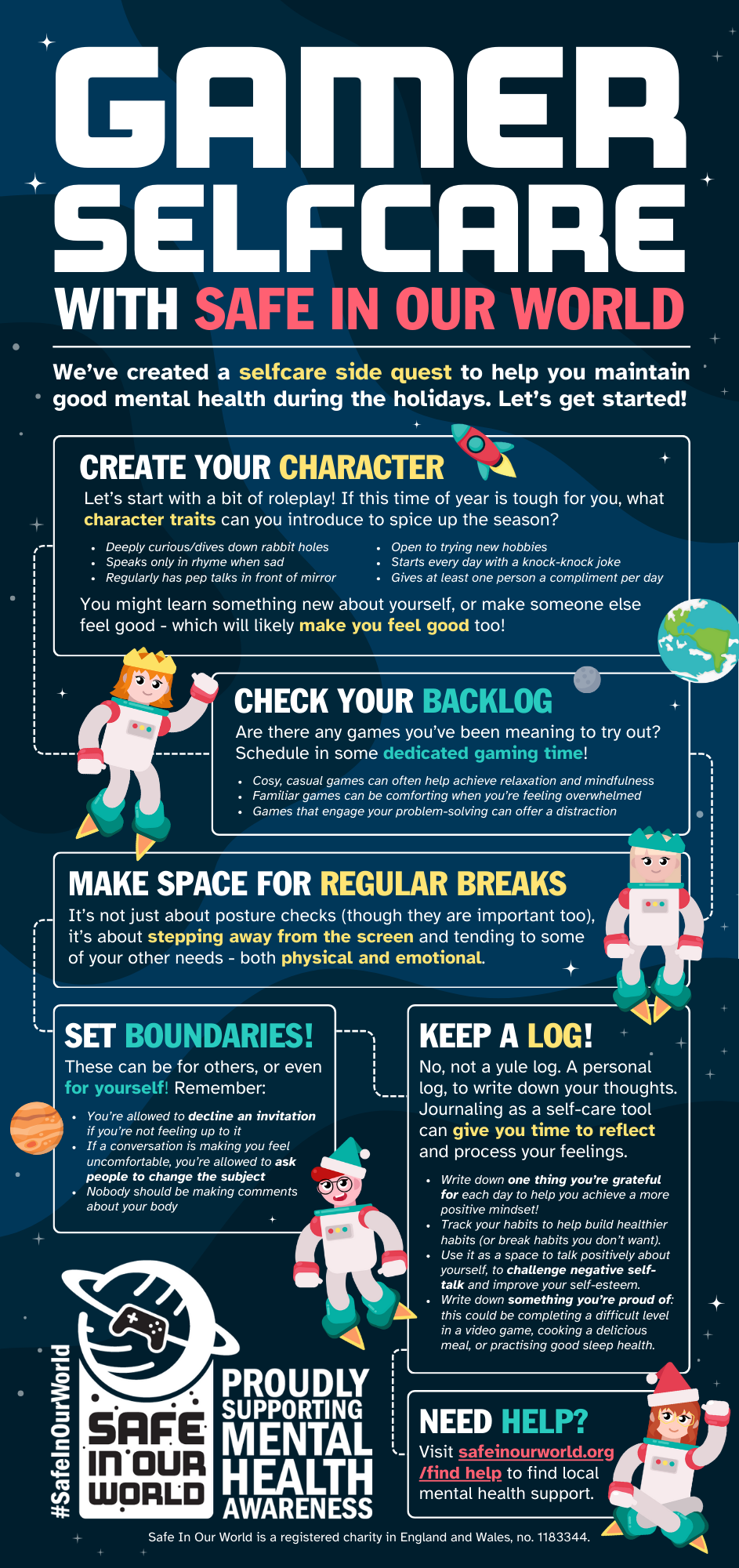
If you’re worried about your finances and you have access to an Employee Assistance Program, you may be able to access financial advice for free. People on the EAP provided through Safe In Our World (e.g. Level Up partners) can access one-to-one financial coaching with MUNNY.
If you’re struggling to switch off and find yourself endlessly scrolling through upsetting content, you might benefit from our article for protecting your mental health online. This can also help you support others impacted by the negative effects of doom-scrolling.
If you’re seeing a friend or relative this festive season who’s gone through a change (e.g. is using different pronouns, or a new name) and you’d like to build empathy and understanding around the importance of social identity, you can read our article exploring intersectionality and mental health.
And if you (or someone you know) needs support with their mental health during the festive period, please look to our Find Help page, to search for mental health services in your local area.
Safe In Our World will be back in 2026
Allow us to take this opportunity to thank you all for the enthusiasm and endless support you’ve given to our mental health charity over the last year. You can read a recap of what we’ve been up to in our birthday blog.
Our team is about to take a much-needed break! Our last work day of this year is Monday, 22nd December, and we’ll be returning to work in the new year on Monday, 5th January. We wish you all a safe, restful and relaxing break. Thank you!
Skills utilised:
News
Safe In Our World Announces New Ambassador Class of 2026
Safe In Our World is thrilled to announce our newest cohort of mental health ambassadors in our Class of 2026.
With 80 impressive applications this year, selecting Safe In Our World’s Ambassador Class of 2026 was a real challenge. We’ve seen such passion and creativity in every submission, and we’d like to thank everyone who applied for caring so deeply about improving mental health in games. But the final decision has been made, and our new ambassadors are locked in.
What do our newest ambassadors bring to the Safe In Our World mission – other than their boundless enthusiasm? We’re excited for this year’s cohort, which represents the diversity of backgrounds and experiences within our community. We’ve been joined by individuals with direct experience supporting loved ones with their mental health, educators, writers, healthcare providers, grief specialists, creators, and games industry professionals.
2026 is fast approaching, but with our new ambassadors by our side (and our ambassador alumni having our back), we’re excited for it to arrive. 2026 will bring with it fresh content, mental health initiatives, resources for the industry and global gaming communities.
Safe In Our World’s Ambassador Programme is sponsored by The Indie Stone this year, and by doing so, they power an initiative that connects mental health advocates on a global scale, allowing our charity to reach further and bring mental health resources and signposting to more people in need.
Alexander Mellström
[He/Him]
Alexander has worked in the video game industry for 7 years and is currently serving as Partner Account Manager at Paradox Interactive. With experience in digital distribution and partner relations, he’s passionate about fostering inclusive, respectful environments where everyone feels seen, heard, and supported both professionally and personally.
Alexander is super energetic and loves talking about, well, anything! Mostly, he enjoys talking about football, video games, Demon Slayer and Star Wars – or whatever has piqued his interest that week.
JadedPhoenix (Amber)
[She/Her]
Amber (JP) is a coordinator, creator, and entrepreneur whose work spans higher education, gaming, and community building. She fell into the world of gaming a year ago after being inspired to change careers and enter the creative industry. Since then she has worked on her own content creations, an indie studio and supports the Liverpool Game Development Network.

At the heart of everything Amber does is a passion for supporting and uplifting others, as well as working with creatives who are ready to make a difference!
Annabelle Afful
[She/Her]
Annabelle is a games developer and designer who founded Lost Wanderer Games, creating a rhythm narrative game. She’s interested in how games bring people together through shared experiences and enjoys supporting emerging developers and creative communities within the games industry.
Bethany Rainbird
[She/Her]
Beth is a game developer and one of the writers at Patch Magazine! She is passionate about how games can be used to support our mental health, particularly through loss and bereavement. While she admits to talking a lot about death, she promises that she’s still fun at parties!

Beth has already been hard at work, developing a content series for Safe In Our World exploring grief and video games.
Caitlin Doleman
[She/They]
Caitlin has been a solo indie developer for a year, and wants to have as positive an impact on the industry as possible. She has been working on publishing her first game while creating a community on social media to showcase what it’s like to work solo and help create a support network for new indie devs.
Codie Sheldon
[She/Her]
Codie is a Player Support specialist and Community Manager in passionate about creating welcoming, safe spaces for players of all ages. With years of experience in large online communities, she focuses on empathy, accessibility, and positive player experiences.

Outside work, Codie loves gaming, thrifting and nurturing cosy online spaces.
Conway Sutton
[He/Him]
Conway Sutton is a freelance indie games writer and narrative designer living in Guildford, UK, with a particular interest in telling queer and disabled stories. He strongly believes in the importance of intersectionality and supporting everyone’s mental health in the way that works best for them.
Dasha Barsky
[She/Her]
Dasha is a QA Analyst in a small studio, having taken a leap of faith 2 years ago to leave her data analytics career and pursue a life in games development. She is passionate about video games (obviously!), inclusivity, being nice to people, collecting niche hobbies like a dragon with a hoard, and her two cats.
Mod Q
[He/Him]
Mod Q is a video and livestream producer at Jagex, helping bring life to announcements across Old School RuneScape, RuneScape 3, and Dragonwilds to players. As a proud dad of two, he’s driven by a deep belief that gaming should be an inclusive and welcoming space where his children, as well as players of all backgrounds can feel safe, supported, and able to belong.

Outside of Jagex, Mod Q is a lover of great stories, whether playing adventure-driven games on Nintendo consoles, watching Critical Role while learning to play Daggerheart, or diving into the magic of Disney and Star Wars.
He also loves stepping into storytelling himself, taking the occasional side quest into managing wrestling villains on the UK indie wrestling scene. He has a deep affection for New Orleans culture and cooking, as well as a love for the sounds of jazz and soul. And if that wasn’t enough, he’s a regular at the cinema, a dedicated concert-goer, a keen LEGO builder, and a guitarist at heart.
George Coates
[He/Him]
With time spent at several studios (currently at Team17 and everplay), charities, schools, and theatres; George has experience with the arts, education, and vulnerable people across the UK. He has spent a huge amount of time and effort dedicated towards learning about and bettering mental health in himself and others.

Havva Solhan
[She/Her]
Havva Solhan is the Co-Founder of Nonereal Games and has been working in the game industry for 5+ years, focusing on both mobile and PC game development. The games she has contributed to have reached millions of downloads. Currently working on a PC title called Problem Solved under the Nonereal Games label.
In addition to game development and publishing processes, she also leads projects on “Education in the Game Industry” and “The Role of Women in the Gaming Industry,” aiming to build more inclusive and informed communities within the industry.
Havva actively advocates for mental well-being, accessibility, and safe creative spaces in game communities – values that align strongly with Safe In Our World’s mission! Her ongoing efforts to support diverse, healthy, and supportive environments make her a strong fit as an ambassador.
Jarvs Tasker
[She/Her]
Jarvs Tasker is an award-winning Accessibility Advocate and Head of Communications at Happy Volcano, creators of the upcoming factory builder game, Modulus. With experience across community marketing, accessibility consulting, and content creation, she has worked on acclaimed indie titles and champions inclusive game communities through industry-wide accessibility initiatives.
Jodie Swepson
[She/Her]
Jodie is a digital artist living in Lincolnshire. Jodie recently received First Class Honours in BA (Hons) Fine Art from the University of Lincoln and is at the start of her career in games.
Through Safe In Our World, Jodie hopes to support fellow graduates with their mental health, knowing from personal experience how turbulent graduate life can be.
Jordan “AmazinglyOreos” Stephens
[He/Him]
Jordan is an experienced Social Media and Community Manager who started as a Sales Assistant at GAME, building his way up to work with major brands like Red Bull and Riot Games. Currently at Get In as a Social Media Manager, he supports diverse clients and studios in the games industry.
Jordan is a passionate AuDHD and neurodivergent advocate, championing truly safe and inclusive online spaces. You’ll often see him with his cat, Sebastian. Be warned though, he may ask you to dab in a photo with him for socials.
Katie Squires
[She/Her]
Katie is the Business Manager at South Westerly Games. They are a micro indie studio based on the south coast of England developing and producing their first game, NINE ROUNDS RAPID. It’s her first job in the games industry, having recently moved from a 20+ year career in the education sector.
Katie held various roles over this time, with a particular interest in the pastoral care and wellbeing of the children in her care. Coupled with this pastoral experience, she has very personal reasons for knowing that talking about, raising the profile of and reducing stigma surrounding mental health is of the utmost importance. Katie is delighted to be given an opportunity to help do so in relation to the games industry. She’s happiest when she is either in her garden or swimming in the sea – the colder the better!
Eri Cheng
[She/Her]
Eri is an Account Executive at Bastion, working on the Riot, FFXIV and WotC accounts. Her favourite game is Outer Wilds. She loves connecting with people, and wants to foster that attitude in the gaming industry and encourage the building of stronger relationships regardless of backgrounds. She also has a British Longhair called Lemony!

Paul Rennie (Ren)
[He/Him]
Ren is a gamer by day, and by night? A gamer with funky neon lighting! He has over 16 years of experience in and around the video game industry – from QA to community management! He’s a content creator, and hosts a semi-regular live podcast on video game news and mental health topics.

Outside of games, Ren enjoys the usual nerdy things, as well as yoga, hiking, coffee, and is a reliable source of bad jokes.
Roshelle P.
[She/Her]
Roshelle P. is a Games UX Researcher, writer, and Death Doula with 4 years of AAA and indie experience, including shipped work on the World of Warcraft franchise at Blizzard. She holds an M.A. in UX Design and is the founder of Playfully Mortal, a 2x award-winning initiative focused on advancing grief literacy and death positivity through games.
Sally Sheppard
[She/Her]
Sally is a game developer, educator, and researcher focused on inclusive game design and storytelling. A Lecturer in Game Design, Art, and Animation at the University of West London, she is also the founder of Wyrdren Games and an advocate for diversity and representation in the games industry.
selcouthmind
[She/Her]
Sel is a Canadian V-tuber and speed-runner with a focus on indie games and cosy chaos. With an educational background in psychology and lived experience with trauma disorders, Sel loves to discuss mental health, stigma, and psychological assessment especially in the context of games and media.
Susmita Aryal
[She/Her]
Susmita Aryal is a Kathmandu-based published author and an independent journalist. As a graduate in journalism, she brings years of writing and publishing experience. Susmita has a genuine love for storytelling, and is a person in progress as a communication professional. With a curiosity about International Affairs, she is currently pursuing her interest in International Relations and Diplomacy.

Sybil Collas
[They/Them]
Sybil Collas is a creative director, narrative designer and published author. They work with clients ranging from video game developers to interactive television and tourism companies (Ubisoft, Warner Bros., Canal+, We Are Social and more) and have navigated the ever-changing landscape of interactive narration for the past 15 years.

In this lapse of time, Sybil has sailed through several burnouts and started operating as a DEI consultant and advisor with a focus on fostering mental health awareness among both teams and projects, especially for queer and neurodivergent developers. They are one of the founders of the French collective Radi (Radical Collective for the Actors of Diversity and Inclusion) and a fervent advocate of political action through community making.
Thomas Müller
[He/Him]
Thomas ‘SpeedyBrain’ Müller is an indie game developer, community manager and co-founder of Fire Sword Studios with over a decade of experience. He purr-sues community-driven development and advocates for mental health and accessibility in games. Thomas is a proud cat dad, shameless pun enjoyer and can always be found on Discord.

Spencer Stachi
[He/Him]
Spencer is a Montréal-based Brazilian-born Canadian. He’s a former video game journalist turned PR, marketing and social media pro, working with brands like Sony Music, Atari, Focus Entertainment, and WB Games. Spencer is a board member for AbleGamers Brasil and a Certified APX Practitioner, and is passionate about making games accessible for everyone.

Tara Williams
[She/Her]
Tara is a non-profit professional who advocates for cancer patients and survivors. Video games brought levity to her own cancer diagnosis, treatment, and survivorship. She tries to balance a love of the outdoors with a love for indoor pursuits and lives in the United States with her husband and their retro video game collection.
Aiden Sealey
[He/Him]
Aiden Sealey is an Assistant Producer at Electronic Arts with a background in indie production and studio operations. As a neurodivergent, transgender man, he’s passionate about inclusive, wellbeing-focused game-dev cultures. Outside of work, Aiden freelances as a graphic, web and UI/UX designer, drinks too much caffeine, and spends his free time playing games.

Elise
[She/Her]
Elise is a people-focused, detail-loving producer who thrives where creativity meets structure. From Zynga Mobile and Cloud Imperium Games to her own indie studio, she’s led teams, shipped features and worn many hats. Mental health matters deeply to Elise, inspiring her support for Safe In Our World and inclusive gaming spaces.
Ricardo Lozano Ham
[He/Him]
Ricardo has over 10 years of marketing experience and is currently the Head of Operations at Infernozilla, a marketing agency in the gaming space.
He is deeply passionate about working with indie games and helping them succeed. He is looking to raise mental health awareness across the hundreds of gaming communities he is responsible for and to be the helping hand he once wished he had. Outside of his professional work, he is dedicated to animal welfare, serving as a volunteer godfather for multiple shelters.
Nat (MurderVeggie)
[She/They]
As Community Manager by trade and content creator for fun, Nat (@MurderVeggie) has a penchant for creating welcoming and safer spaces for gamers that fit more than one type of person. Despite recent online harassment as a direct consequence of her job, they continue to speak publicly and refuse to leave the industry out of equal amounts of passion and spite.
Thank you to all our new ambassadors for their passionate applications, and to everyone who applied. We’re so excited for our Class of 2026! Remember, applications open every year in October, so if you want to apply (or reapply if you weren’t selected this time), add a reminder to your diary, follow us on social media, or join our Discord to hear when we’re looking for a new cohort.
Skills utilised:
News
Ubisoft and Safe In Our World team up to deliver new Good Game Playbooks for kids, teens, and parents
Safe In Our World and Ubisoft have united again to deliver three Good Game Playbooks for kids, teens, and parents – challenging toxicity in video games.
Safe In Our World and Ubisoft co-developed the very first Good Game Playbook back in 2023, designed to provide players with the tools to navigate and help reduce in-game toxicity. Now, two years later, we’re back to collaborate on a brand new set of tools – this time for the whole family!

The History of the Good Game Playbook
When Ubisoft and Safe In Our World came together back in 2023, the goal was simple: create a tool to help players experiencing online toxicity. That included those perpetrating unhealthy behaviours, as well as those on the receiving end of in-game negativity.
The original Good Game Playbook gave players the tools to recognise warning signs, cope with anger and negativity, and practice self-care. Over the last two years, it’s been delivered to any Ubisoft player reporting others for toxicity, as well as to players who are reported.
Expanding the Good Game Playbook
Ubisoft and Safe In Our World got together again this year to explore a new series of Good Game Playbooks. We recognised the need to adapt to the different ages of young gamers and provide parents with the tools to support their children engaging safely with online games.
“Expanding the Good Game Playbook to parents, teens, and kids marks a new step in our mission to make online gaming a safer and more positive space for everyone. By empowering families with the right tools and insights, and through our continued partnership with Safe In Our World, we want to help the next generation of players build empathy, respect, and healthier gaming habits,” – Jérémy Marchadier, Player Safety Director at Ubisoft
A playbook in three parts
So, what does this look like? Well, players and parents can now download three Good Game Playbooks: for kids, teens, and parents. Each has been adapted to consider the kinds of challenges faced by that age group.
While all the toolkits focus on the same core objective (helping gamers be positive online community members), each playbook approaches this in a way that resonates with the audience it’s intended for.
- The Good Game Playbook for Kids caters to a 5th grade reading age and focuses on how to stay safe online and understand appropriate and inappropriate behaviour in online gaming.
- The Good Game Playbook for Teens supports an 8th grade reading age, and helps young people make informed, safe decisions about what games they play, how, and with whom. It also supports teens in identifying signs of tilt, and gives guidance on how to remain a positive member of their online communities.
- The Parents’ Guide is designed to support parents and guardians in understanding the risks and nuances of online gaming and communication, so that they can facilitate open and productive conversations with their children.
“It’s part of Safe In Our World’s mission to support gamers and ensure they can play the games they love while maintaining their wellbeing: addressing this with children and young people is crucial for building skills that will see them well into adulthood.” – Sky Tunley-Stainton, Partnerships & Training Manager at Safe In Our World
The Good Game Playbooks are available in English, French, Portuguese, Spanish, and German, and you can download them for free from the Ubisoft website.
Skills utilised:
News
Which would you choose in a mental health crisis? ChatGPT or human connection?
If you were experiencing mania, psychosis, or suicidal thoughts, would you turn to an AI chatbot, or would you seek support from a friend?
Content Warning: This article mentions suicidal thoughts and one case of suicide in a young person.
You might think the answer is simple – talk to a friend! Or, you might be wondering whether chatbots could actually help people in crisis reach out. Either way, we’ve seen a rise in people turning to AI tools for mental health support.
OpenAI has announced that 0.07% of users in a given week have shown possible signs of mental health emergencies related to psychosis or mania. On the surface, that might not sound like a lot – but OpenAI claims to have 800 million weekly users.
That leaves us with 560,000 weekly users engaging with ChatGPT while seemingly showing signs of experiencing a mental health crisis.
Are AI therapy chatbots safe?
ChatGPT hasn’t been designed to support people experiencing mental health problems. It’s described by OpenAI as an “AI chatbot for everyday use”, with the ability to answer questions, summarise information, and so on. But there are AI therapy chatbots, designed specifically to provide mental health support.
These AI therapy chatbots tend to sell themselves on the promise of providing a supportive, non-judgmental space. It might feel like a good option to those struggling to access therapy due to long wait times, expensive fees, or having to travel to appointments.
But a Stanford study from this year revealed that AI therapy chatbots may not only lack effectiveness compared to human therapists, but could also contribute to harmful stigma and provide dangerous responses.
“Therapy is not only about solving clinical problems, but also about solving problems with other people and building human relationships. If we have a [therapeutic] relationship with AI systems, it’s not clear to me that we’re moving toward the same end goal of mending human relationships.” – Jared Moore (Leading Author of Stanford Study: Exploring the Dangers of AI in Mental Health Care)
The limitations of AI in mental health care
An article from the National Centre for Biotechnology Information explored whether AI can replace psychotherapists, and envisioned a future where AI could offer scalable, cost-effective solutions that reduce barriers to mental health care – such as affordability, stigma, and logistical challenges.
But they also recognised the dangers of the limitations as AI becomes more integrated into mental health care, including algorithmic bias, a lack of genuine empathy, and the ability to interpret non-verbal cues – qualities that are intrinsic to human therapists.
Devastating consequences for vulnerable people
We’re already seeing the dangers of using chatbots for mental health support. This year, a 16-year-old boy from California died by suicide. The parents of Adam Raine are suing OpenAI for wrongful death, stating the AI programme’s design “foster[s] psychological dependency in users”.
Adam spent months confiding in the chatbot, discussing his interests, his future, and his experience of anxiety and mental distress. The final chat logs showed that Adam discussed his plans to end his life.
Sadly, this isn’t the only story like this, and it speaks to the ongoing challenges we face as AI becomes more commonplace.
Build your mental health crisis strategy
Navigating the introduction of AI to mental health care feels like a huge challenge, because it is. But it’s not your responsibility to find one big catch-all solution.
Instead, we’d encourage you to focus on building out your knowledge and confidence in supporting people in your life who might struggle with their mental health.
We still have spaces on our upcoming FREE Mental Health Awareness training (Nov 6, 2025), to help increase your knowledge of mental ill health and feel confident in signposting to resources. You’ll learn to identify and manage stress, and establish healthy boundaries.
Skills utilised:
News